What is the longest cave in the world?
Mammoth Cave in Kentucky. Its surveyed passages alone stretch for more than 680 kilometers.
686km
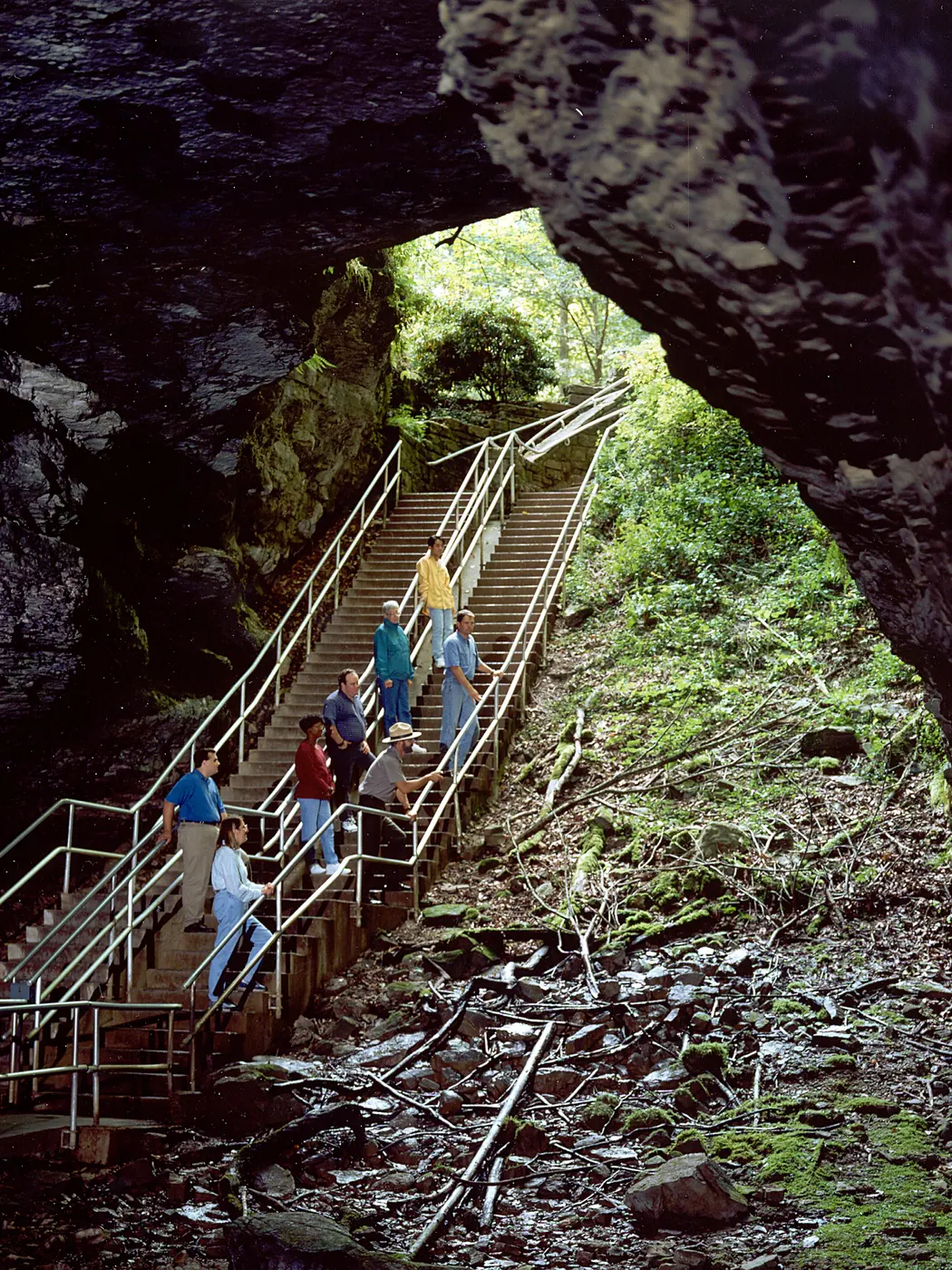
In the green, rolling hills of Kentucky, cool air seeps out of a crack in the rock that opens up in the forest. Beyond it lies Mammoth Cave, the longest known cave in the world.
How long is it? The passages surveyed so far add up to about 686 kilometers (426 miles). That is roughly the straight-line distance from Tokyo to Hiroshima, all of it in passages linked together underground like a web.
Far ahead of second place
A cave’s length is the total of all the passages that explorers have actually entered, surveyed and mapped. Mammoth Cave’s figure grows year after year, and as of 2025 it topped 426 miles, about 686 kilometers.
In second place is Ox Bel Ha, an underwater cave on Mexico’s Yucatán Peninsula, at a little over 500 kilometers. Mammoth Cave is more than 1.2 times as long. A cave network in China comes third, but none come close to Mammoth Cave.

Limestone under a sandstone roof
The secret behind such an enormous cave lies in the local rock.
Mammoth Cave’s passages are carved into thick layers of limestone laid down a little over 300 million years ago, when the region lay at the bottom of a shallow sea. Limestone slowly dissolves in the faint acids carried by rain and groundwater. Over vast stretches of time, groundwater widened the cracks in the rock until they became passages large enough for people to walk through.
A key role was played by a layer of sandstone lying on top of the limestone. Because sandstone resists dissolving, it covers the cave like a roof, keeping the passages from collapsing and preserving the underground spaces. Meanwhile, as a nearby river gradually cut its valley deeper, the groundwater’s path moved lower and lower too. As a result, Mammoth Cave has passages stacked on many levels, forming a three-dimensional maze.
The guide who drew the map, and the tight squeeze
The exploration of Mammoth Cave is also a human story.
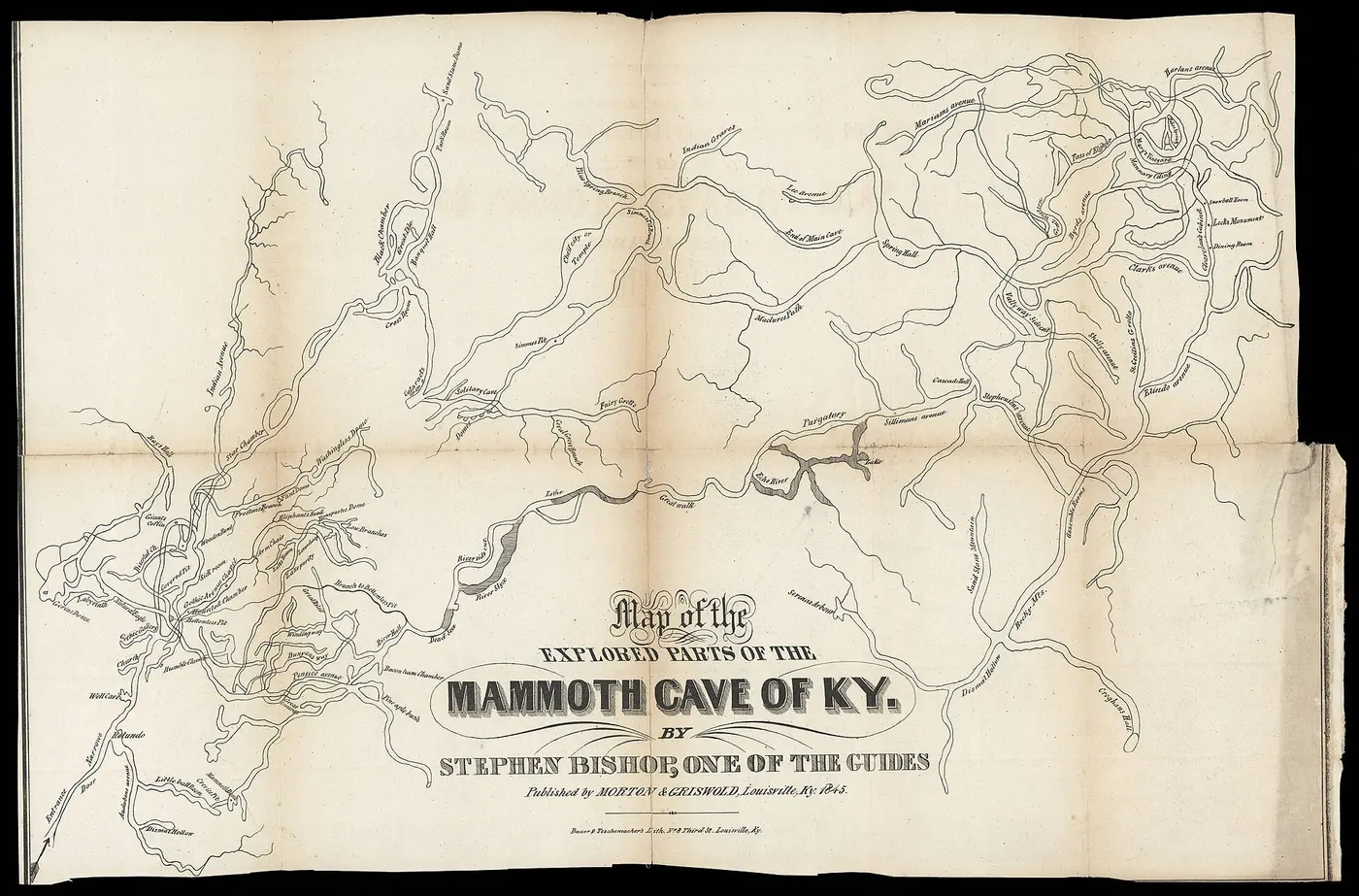
In the first half of the 19th century, tourists began visiting the cave. One of their guides was Stephen Bishop, who was enslaved. Between tours, he pushed deeper into the cave and discovered one unknown passage after another. In 1842, he is said to have drawn a detailed map of the cave.

In the 20th century, it became clear that another large cave system lay beneath nearby Flint Ridge. Then, on September 9, 1972, explorers finally found a passage connecting the two systems. The breakthrough hinged on a narrow gap later named the “Tight Spot.” A petite caver named Patricia Crowther had earlier squeezed through it and pushed on beyond, opening the way to the discovery. The connection secured Mammoth Cave’s place as the longest cave in the world.
The Mammoth Cave area became a national park in 1941 and was named a World Heritage Site in 1981. It is also known as home to eyeless fish, shrimp and other creatures adapted to life in darkness.
Japan’s longest cave
So which is the longest cave in Japan? The answer is Akkadō (安家洞) in the town of Iwaizumi, Iwate Prefecture.
Akkadō is a limestone cave with a total length of about 23.7 kilometers, and it is designated a national natural monument. Only about the first 700 meters from the entrance are open to the public; beyond that, long passages continue that can be entered only on expeditions. It is in a different league from Mammoth Cave, but beneath Japan, too, lies a vast world that human eyes have barely seen.