What is the largest crystal in the world?
The best known are gypsum crystals found in Mexico’s Naica Mine, more than 11 meters long.
11.4m
When we think of crystals, we might picture snowflakes, tiny grains of salt or sugar, or a piece of quartz that fits in the palm of your hand. All of them are small things to examine with a magnifying glass or between your fingers.
Beneath Mexico, though, there is a cave where crystals big enough to walk on jut out in every direction like a forest. Translucent white pillars as long and thick as utility poles—and every one of them is a single natural crystal.
Three hundred meters underground
The place is the Naica Mine in the state of Chihuahua in northern Mexico. In April 2000, miners digging a new tunnel in this lead, zinc and silver mine broke into a cavity about 300 meters (980 feet) below the surface.
What met their eyes were giant pillars crisscrossing from the floor to the ceiling. The chamber came to be called the Cave of the Crystals. The largest crystal is about 11.4 meters (37 feet) long and estimated to weigh 12 tonnes. A crystal about as long as a full-size bus had grown as a single piece.
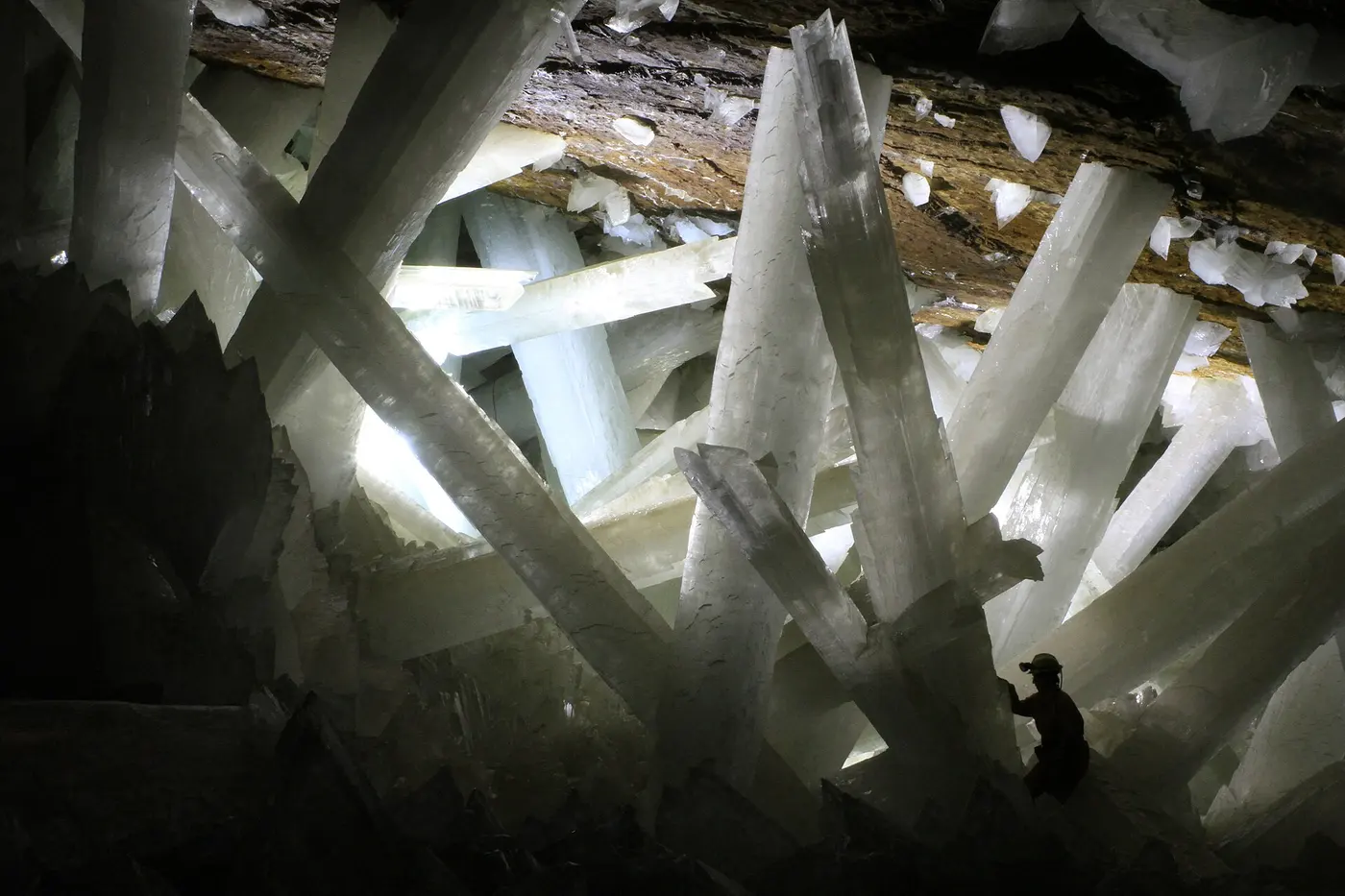

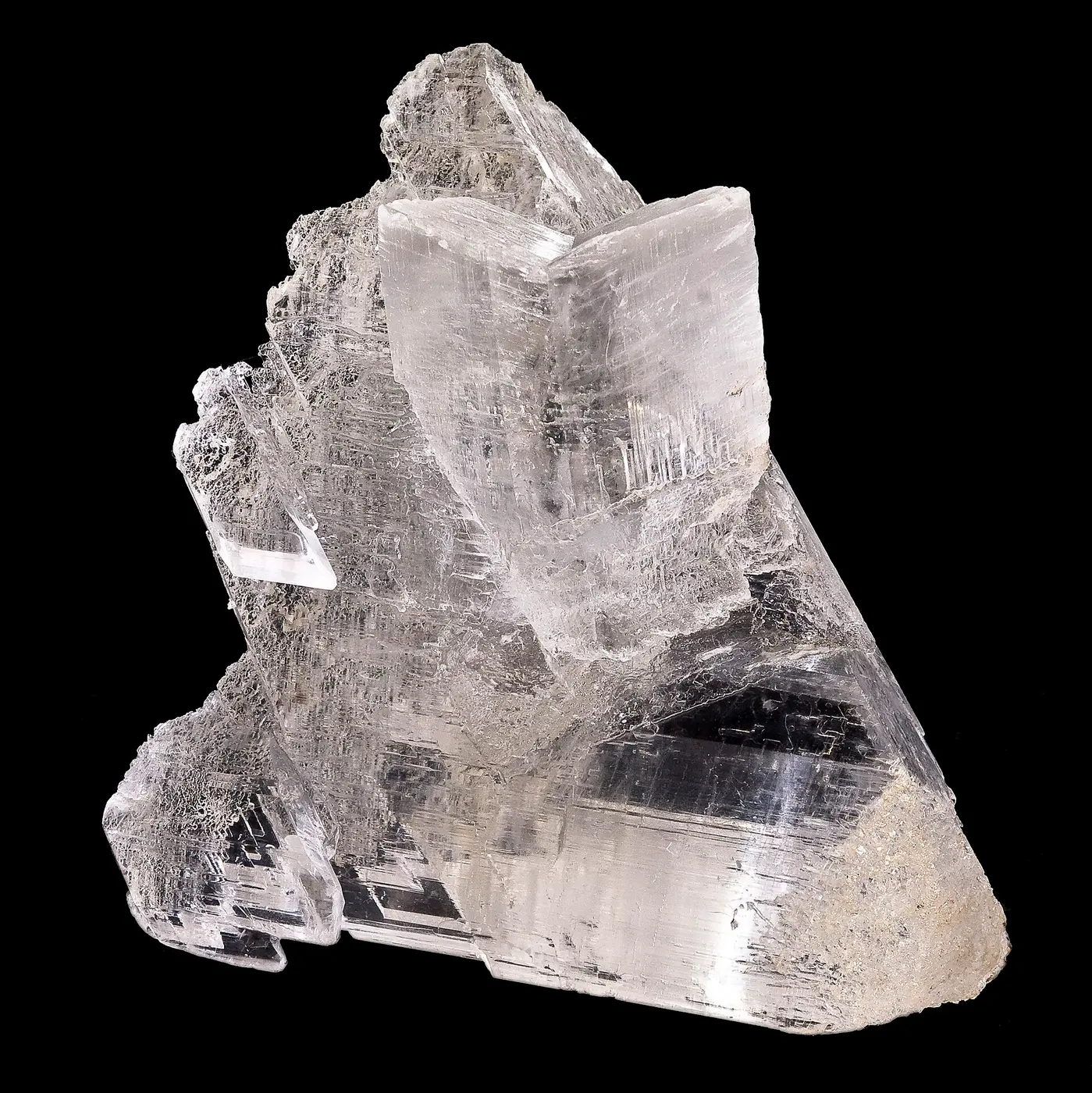
The crystals are made of gypsum—the same substance as the plaster used in school art projects and the gypsum board used in building walls. When it forms clear crystals, it is called selenite. Gypsum is soft enough to scratch with a fingernail, yet at Naica it grew to many times the height of a person.
A scorching “crystal palace”
The cave may look like an ice palace, but in reality it is an inferno. Temperatures reach about 58°C (136°F), with humidity above 90 percent. The air is hotter than the human body, and sweat barely evaporates, so the body has no way to cool itself. Without protective gear, a person can reportedly stay inside for only about ten minutes.
So the researchers who came to study the cave wore specially made suits cooled by ice, along with breathing equipment. Even then, they could work for only about half an hour at a time.

Grown over at least 500,000 years
Crystals this large grew because of special conditions deep underground.
Beneath Naica lies a magma chamber, and the groundwater it heated was rich in the dissolved ingredients of gypsum. This hot water filled the cave for a very long time, and its temperature is thought to have held almost steady somewhere in the mid-to-upper 50s Celsius. At that temperature, the dissolved minerals turn into crystal only very, very slowly. So rather than many tiny crystals sprouting, only a limited number grew, becoming enormous over an immense span of time.
The growth was extraordinarily slow: the crystals are said to have taken at least 500,000 years to form. One study that estimated the growth rate experimentally calculated that the largest crystals would have needed about a million years to reach their present size.
People could enter the cave only because the mine was pumping out groundwater to lower the water table for mining. When mining stopped in October 2015, the pumps were switched off and the cave flooded once again. No one can go inside now, but in the hot water, the crystals may have quietly begun growing again.
Incidentally, there are other contenders for the title of “largest crystal in the world.” In Madagascar, there is a record of a beryl crystal said to be 18 meters long and to weigh 380 tonnes. Detailed documentation is scarce, however, so among giant crystals that have actually been studied and photographed, Naica’s can fairly be called among the largest in the world.