Was sushi originally a way to preserve fish?
Yes. Narezushi, fish fermented in salt and rice, is considered the prototype of sushi.
Tuna and salmon gliding past on a conveyor belt; gizzard shad and conger eel shaped by a chef behind the counter. We tend to think the greatest delicacy of sushi is its freshness.
Trace sushi’s history back far enough, though, and you find that it started out as the very opposite of fresh. Fish packed away for months, sometimes years, and slowly allowed to turn sour: that was what “sushi” looked like more than a thousand years ago.
Sushi’s homeland isn’t Japan
The prototype of sushi is a food called narezushi. Fish is first salted, then packed together with cooked rice and left to ferment for a long time. As the rice ferments it produces lactic acid, and that sourness holds back the microbes that cause rot, so the fish could be kept for a long time.
This method is thought to have originated in the hill country of Southeast Asia as a way to preserve freshwater fish. The leading theory is that it traveled to Japan by way of China, along with rice farming. In an age without refrigerators, using rice to store fish was a very sensible piece of know-how.
The first confirmed mention of sushi in Japanese writing comes in the Yōrō Code, a body of law compiled in the 8th century. Sushi, written with the characters 鮨 and 鮓, appears in it as one of the goods that provinces had to send to the imperial court. The character 鮓 also appears on wooden tablets excavated from the site of Heijō-kyō, the ancient capital at Nara, showing that sushi was already a prized tribute item.
Narezushi lives on
Narezushi is not just a food of the past. It survives in various parts of Japan, and the best-known example is funazushi from Shiga Prefecture. Nigorobuna, a kind of crucian carp caught in Lake Biwa, is salted and then packed in rice, and takes anywhere from a few months to more than a year to mature.
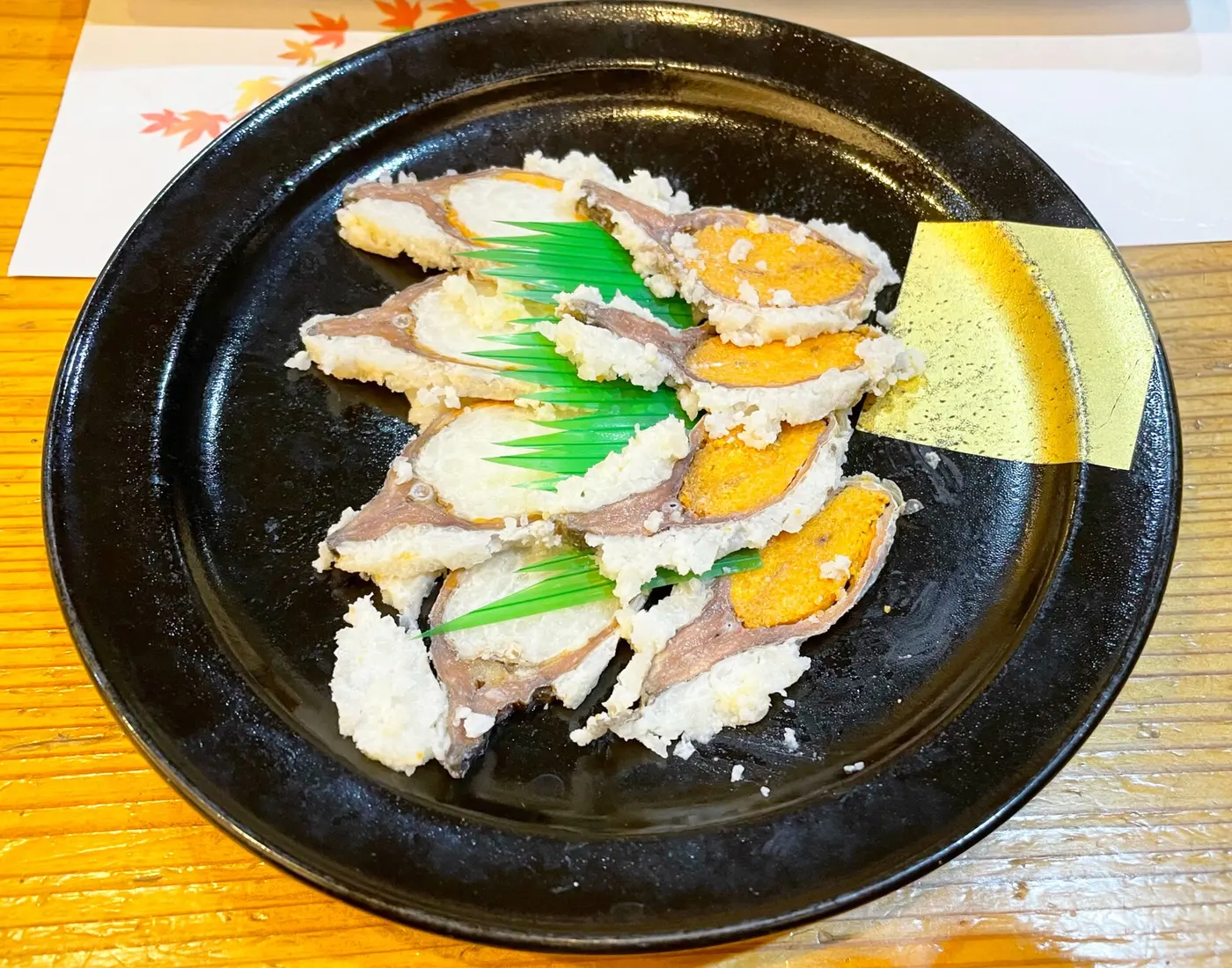

Finished funazushi has a powerful aroma and sourness that are sometimes compared to cheese. In the old forms of narezushi, the rice had broken down into a paste, and people often seem to have eaten only the fish. The word “sushi” itself most likely comes from an old word, sushi (酸し), meaning “sour,” which described this tangy taste.
People who couldn’t wait
Over time, sushi gradually became something that could be eaten sooner. Around the Muromachi period (1336–1573), namanare spread: the fermentation was cut short so that it was eaten while the fish was still almost raw and the rice still soft. For the first time, the rice was eaten as part of the sushi too.
Then, in the Edo period (1603–1868), came hayazushi, “quick sushi,” in which vinegar was mixed into the rice to give it sourness without waiting for fermentation. As vinegar became widely available, sushi that had once taken months could be eaten the same day. Pressed sushi, packed into a box and pressed, and rolled sushi also grew out of this trend.
Nigiri, Edo’s fast food
Then, in the late Edo period, around the Bunsei era (1818–1830), nigirizushi appeared in Edo, as Tokyo was then called: a slice of fish placed on vinegared rice and shaped by hand. It is often said to have been invented by Hanaya Yohei of the Ryōgoku district, but there are other theories, and no one knows for certain.
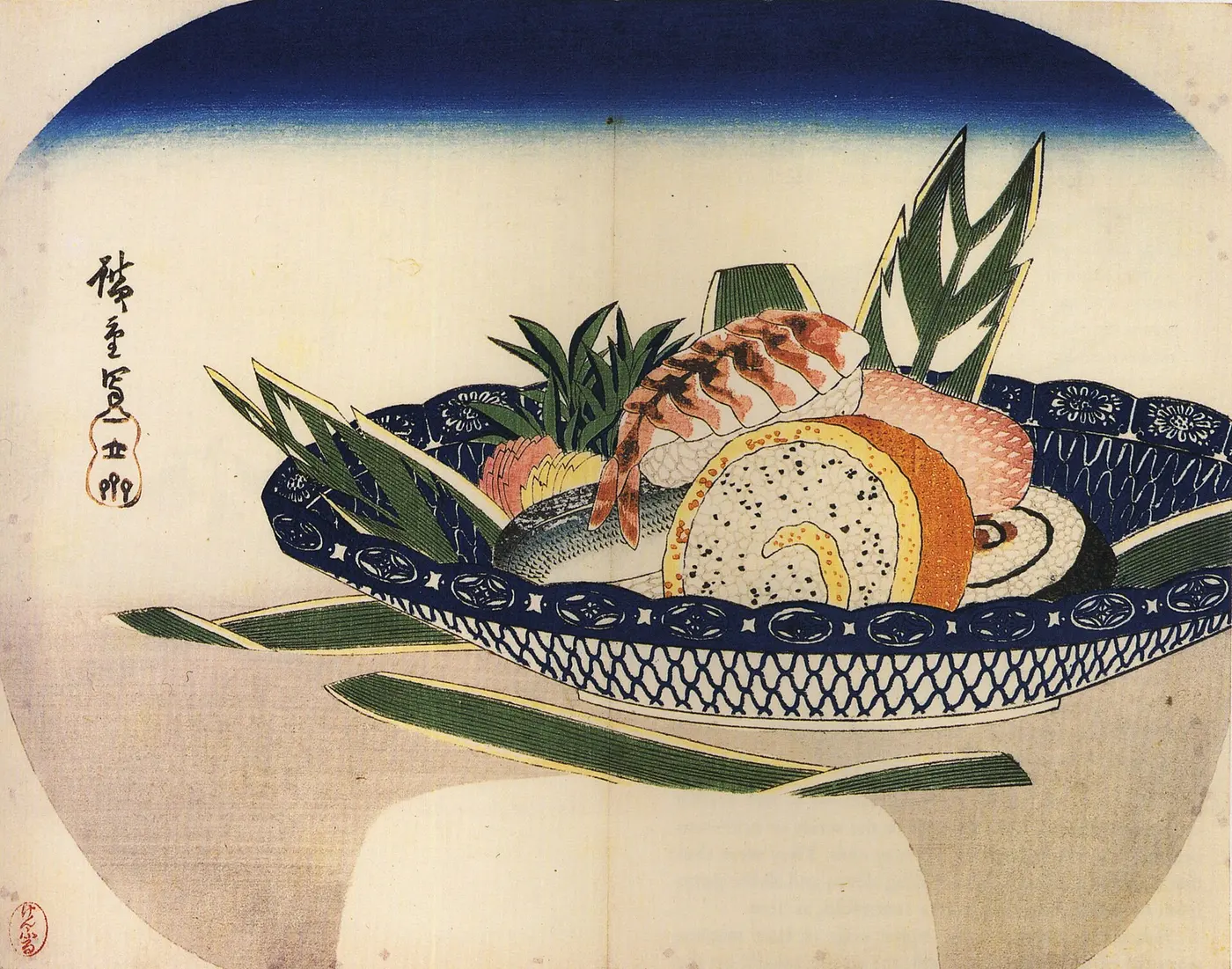

Made with fish from the bay in front of Edo and shaped quickly at street stalls, nigiri suited the famously impatient temperament of Edo’s townspeople perfectly. Nigiri of that era is said to have been much larger than today’s. And because there was no refrigeration, it was normal to give the fish some “work” before shaping it: curing it in vinegar, marinating it in soy sauce or simmering it. The wisdom of preservation lived on here too. In this way, a preserved food that once took years to make turned into a fast food you could eat within minutes of ordering.