When did curry arrive in Japan?
Early in the Meiji era. It came not straight from India but via Britain, as a Western dish.
1872
Whether it is a school-lunch favorite or a weeknight staple at home, curry rice is always near the top of Japan’s list of best-loved dishes. Alongside ramen, it is often called a “national dish,” and it would be no surprise if some Japanese children assumed it was invented in Japan.
Curry’s homeland is India, of course. But the curry that reached Japan did not come straight across the sea from India. Trace its route, and you find a lively dinner table from the age of “civilization and enlightenment,” when Japan was eagerly adopting Western ways in the late nineteenth century.
First written as “korurí”
Curry first shows up in Japanese writing at the very end of the Edo period (1603–1868). In 1860, Fukuzawa Yukichi published Zōtei Ka-Ei Tsūgo, a Chinese–English word list to which he had added Japanese readings and translations. It included the word “curry,” with the reading korurí (コルリ) written beside it. There is no record, however, that Fukuzawa himself ever ate curry.
The first Japanese person known to have actually tasted it is Yamakawa Kenjirō, who would later become president of Tokyo Imperial University. In 1871, aboard a ship bound for America where he was going to study, he is said to have ordered “rice curry” but found the sauce on top so unappealing that he ate only the rice. It seems the first encounter was not a happy one.
A recipe with frogs and apples
The first curry recipes appeared in Japan in 1872. That year saw the publication of two Western cookbooks in quick succession, Seiyō Ryōri Shinan (A Guide to Western Cooking) and Seiyō Ryōri Tsū (Western Cooking Made Easy), and both included curry.
The recipe in Seiyō Ryōri Shinan calls for leeks, ginger, garlic, shrimp, sea bream, oysters and chicken—and, astonishingly, red frogs. Meanwhile Seiyō Ryōri Tsū, compiled by the popular writer Kanagaki Robun, describes simmering cold leftover veal or chicken with chopped leeks and apples, curry powder and flour, then serving it with rice arranged in a ring around the plate.
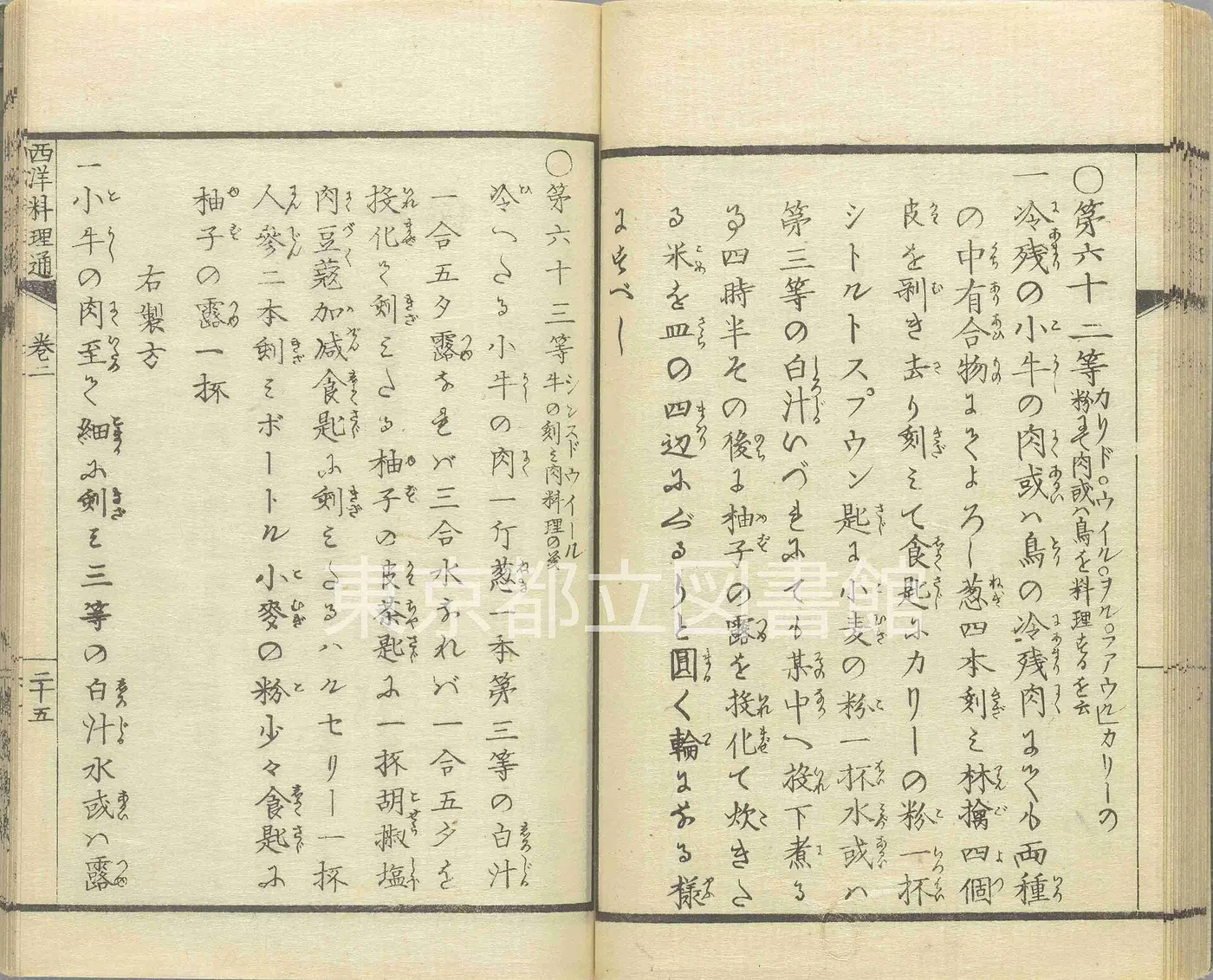

The frogs are startling, but the apples and the flour-thickened sauce have a lot in common with the curry served in Japanese homes today. It is fun to see the first seeds of Japanese-style curry already sprouting in a recipe from 150 years ago.
Not from India, but from Britain
That flour-thickened sauce is the key detail. Indian cooking rarely uses the technique of toasting flour to thicken a sauce. That method comes from European stews and sauces, and it was a hallmark of British-style curry.
From the eighteenth century on, as Britain came to rule India, spiced dishes were carried back home and gradually reshaped to suit British cooking. Then “curry powder,” a ready-made blend of many spices, went on sale, turning curry into a dish anyone could make at home. Meiji-era Japan (1868–1912) took in curry along with this British-born curry powder, as just one more Western dish.
The first curry the Japanese met was not Indian food, but British cooking.
Spread by the military and cheap diners
It took a little longer for curry to reach ordinary households. One well-known part of the story involves the military. Japan’s Meiji-era navy was plagued by beriberi, which was thought to stem from a diet built around white rice, so it introduced Western-style meals that included meat and vegetables. Curry became a favorite among them, and the story often goes that men who finished their service carried the taste back to their hometowns.
Curry recipes had already appeared in civilian cookbooks before the navy spread the dish, however, so it seems going too far to call “navy curry” the origin of Japanese curry. It is probably better to think of the military as one of several things that helped it catch on.
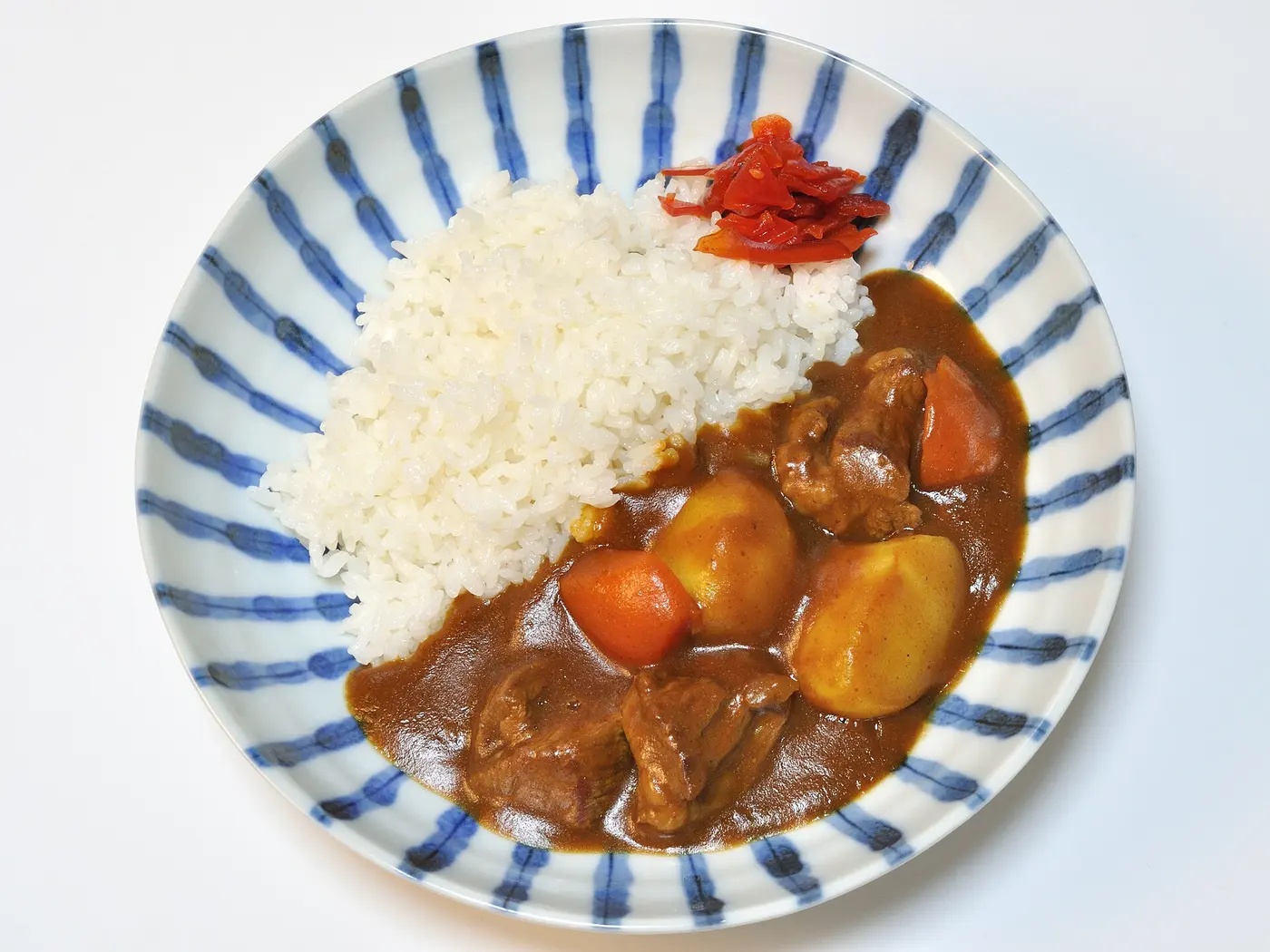

Toward the end of the Meiji era, an Osaka dealer in medicinal ingredients began selling domestically made curry powder. From the Taishō era (1912–1926) into the early Shōwa era, companies that would grow into today’s S&B Foods and House Foods entered the market one after another. In city diners, curry became popular as a cheap, filling meal, and little by little it changed from a special treat into an everyday taste.