How long have people been eating natto?
No one knows for sure. Stringy natto first shows up clearly in writings from the Muromachi period.
Peel back the lid of the little tub, pour in the sauce, and whip it around and around with your chopsticks. As fine white threads rise and stretch from the beans, you are looking at one of the classic sights of a Japanese morning. Natto—soybeans fermented until they turn sticky and stringy—is a food people tend to love or hate. Yet surprisingly few know how long it has been around.
Start digging into the question of when people first ate natto, and the first things you run into are legends, many of them starring famous figures from Japanese history.
Born on a warrior’s horse? The natto legends
The best known involves Minamoto no Yoshiie, a warrior of the Heian period (794–1185) better known by his nickname, Hachiman Tarō. During the Later Three-Year War of the late 11th century, the story goes, Yoshiie’s troops collected boiled soybeans from local farmers, wrapped them in straw, and carried them on horseback. Warmed by the horses’ body heat, the beans had turned stringy a few days later. Places across Japan, including what is now Yokote in Akita Prefecture, are said to be linked to this legend.
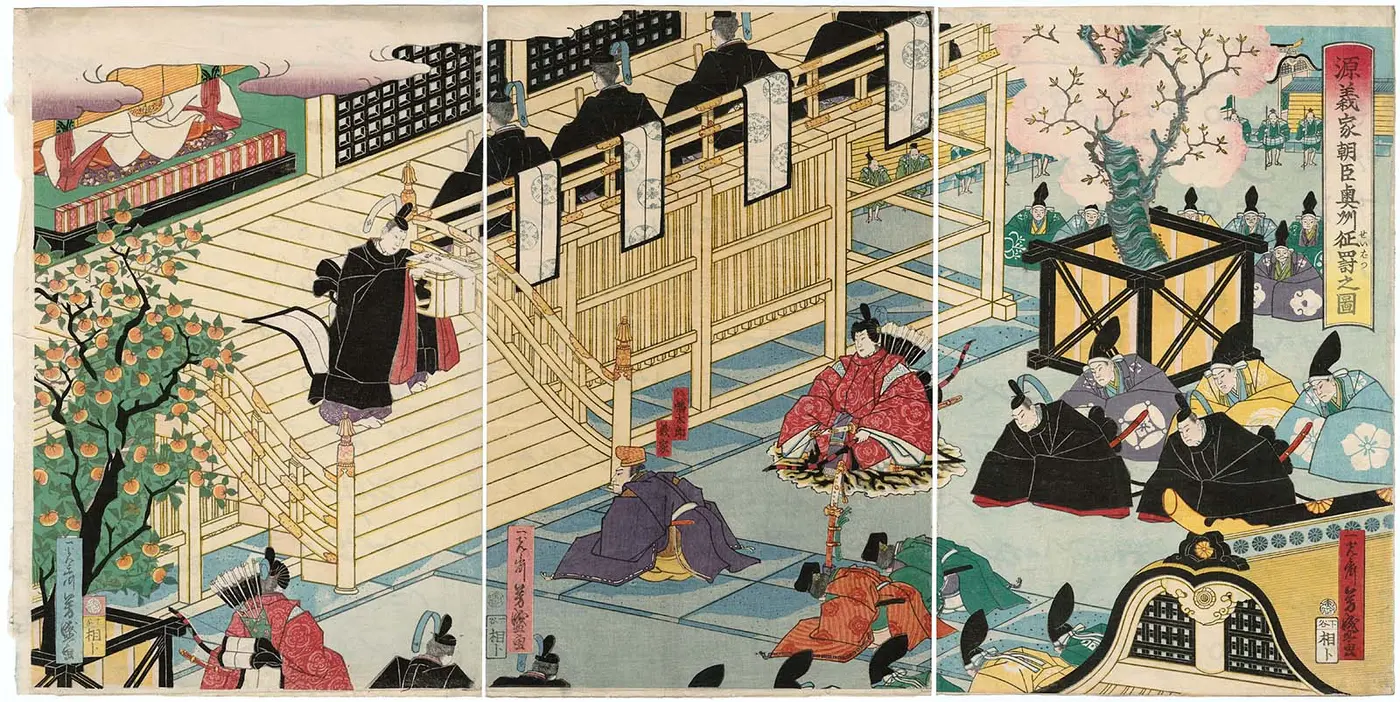

There are others, too, scattered all over the country, such as the tale that natto began when Prince Shōtoku wrapped boiled beans meant as horse feed in straw. What makes these stories fun is that they all get the essential conditions for making natto right: boiled soybeans, straw, and warmth. None of them, however, is backed by records from the time, so they are best enjoyed simply as folklore.
The first “natto” wasn’t stringy
The oldest known appearance of the word nattō (納豆) in writing is said to be in Shin Sarugakuki (新猿楽記), written by Fujiwara no Akihira in the mid-11th century. It mentions a food called shiokara nattō, or “salty natto.” This, however, was something quite different from the stringy natto we know today.
Salty natto is made by fermenting boiled soybeans with kōji mold, soaking them in brine, and then drying them. The result is dark and salty, and it does not form strings. Daitokuji nattō from Kyoto and Hama nattō from Shizuoka still carry on this line of flavor today. This kind of natto was often made at temples, and one theory holds that the name nattō came from the nassho (納所), the part of a temple that served as its kitchen or storehouse. Accounts of the word’s origin differ, however.
The oldest source that clearly describes stringy natto is Shōjin Gyorui Monogatari (精進魚類物語), a popular illustrated tale of the kind known as otogizōshi, from around the 15th century in the Muromachi period (1336–1573). It tells of a battle between vegetarian foods, such as vegetables and beans, and “fishy” foods, such as fish and fowl. Among the generals on the vegetarian side is a character named Nattō Tarō Itoshige. Since his name contains ito, the Japanese word for “thread,” it seems safe to say that natto in this era was already stringy.
The supporting actor hiding in the straw
There is a good reason the legends all feature straw. Rice straw is naturally home to large numbers of natto bacteria.
The natto bacterium is a strain of Bacillus subtilis, sometimes called hay bacillus. It can enter a dormant state called a spore, which withstands heat and drying, so it survives even when the straw is boiled. Wrap boiled beans in boiled straw, and almost all the other microbes die off, leaving the natto bacteria to multiply on the beans. Without knowing that bacteria existed, people had arrived through experience at a method that made perfect scientific sense.
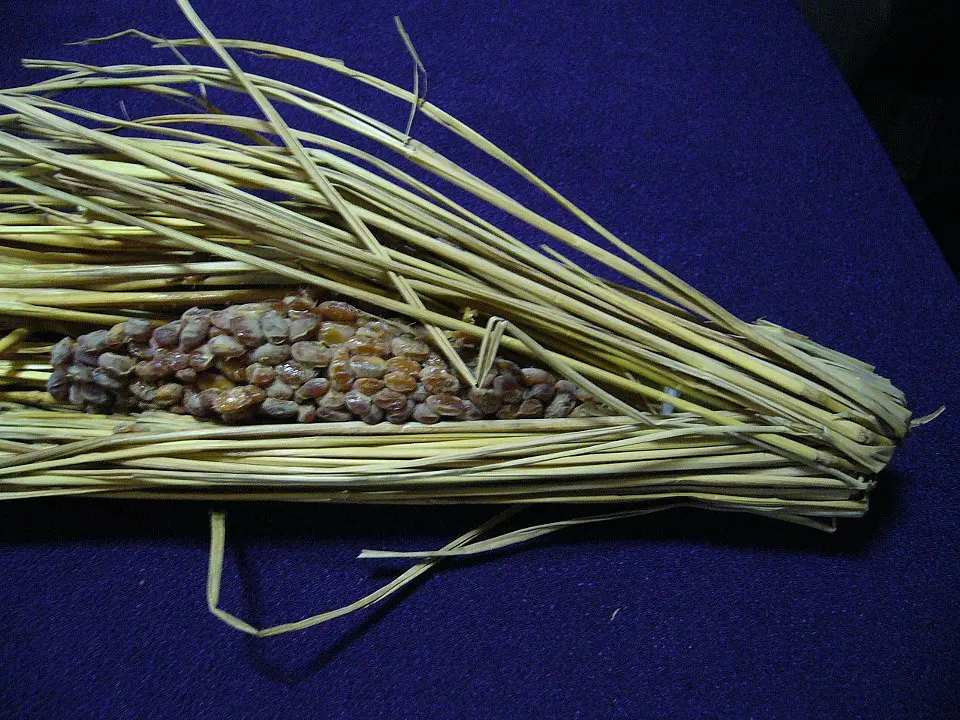

The bacterium itself was identified in 1905, when the agricultural scientist Shin Sawamura isolated it from commercially sold natto and named it Bacillus natto. Methods of making natto with pure cultures of the bacterium then spread, making hygienic production possible without relying on straw. It is thanks to this research that natto packed in thin wood-shaving wrappers or containers reached every corner of Japan.
Not just a Japanese food
Stringy fermented soybeans are not unique to Japan. Similar foods are found across Asia, such as kinema from Nepal and other parts of the Himalayas, and thua nao from northern Thailand.
In 1972, the botanist Sasuke Nakao proposed the idea of a “natto triangle” linking tempeh from Java, kinema from the Himalayas, and natto from Japan. He speculated that the area around Yunnan Province in China, near the center of that triangle, might be the homeland of natto culture. Tempeh is fermented with a mold rather than bacteria, so it cannot quite be called a relative. Still, the possibility that natto is part of a long story connecting Japan with lands across the sea continues to fascinate researchers.