Was the croissant born in France?
Its roots are the Austrian crescent roll, the kipferl. The flaky, layered croissant took shape in 20th-century France.
A croissant eaten with café au lait in a Paris café. Bite into it and the thin, crisp outer layers shatter, releasing a warm breath of butter. With a name that means “crescent” in French and that unmistakable shape, it is hard to imagine a more French bread.
Yet if you follow the croissant’s family tree, it leads east across the border, to the Austrian capital of Vienna. And along the way, a very convincing war legend lies in wait.
Its ancestor: Vienna’s kipferl
The croissant’s ancestor is said to be the kipferl, a crescent-shaped roll from Austria. It has long been loved across Central Europe, and in Vienna a bread that seems to match it is said to appear in records as early as the 13th century.


The kipferl, however, is quite different on the inside. It is usually made from a yeast dough close to ordinary bread, or from a brioche-like dough, rather than from many thin, flaky layers. The shape may be nearly identical, but the texture is closer to a soft dinner roll.
The legend of the 1683 siege of Vienna
There is a famous story about how the kipferl was born. In 1683, when a huge Ottoman army laid siege to Vienna, a baker working through the night noticed faint sounds rumbling up from underground. The enemy was digging a tunnel beneath the city walls. Thanks to the baker’s warning, the attack was thwarted, and to celebrate, bakers began making rolls shaped like the crescent on the Ottoman flag.
It is a dramatic tale, but no sources from the time back it up. Similar stories are told about Buda (part of today’s Budapest) in 1686, and the kipferl existed long before either siege anyway. The legend is thought to have become widely known after it appeared in the first edition of the food encyclopedia Larousse Gastronomique in 1938. It is, in effect, a food fable that spread in the 20th century.
A Viennese bakery in Paris
So how did the kipferl reach France? The figure who appears in reliable records is August Zang, a former Austrian artillery officer.
In 1838 or 1839, Zang opened the Boulangerie Viennoise (Viennese Bakery) at 92 rue de Richelieu in Paris. The shop, which sold Viennese specialties such as the kipferl, quickly became popular, and French bakers began imitating it one after another. The French word viennoiserie, “Viennese things,” now used for croissants, pains au chocolat and similar pastries, carries on this legacy.
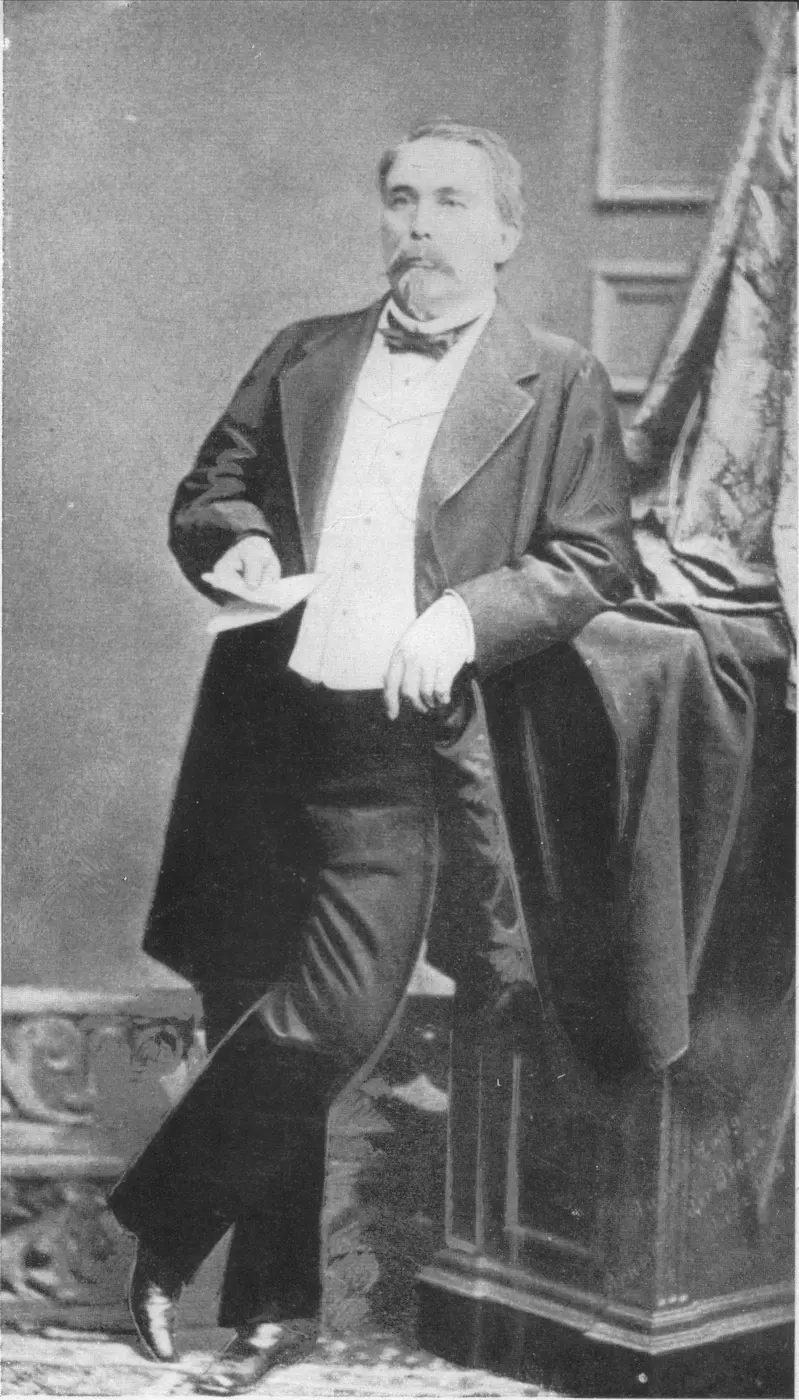

Zang himself did not spend the rest of his life as a baker. After returning to Vienna in 1848, he founded the newspaper Die Presse, and later ran a bank and a mine as well. The newspaper, despite some interruptions along the way, is still published today.
The flaky layers are a 20th-century invention
In France, the name “croissant” is said to appear in the record early on in 1853, listed as a kind of “fancy bread.” At that point, however, croissants are thought to have still been made from much the same dough as the kipferl.
The technique of folding butter into dough to build up many layers can be found in French cookbooks as far back as the 17th century. But it was not applied to the croissant until the 20th century. The first recipe corresponding to today’s croissant dates from around 1905 (some sources point to a culinary encyclopedia published in 1906).
So the crescent shape came from Austria, and the buttery layers from France. The croissant, it seems, is a joint creation, developed over time by bakers in two countries.