How long has soy sauce been around in Japan?
Its ancestor, hishio, is recorded in the early 700s; the name for liquid soy sauce appears in the Muromachi period.
On sashimi, on chilled tofu, on grilled fish: few seasonings work as hard on the Japanese table as soy sauce. Today it sits on supermarket shelves around the world, and “soy sauce” needs no translation.
It is so familiar that we rarely stop to think it had a beginning at all. Yet look back through history and soy sauce turns out to be a seasoning that took shape slowly, changing form over a very long time.
An ancestor from ancient China
Soy sauce is usually traced to jiang (醤), a seasoning from ancient China made by fermenting meat, fish or grain with salt. Early versions were mostly made from meat or fish, but versions based on soybeans and other grains appeared later.
In Japan, this seasoning was known as hishio and was used from early times. The Taihō Code of 701 lists an official post called shushō, responsible for handling hishio. The Engishiki, a book of court regulations from the Heian period (794–1185), even records how much hishio could be made from a given amount of soybeans.
Hishio in those days, however, is thought to have been a thick paste closer to miso. The thin, pourable soy sauce we know came somewhat later.
The “first drop” in a miso barrel
Yuasa, a town in Wakayama Prefecture, tells a famous story about how liquid soy sauce began.
In 1249, a Zen monk named Kakushin sailed to Song-dynasty China. Alongside his training there, he learned how to make the miso of Jingshan Temple (径山寺味噌), and he returned to Japan in 1254. It was a chunky miso eaten as a relish, made by pickling chopped vegetables in it, and it is considered the ancestor of today’s kinzanji miso (金山寺味噌). As the miso matured, liquid seeping from the vegetables pooled at the bottom of the barrel. Someone tasted it and found it delicious. Efforts to make more of that liquid, the story goes, were the start of soy sauce in Yuasa.
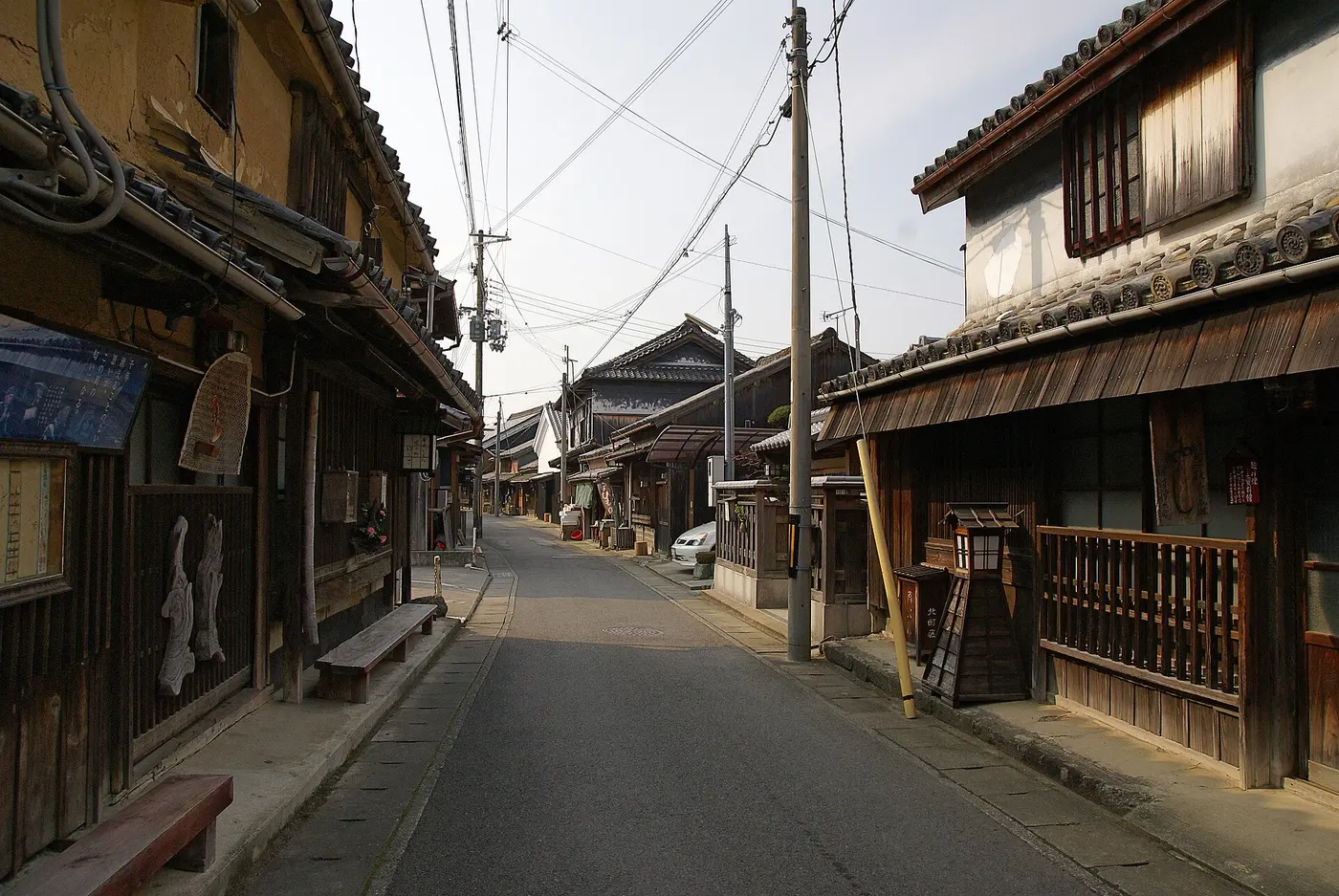

The tale is a legend, but Yuasa certainly prospered on soy sauce. A record from 1535 is said to describe Yuasa soy sauce being shipped to Osaka by boat, and in the later Edo period the town reportedly had more than 90 breweries. In 2017 it was recognized as a Japan Heritage site under the title “The ‘First Drop’: Kishū Yuasa, Birthplace of Soy Sauce Brewing.”
When the name “shōyu” appeared
So when did people start saying “shōyu” (醤油), the Japanese word for soy sauce?
A dictionary compiled around 1474, the Bunmei-bon Setsuyōshū, gives the reading “shauyu” for the characters 漿醤. The modern spelling 醤油 is said to appear about a century later, in 1568, in the Tamon’in Nikki, a diary kept by monks in Nara. And the Vocabulario da Lingoa de Iapam, a Japanese–Portuguese dictionary published by the Jesuits in Nagasaki in 1603, describes “tamari” as “a very tasty liquid taken from miso.” Together, these suggest that liquid seasonings were gradually spreading from the Muromachi period (1336–1573) into the age of civil wars that followed.
In the Edo period (1603–1868), soy sauce brewing spread from western Japan to the east. In Chōshi and Noda, in what is now Chiba Prefecture, brewers turned out large amounts of dark koikuchi soy sauce made from soybeans and wheat, which kept the kitchens of Edo (today’s Tokyo) supplied.
Sailing to Europe on Dutch ships
Soy sauce began traveling overseas early on. In 1647, the Dutch East India Company, based on the island of Dejima in Nagasaki, started exporting it. At first it went to other parts of East Asia; in the 18th century it was shipped to Europe as well.
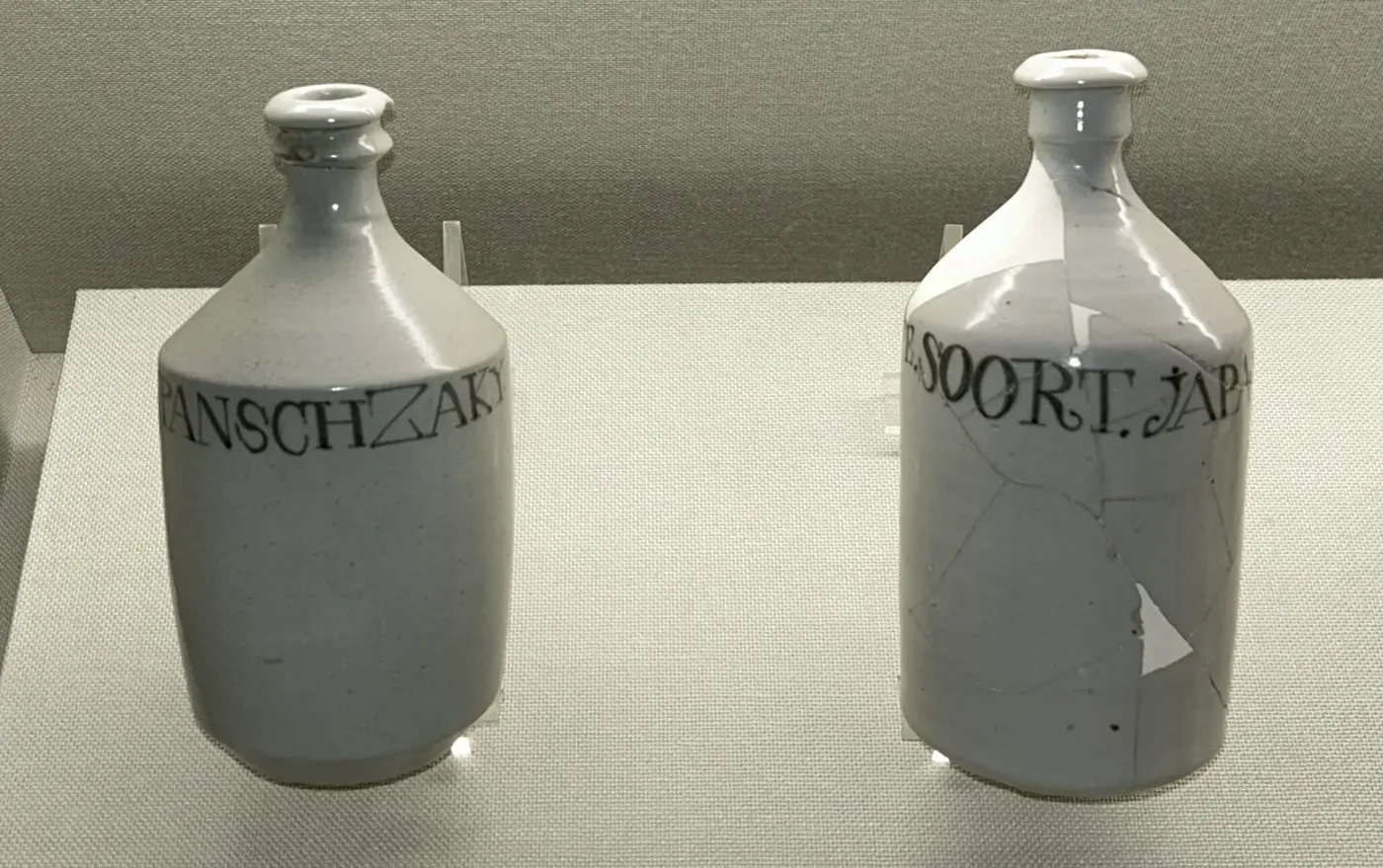

To keep the soy sauce from spoiling on the long voyage, porcelain bottles were also used for export. These white “konpura bottles” were fired in places such as Hasami in Nagasaki Prefecture, and their sides bore the words “JAPANSCH ZOYA,” Dutch for “Japanese soy sauce.”
The English word “soy” was born along this route. Japanese “shōyu” entered Dutch as “soja,” and English is thought to have borrowed it in the late 17th century. One theory holds that the Dutch form came from a Kyushu dialect pronunciation close to “soi.” The word “soy,” now used worldwide, can be traced back to Japanese soy sauce.