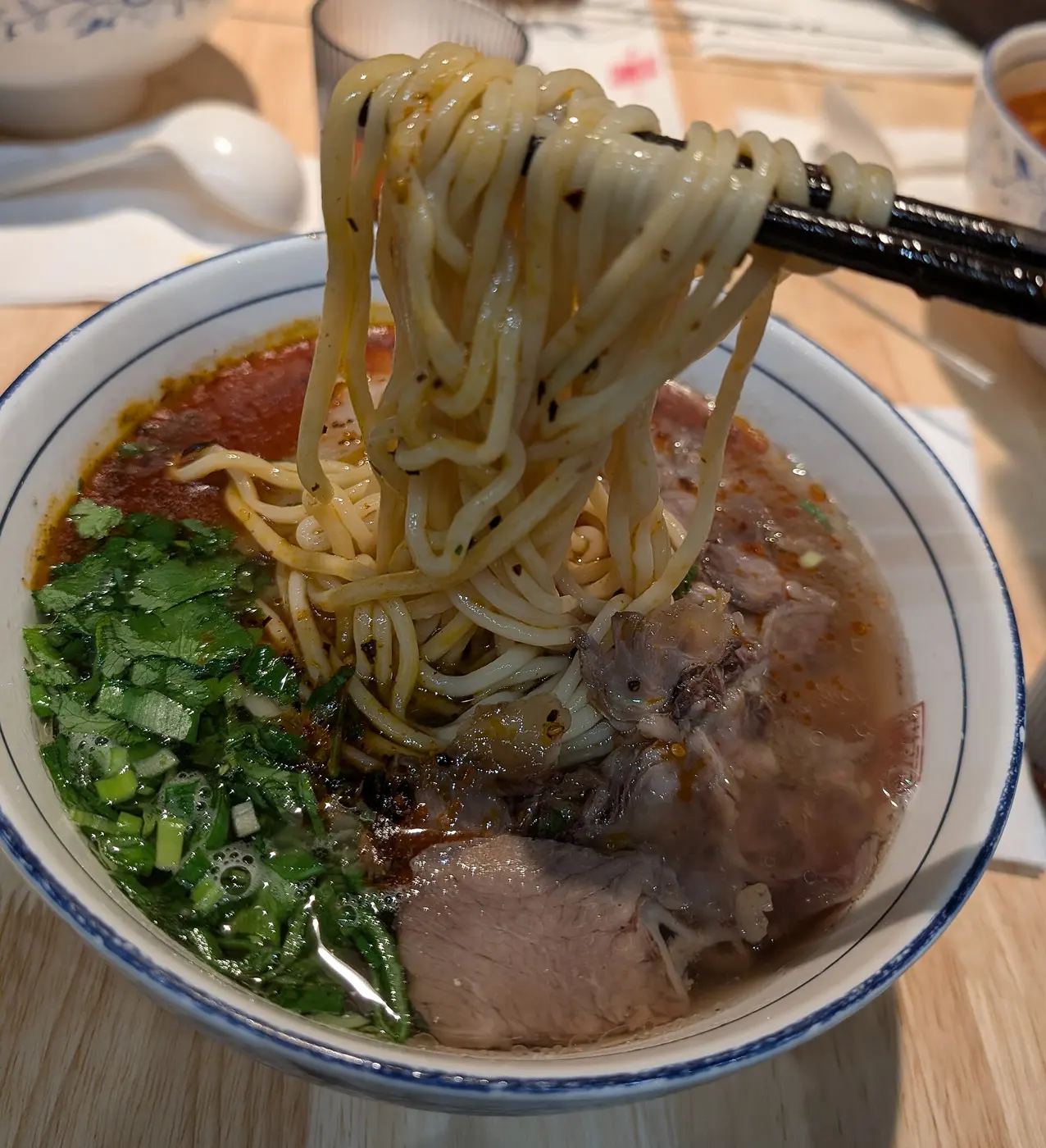
Where did ramen come from?
Chinese noodle dishes. It is said to begin with shina soba, adapted for Japanese diners via Meiji-era Chinatowns.
Soy sauce, miso, salt, pork bone. Once you start counting Japan’s regional styles of ramen, there is no end to it, and “RAMEN” signs have become a common sight overseas too. Today ramen ranks alongside sushi as one of Japan’s signature dishes.
Look into a bowl of ramen, though, and you will find noodles born in China swimming in it. When, and from where, did Japan’s national dish arrive?
A record 200 years before Mito Kōmon
The story that “the first person in Japan to eat ramen was Mito Kōmon” is quite widely known in Japan. Mito Kōmon is the popular name of Tokugawa Mitsukuni, lord of the Mito domain. The tale goes that in the late seventeenth century, he learned how to make Chinese noodles from Zhu Shunshui, a Confucian scholar who had fled the fall of China’s Ming dynasty, and served them to his retainers.
In 2017, however, the Shin-Yokohama Raumen Museum introduced an even older record. Inryōken Nichiroku, a diary kept at a Zen temple in Kyoto during the Muromachi period (1336–1573), reportedly mentions that in 1488 guests were served noodles called keitaimen (経帯麺). The recipe for keitaimen appears in a Chinese cookbook known in Japan as Kyoka Hitsuyō Jirui, and called for adding salt and an alkaline substance, ken (鹸), to wheat flour. This ken is a relative of kansui, the alkaline water essential to today’s Chinese-style noodles.
Noodles like these, however, were a rare delicacy eaten by a handful of monks and scholars, and they never spread to ordinary people. Ramen would not take root as a Japanese taste until much later.
From Chinatown to Asakusa
The turning point came in the Meiji era (1868–1912). When Japan opened its doors to the world, Chinese communities known as Nankinmachi sprang up in the port cities of Yokohama, Kobe and Nagasaki, and Chinese-style noodle soups could be eaten there. Japanese people are said to have called them Nankin soba, “Nanjing noodles.”
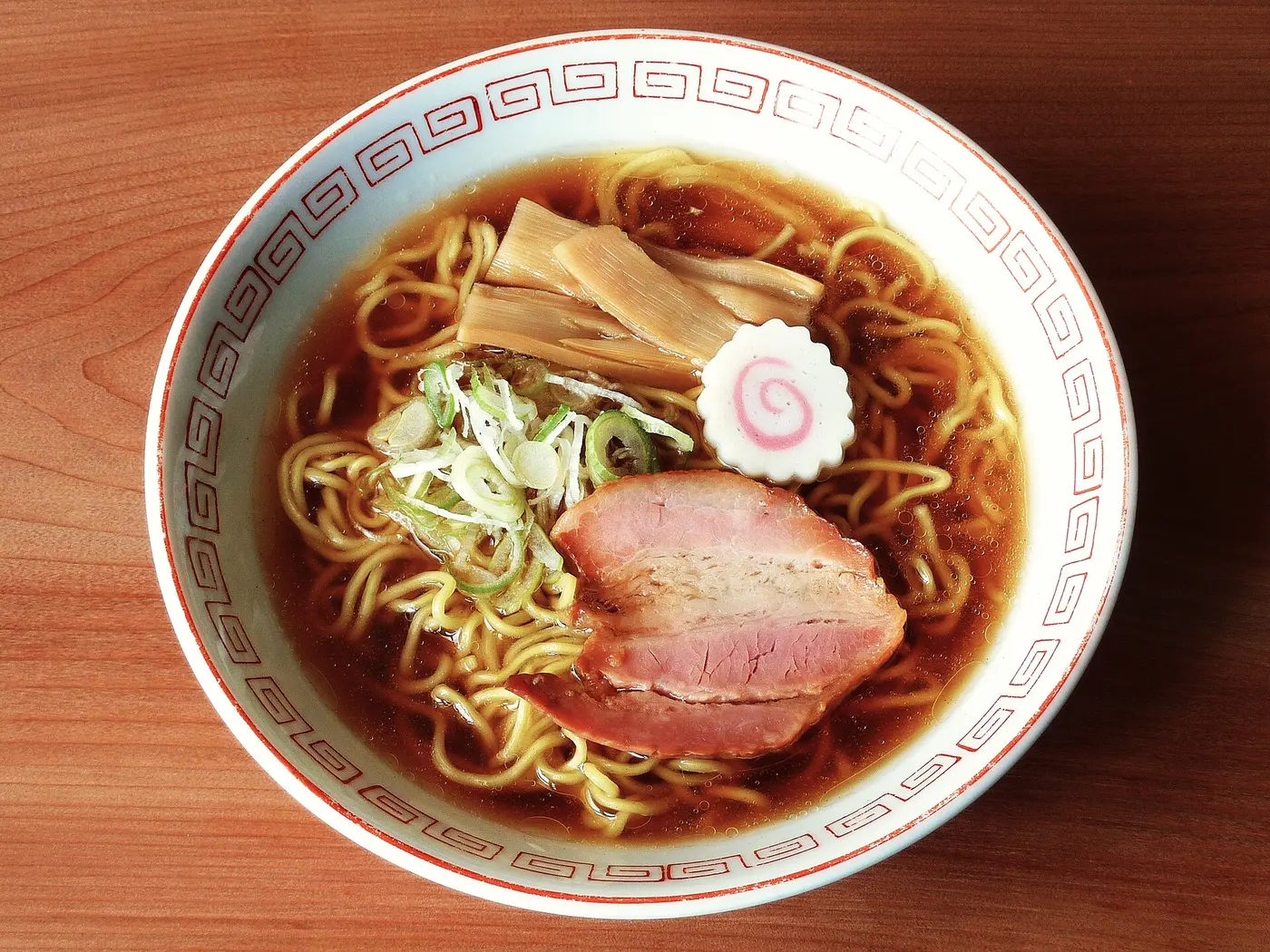
Then, in 1910, a restaurant called Rairaiken opened in Asakusa, Tokyo. It was founded by Ozaki Kan’ichi, who had worked at the Yokohama customs house, and he brought in Chinese cooks from Yokohama’s Nankinmachi to run a Chinese restaurant aimed at Japanese diners. Its shina soba—Chinese noodles in a soy-sauce broth, named with Shina, an old Japanese word for China—became a huge hit, and many other shops followed its lead. For this reason, quite a few people regard 1910 as the starting point of Japanese ramen.

The secret ingredient: kansui
What sets ramen noodles apart from Japan’s udon and soba is the use of kansui. Kansui is alkaline water containing sodium carbonate and similar compounds. Added to wheat flour, it gives noodles a yellowish tint, a distinctive springy bite and a slippery smoothness. That characteristic aroma of Chinese-style noodles also comes from kansui.
Adding alkali to wheat dough is a technique long practiced in China, and the ken in keitaimen is one example. Japanese ramen took this technique inherited from China as its foundation, then layered on flavors from around Japan, such as soy sauce, miso and pork bone, growing into something all its own.
Nankin soba, shina soba, chūka soba
The name, too, has changed over time. From the Meiji era to the early Shōwa era, it was Nankin soba or shina soba. After World War II, when calling China “Shina” came to be avoided, the name chūka soba (“Chinese noodles”) spread. Even now, plenty of shops deliberately serve their old-fashioned soy-sauce bowls under the name chūka soba. Each name carries something of the shop’s own feelings.
There are several theories about where the word “ramen” comes from. The leading one traces it to lamian (拉麺), Chinese for hand-pulled noodles; other theories link it to the words 柳麺 or 老麺. There is also a well-known story that it began at a diner in Sapporo, where a Chinese cook would call out hǎo le (好了, “it’s ready”) when a dish was done, but this is thought to be a folk tale.