Can water stay liquid below 0°C?
Yes. Without something to trigger freezing, water can stay liquid below 0°C. This is called supercooling.
You gently take a bottle of water out of the freezer after it has been chilling for a while. Inside, it’s still a clear liquid. But the moment you tap the bottom of the bottle, white ice spreads through it in seconds, and the whole thing turns to slush. You may have seen videos like this.
We learn that water freezes at 0°C (32°F). In fact, water that drops below 0°C doesn’t necessarily freeze right away. This curious state is called supercooling.
Freezing needs a starting point
For water to become ice, its water molecules, which normally tumble around in no particular order, have to line up in a fixed pattern. Getting that lineup started, though, is surprisingly hard.
Once a tiny cluster of ice has formed, the surrounding molecules can use it as a foothold and line up one after another. That first foothold is called a nucleus. Ordinary water starts to freeze just a little below 0°C because dust in the water or tiny scratches on the container help nuclei form.
Cool clean water slowly and gently, on the other hand, and it can slip below 0°C without forming a nucleus. That is supercooling. The phenomenon is said to have been first recorded in 1724 by Fahrenheit, the scientist whose name lives on in the Fahrenheit temperature scale. Very small droplets free of impurities are known to stay unfrozen down to around −40°C (−40°F), and in the laboratory, liquid water has been observed at even lower temperatures.
Tap it and it freezes—but not all of it
Tapping the bottle starts the freezing because the jolt helps a nucleus form. Once there is a nucleus, ice crystals race through the water.
But the bottle doesn’t turn into a solid block of ice in an instant. Freezing water gives off heat, and that heat warms the bottle back up to near 0°C. By calculation, when water supercooled to −10°C (14°F) is tapped and freezes, only a little more than a tenth of it can turn to ice right away. The rest stays liquid and mixes with fine bits of ice, which is why you get slush.
The sky is full of supercooled water
Supercooling isn’t just a rare curiosity confined to the lab. Inside the clouds overhead, even below 0°C, there are often countless tiny water droplets that haven’t frozen.
When an ice particle forms in a cloud like this, it grows by stealing water from the droplets around it. When the ice particles become heavy enough to fall, they reach the ground as snow, or as rain if they melt on the way down. Much of our rain and snow is thought to form this way.
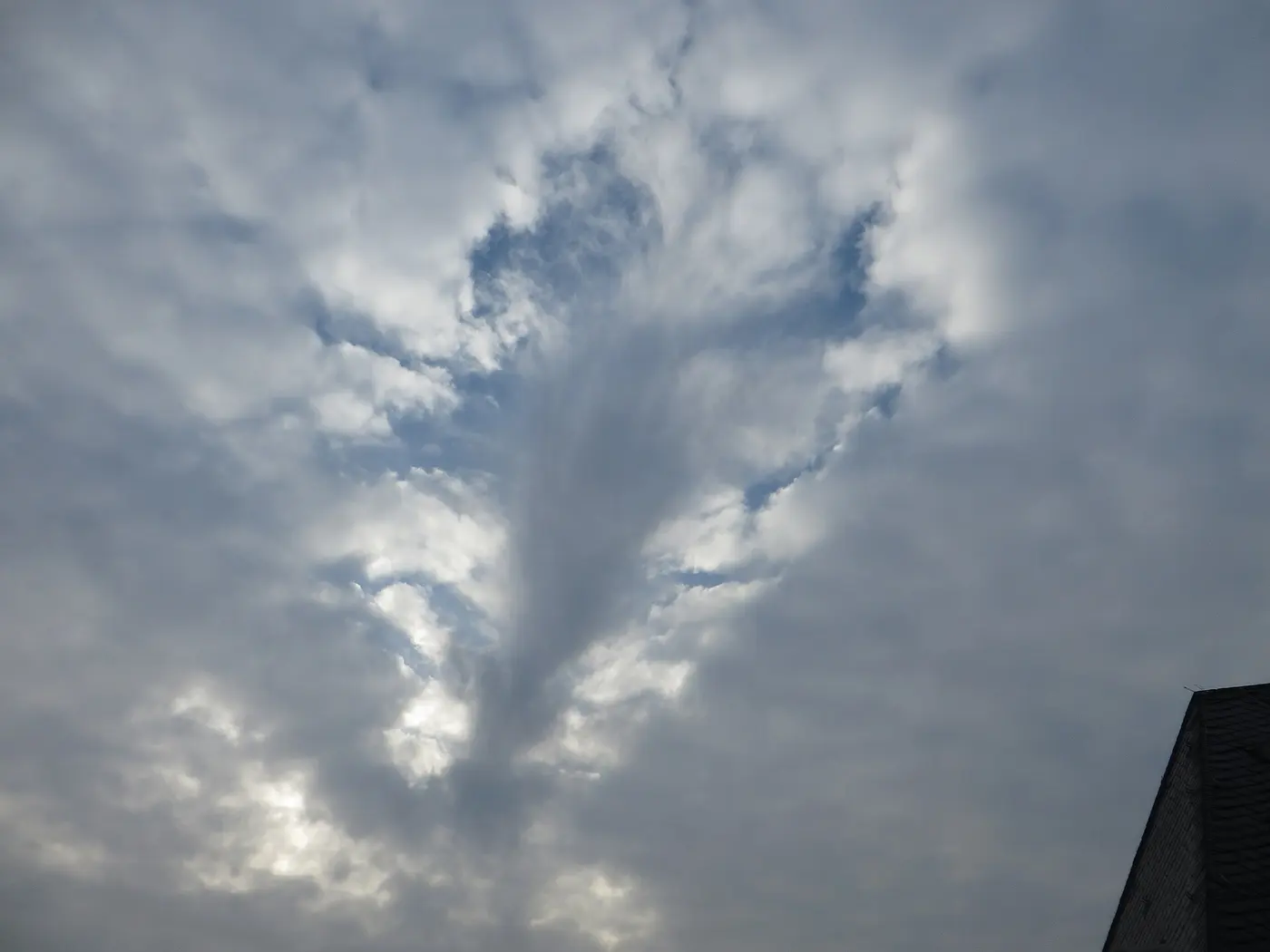

You can see this process at work in so-called hole-punch clouds. When an airplane passes through a cloud layer made of supercooled droplets, the air behind its wingtips or propellers can expand and cool suddenly, producing ice particles. The droplets nearby then turn into ice all at once and fall, leaving a gaping hole in the cloud. In 2010, American researchers reported observations confirming that airplanes create such holes.
Rain that freezes on contact
When supercooled droplets fall all the way to the ground, things get a bit troublesome. The instant they hit a tree branch, a power line or a road, the impact sets off freezing. This is called freezing rain, and it coats surfaces in clear ice like a layer of glass. The ice it leaves behind is called glaze.
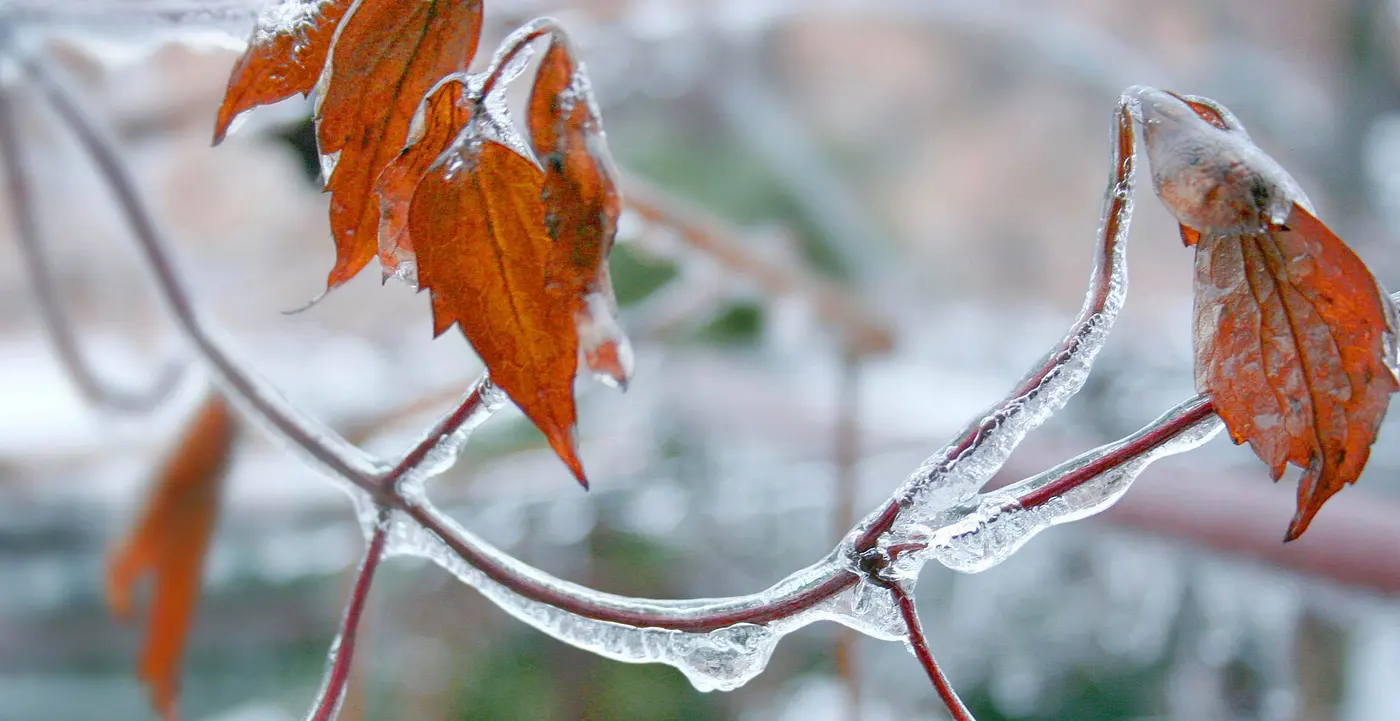

Glaze is beautiful to look at, but its weight can snap tree branches and bring down power lines. Supercooled droplets are a hazard for aircraft too. If they strike a wing and freeze, they can change its shape and reduce its performance, which is why airplanes are equipped with systems to prevent ice from building up.