Did Archimedes really shout “Eureka”?
The bath story was written about 200 years later, so no one knows. But the principle of buoyancy is real.
200years
“Eureka!” is known around the world as the thing you shout when inspiration strikes. In ancient Greek it means “I have found it!” You probably know the story: the ancient genius Archimedes made a great discovery in his bath and, overjoyed, ran through the streets naked shouting the word.
But how much of that is true? Look closely, and surprising doubts emerge about both where the story comes from and the method it describes.
The riddle of the crown and the overflowing bath
The story is set in the 3rd century BCE in Syracuse, a city on the island of Sicily. King Hiero II had a craftsman make a golden crown to dedicate at a temple. Then a rumor spread that the craftsman had pocketed some of the gold and mixed in silver instead. Was there a way to check without damaging the crown? The king handed the puzzle to Archimedes.
One day, as Archimedes got into his bath, water spilled over the sides as his body sank. Seeing this, he realized how to solve the problem, leapt out of the tub and ran home naked, shouting “Eureka!”
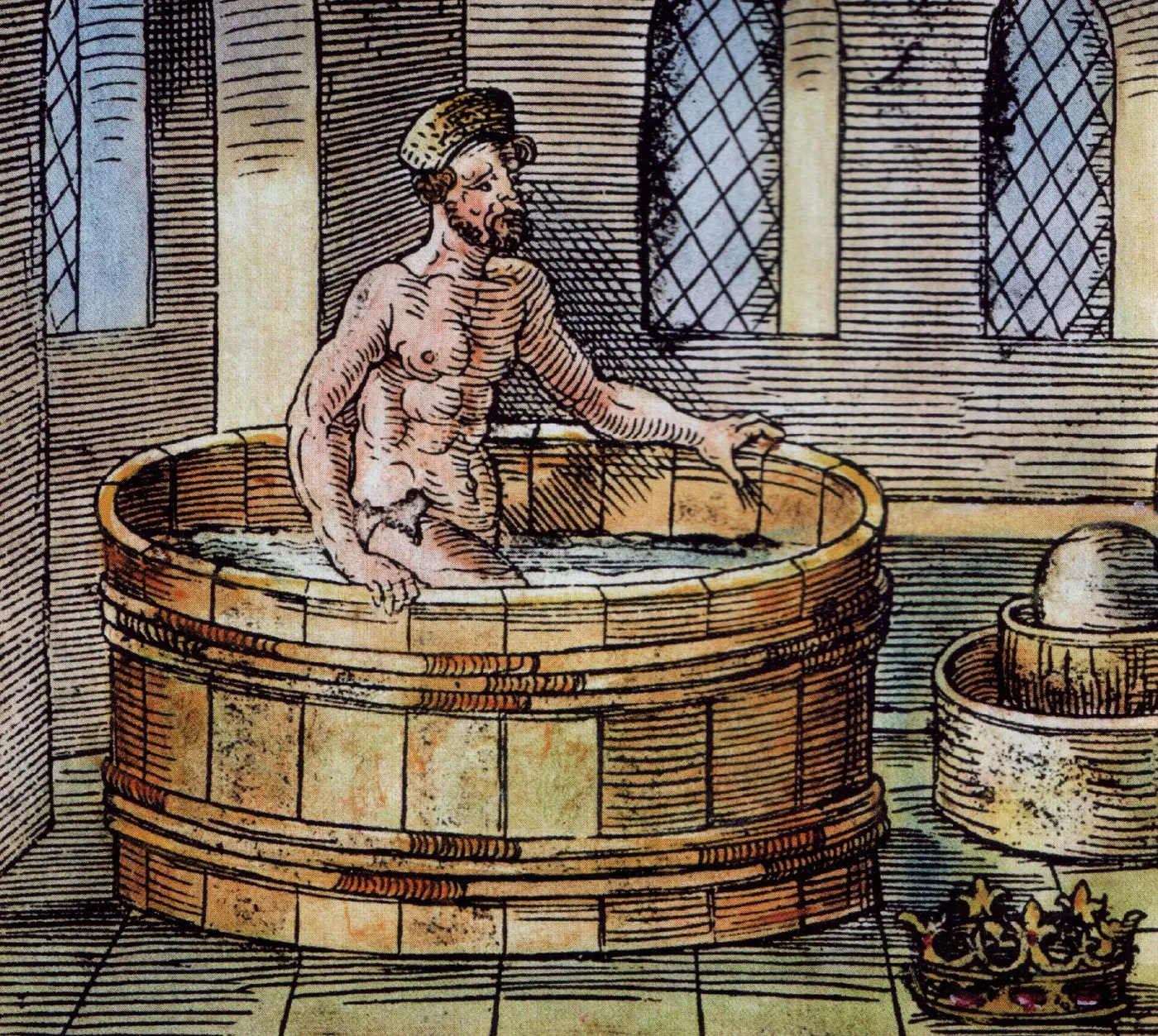

According to the story, his method went like this. Take a lump of gold and a lump of silver, each the same weight as the crown, lower them one at a time into a vessel filled to the brim, and compare how much water spills out. Silver is lighter than gold for the same size, so the same weight of silver takes up more volume. The crown made more water overflow than the lump of gold did, proving that silver had been mixed in.
A story written 200 years later
The story comes to us from De architectura (On Architecture), written in the late 1st century BCE by the Roman architect Vitruvius. Archimedes died around 212 BCE, so the story was written down roughly 200 years after the events it describes.
The crown story does not appear in any of Archimedes’ own writings. The later writer Plutarch also mentions the discovery in the bath, but only briefly. Both accounts suggest the story was already a well-known legend by their time. Whether it really happened, or took shape as a legend about a great man retold over generations, there is no way to check.
Galileo’s doubts
The story has another big problem: with the overflow method, the difference might simply be too small to see.
By one estimate, if you compared a 1,000-gram crown containing 30% silver with an equal weight of pure gold in a container with a 20-centimeter opening, the water level would differ by only about 0.41 millimeters. Even if you collected and measured the overflow, reading such a small difference accurately with the tools of the day would have been extremely difficult.
In 1586, the 22-year-old Galileo Galilei seized on this point. In a short essay called La Bilancetta (The Little Balance), he wrote that the method Vitruvius described was “so to say, a crude thing, far from scientific precision.” Then he proposed a more reliable approach.
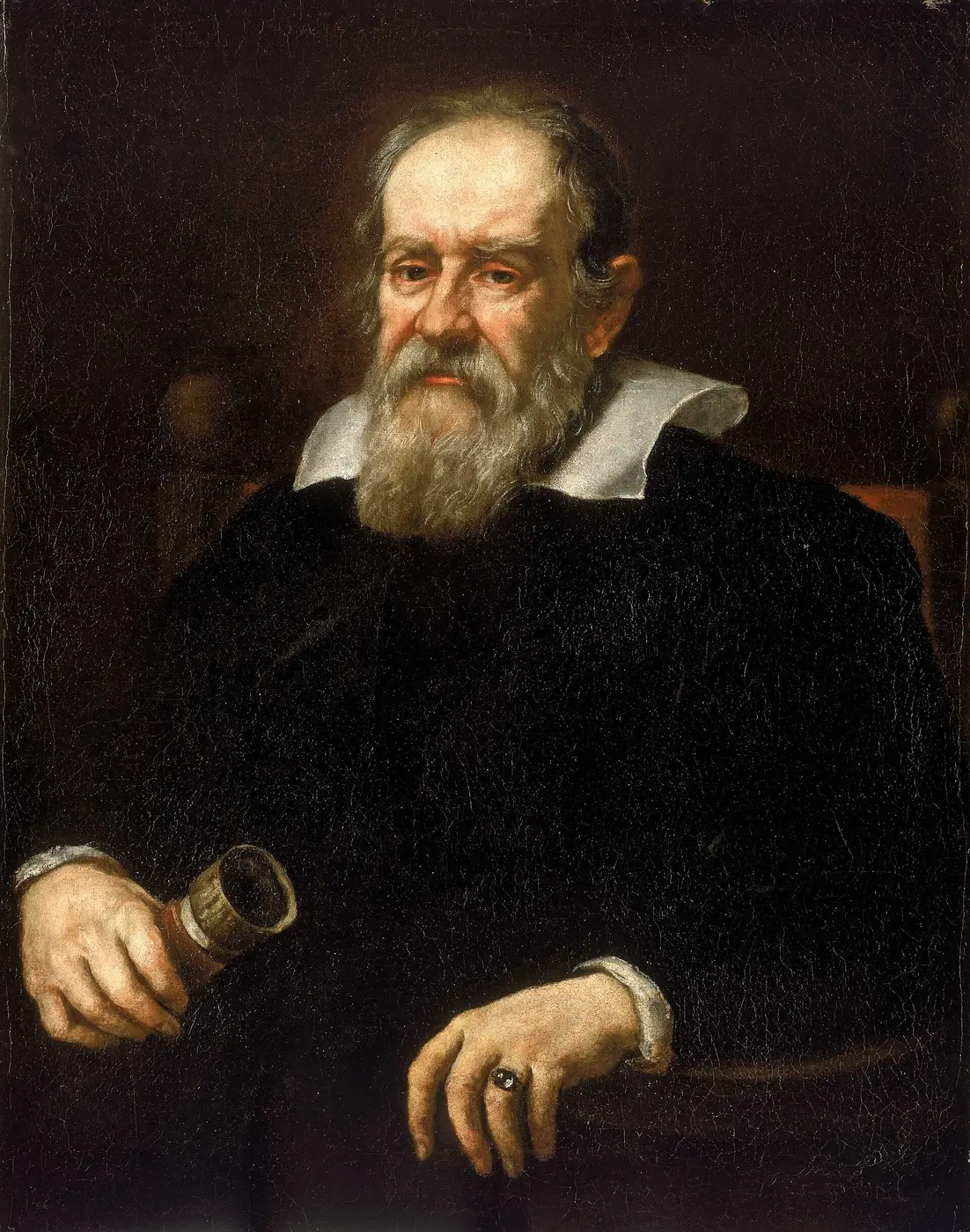

Hang the crown from one side of a balance and an equal weight of pure gold from the other so they balance, then lower both into water. A crown containing silver has a larger volume, so it gets more upward push from the water, and the balance tips toward the pure gold. Under the same conditions as the estimate above, the difference would be about 13 grams—easy to see. Galileo thought this method, based on a principle Archimedes himself had discovered, was probably the one he actually used.
The principle of buoyancy is real
Whatever the truth of the bath story, Archimedes certainly discovered the law of buoyancy. His treatise On Floating Bodies sets out the principle that an object immersed in a liquid is pushed upward by a force equal to the weight of the liquid it displaces. This is what we call Archimedes’ principle.
It explains why a steel ship weighing tens of thousands of tons floats on the sea and why a hot-air balloon rises into the sky. A law discovered more than 2,000 years ago still keeps the world moving, unchanged.