Why does road salt melt ice?
Water with salt dissolved in it can no longer freeze at 0°C. Strong brine stays liquid down to about −21°C.
-21°C
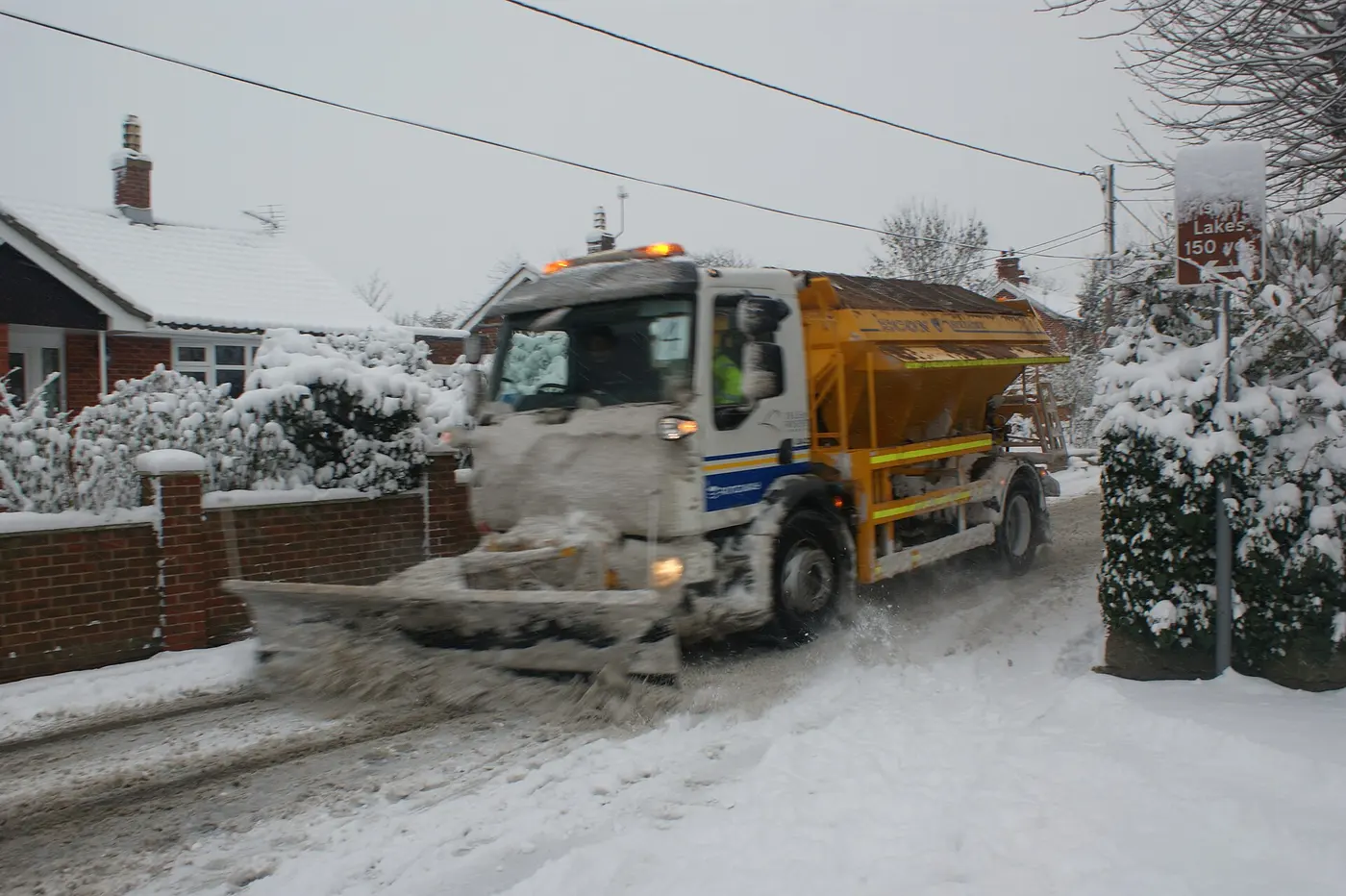
On a snowy morning or a bitterly cold night, you may notice white grains scattered across roads and bridges. They are usually de-icing agents, and most of them are salts: sodium chloride, the same stuff as table salt, or its relative calcium chloride.
Ice is not supposed to melt until it warms above 0°C. Yet even when it is several degrees below freezing, spreading salt makes ice melt away. What exactly is the salt doing?
At 0°C, ice and water are always trading places
In a glass of ice water at 0°C, water molecules are constantly breaking away from the surface of the ice and joining the liquid, while others are latching onto the ice and freezing, both at the same rate. Because what leaves and what arrives balance out, nothing seems to change. That balance is what we mean when we say water freezes, or ice melts, at 0°C.
Add salt, and it dissolves in the water, splitting into tiny charged particles, sodium and chloride ions. These ions get in among the water molecules and make it harder for them to latch onto the ice. Meanwhile, molecules keep breaking away from the ice just as before. The balance tips, and at 0°C, or even a little below, the ice melts.
For salt water to freeze, it has to get colder than 0°C. This is called freezing point depression. It is also why seawater does not freeze at 0°C, but only once it cools to about −1.8°C (29°F).

The stronger the brine, the harder it freezes
The more concentrated the salt water, the lower its freezing point. According to material from Japan’s National Institute for Land and Infrastructure Management, a 23.3 percent solution of sodium chloride freezes at about −21°C (−6°F). Adding more salt will not take it any lower; that is the limit. With calcium chloride, the freezing point can drop to about −51°C (−60°F).
Another neat detail is that salt water does not freeze solid all at once. Cool a 10 percent salt solution, for example, and it starts to freeze at about −7°C, but only the pure water freezes. The water left behind becomes saltier, so it has to get colder still before it freezes. As a result, instead of turning into a sheet of glassy ice, a salted road tends to keep patches of slush, which is part of the reason de-icing agents cut down on skidding.
Too cold, and salt struggles
Salt is no cure-all, however. For salt to work, it first has to dissolve in water. The colder it is, the more slowly it dissolves and the less ice it can melt, so sodium chloride loses much of its punch on very cold days.
The same Japanese material lists how much ice one kilogram of de-icer can melt. At −3°C (27°F), sodium chloride melts about 9.5 kilograms of ice in six hours. At −15°C (5°F), it melts only about 0.1 kilograms in 15 minutes, and less than 2 kilograms even after six hours. The same kilogram of salt does very different amounts of work depending on the cold.
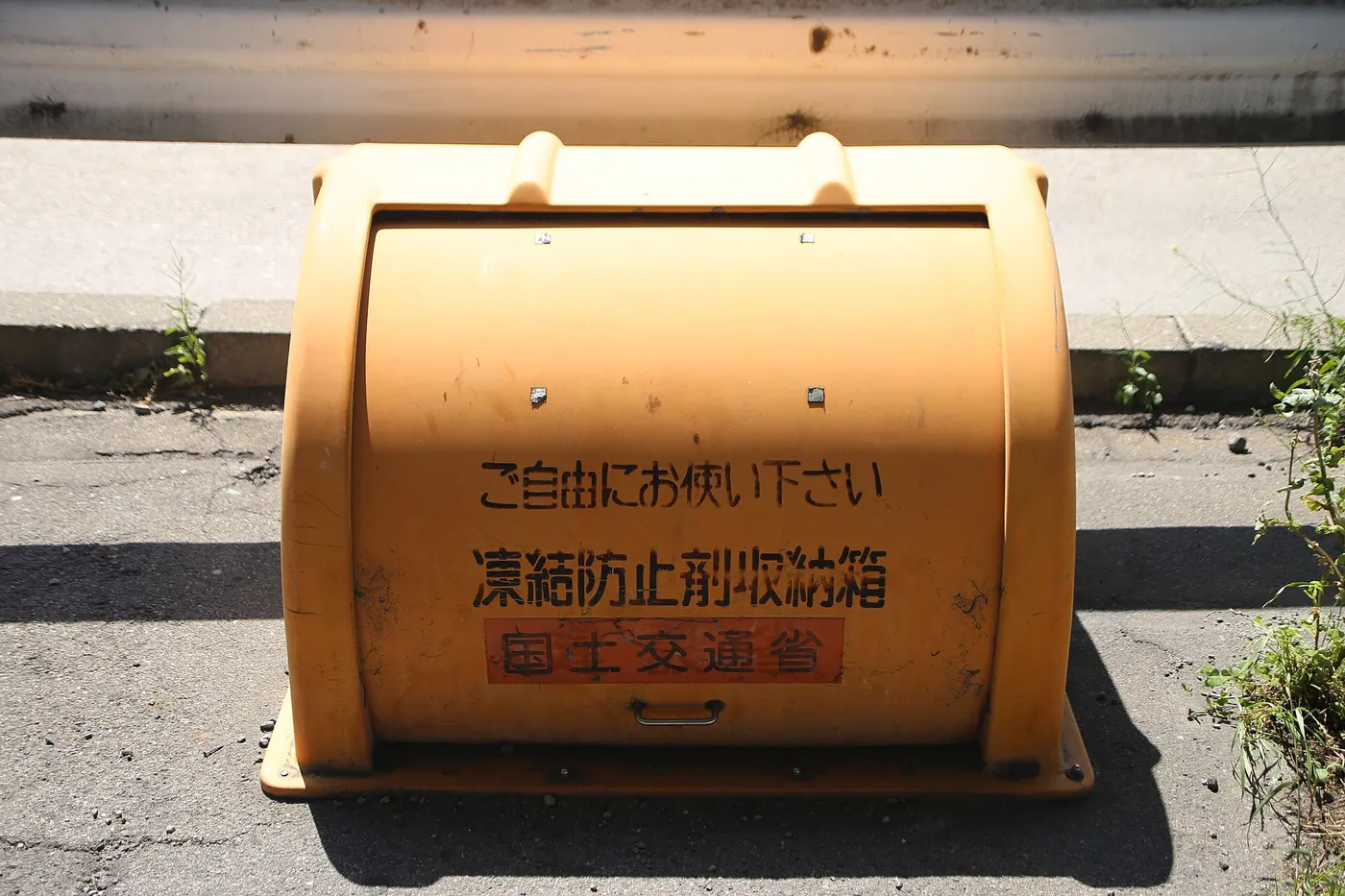

That is why calcium chloride is preferred in especially harsh cold, or on roads that have already iced over. Calcium chloride gives off heat as it dissolves, and that heat helps melt snow and ice too, so it works fast. Sodium chloride, by contrast, absorbs heat as it dissolves, but its effect lasts longer. It works best when spread as a precaution, before the road freezes.
Handy as it is, salt also makes car underbodies and the steel inside bridges rust. That is why drivers are advised to wash the underside of their cars after driving on salted roads.