Does air have weight?
Yes. Near the ground, a cubic meter of air weighs about 1.2 kilograms.
1.2kg
We say things are “light as air,” and in everyday life we never feel that air has any weight. Blowing up a balloon doesn’t seem to make it heavier, and a room full of air doesn’t weigh down on our shoulders.
Even so, air really does have weight. Add up the air around us, in fact, and the numbers get surprisingly large. Proving it took some bold, and rather showy, experiments by 17th-century scientists.
How much does the air in a room weigh?
At about sea level and a temperature of 20°C (68°F), one cubic meter of dry air weighs about 1.2 kilograms (2.6 pounds). That’s about 1/800 as heavy as water, light indeed, but certainly not zero.
Take, for example, a room of about 10 square meters, the size of a typical six-tatami room in Japan, with a ceiling about 2.4 meters high. That works out to roughly 24 cubic meters, so the air inside weighs about 29 kilograms (64 pounds). That’s about the weight of an eight- or nine-year-old child, floating gently around the room.
Incidentally, humid air is lighter than dry air. That’s because water vapor molecules are lighter than the nitrogen and oxygen molecules that make up most of the air.
Living at the bottom of an ocean of air
The first person to really pin down the weight of air was the Italian physicist Evangelista Torricelli, a former pupil of Galileo.
In 1643, Torricelli and his colleagues took a glass tube filled with mercury, turned it upside down and stood it in a dish of mercury. The mercury in the tube dropped a little and stopped at a height of about 76 centimeters (30 inches) above the surface in the dish. At the top of the tube, an empty space had formed. Torricelli reasoned that the column of mercury didn’t fall all the way because the weight of the surrounding air was pressing down on the mercury in the dish.
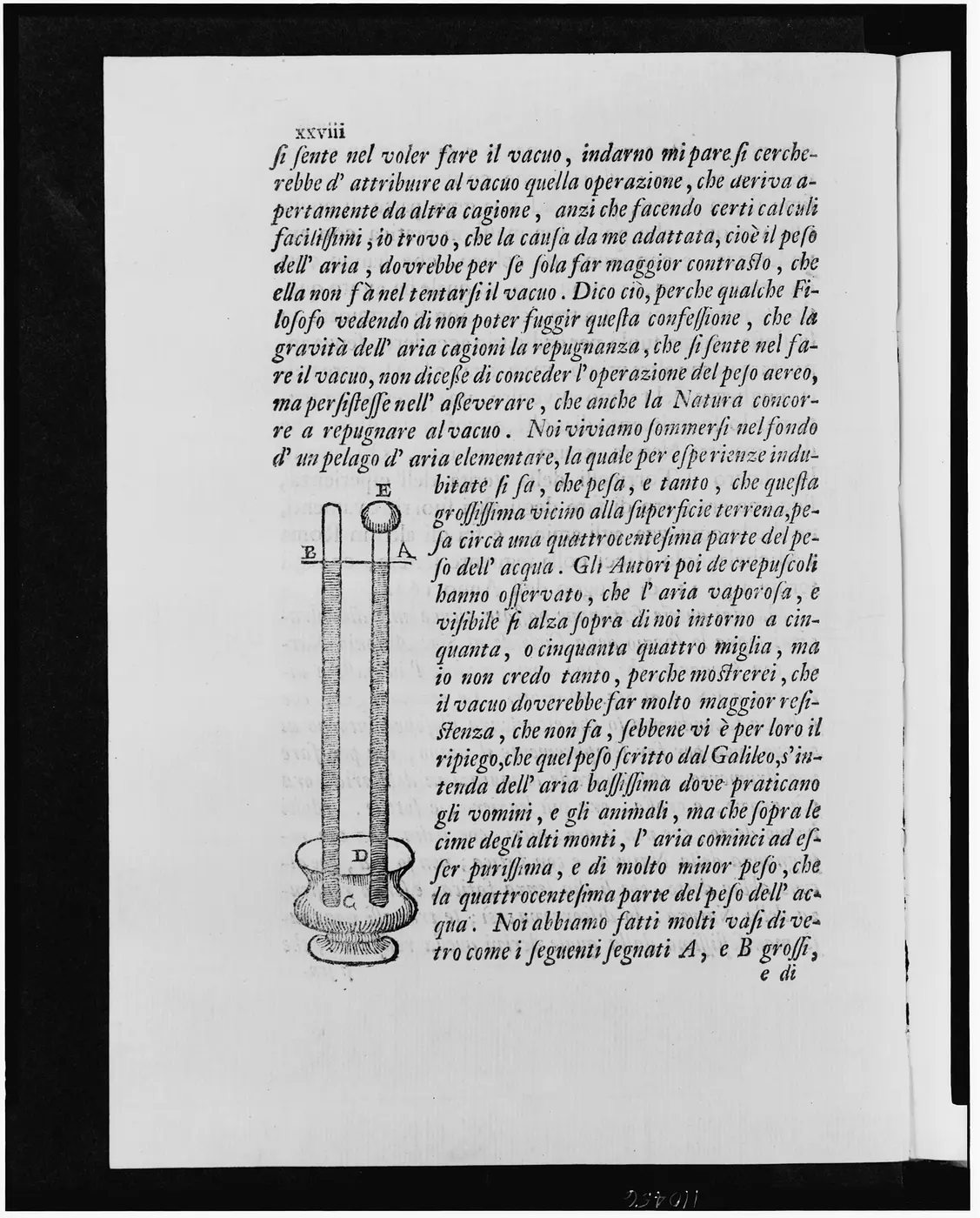

In 1644, Torricelli wrote to a friend:
We live submerged at the bottom of an ocean of the element air.
Climb a mountain, and the air gets lighter
If air has weight, then the higher you go, the less air there is above you, and the less it should press down. The French philosopher and mathematician Blaise Pascal set out to test this idea.
Because Pascal was in poor health, his brother-in-law Florin Périer went in his place. On September 19, 1648, Périer carried the same kind of mercury tube Torricelli had used up the Puy de Dôme, a mountain in central France about 1,460 meters (4,790 feet) high. At the summit, the mercury column stood a little more than 8 centimeters (about 3 inches) lower than at the foot of the mountain. It was confirmed that the weight of the air decreases the higher you go. The “hectopascal,” the unit of air pressure you hear in weather forecasts, is named after Pascal.
Sixteen horses couldn’t pull them apart
The man who showed off the force of air in a way anyone could understand was Otto von Guericke, who also served as mayor of the German city of Magdeburg.
Guericke built his own vacuum pump for drawing the air out of a container. He fitted together two copper hemispheres about 50 to 60 centimeters across and pumped out the air inside. The two halves, pressed together by the surrounding air, wouldn’t budge. In 1654, in Regensburg, Guericke demonstrated vacuum experiments before the Holy Roman Emperor Ferdinand III. In the famous experiment in which horses were hitched to the hemispheres and made to pull from both sides, it is said that even sixteen horses, eight on each side, struggled to pull them apart. Accounts differ, however, on where the experiment took place and how many horses were used.
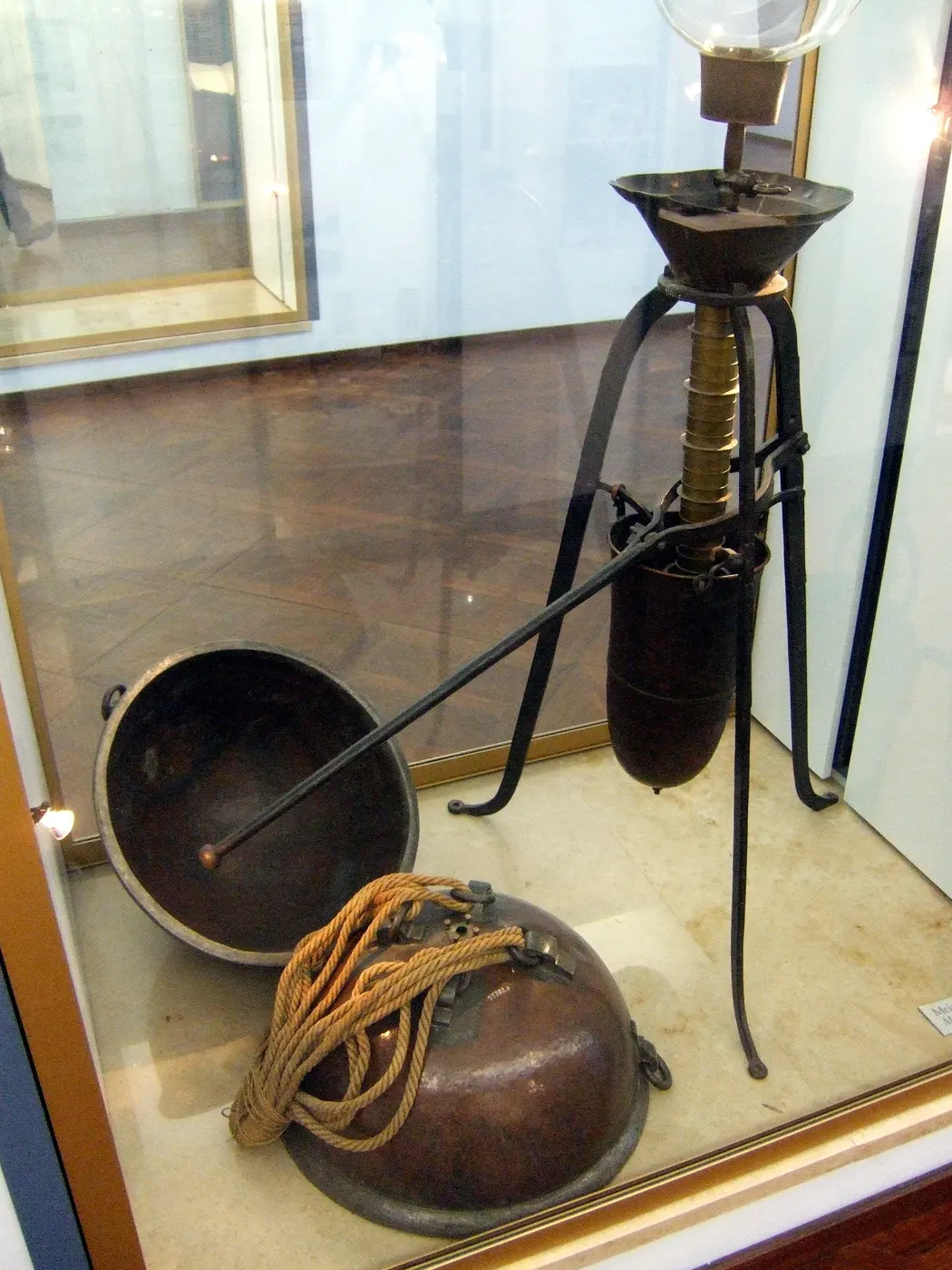

For hemispheres 50 centimeters across, the force of the air pressing them together equals the weight of about two tonnes. Our bodies, too, bear the weight of about one kilogram of air on every square centimeter, or about 100 kilograms on an area the size of your palm. We aren’t crushed because our bodies push back from the inside with equal strength.