Is an atom mostly empty space?
The nucleus is tens of thousands of times smaller than the atom, but an electron “cloud” fills the rest.
“An atom is almost entirely empty space.” You may well have heard this in science class or read it in a popular science book. At the center of the atom sits a small nucleus, with even smaller electrons zipping around it, and between them, so the story goes, lies a vast expanse of nothing.
That’s half right, and half a bit too simple. How much of it is true, and where does it go too far? Let’s take a tour inside the atom, step by step.
A tiny nucleus at the heart of the atom
An atom is roughly a ten-millionth of a millimeter across. The nucleus at its center is far smaller still: its diameter is only about 1/27,000 to 1/60,000 of the atom’s.
To put that in everyday terms, imagine enlarging an atom into a huge ball 100 meters across, about the length of a soccer field. The nucleus would still be only 2 to 4 millimeters wide, like a single sesame seed floating in the middle of that giant ball.
Yet almost all of the atom’s mass is packed into this tiny nucleus. That’s because a single proton, one of the particles that make up the nucleus, is about 1,800 times heavier than an electron. In hydrogen, the simplest atom of all, the nucleus accounts for more than 99.9 percent of the mass.
The alpha particles that bounced back
The existence of the nucleus was revealed by the research team of the physicist Ernest Rutherford at the University of Manchester in England.
In 1909, working under Rutherford, Hans Geiger and a student named Ernest Marsden were firing “alpha particles,” which shoot out of radioactive materials, at thin metal foil. Most of the particles passed straight through. But every so often, one would veer sharply and bounce back. That happened to roughly one particle in 8,000.
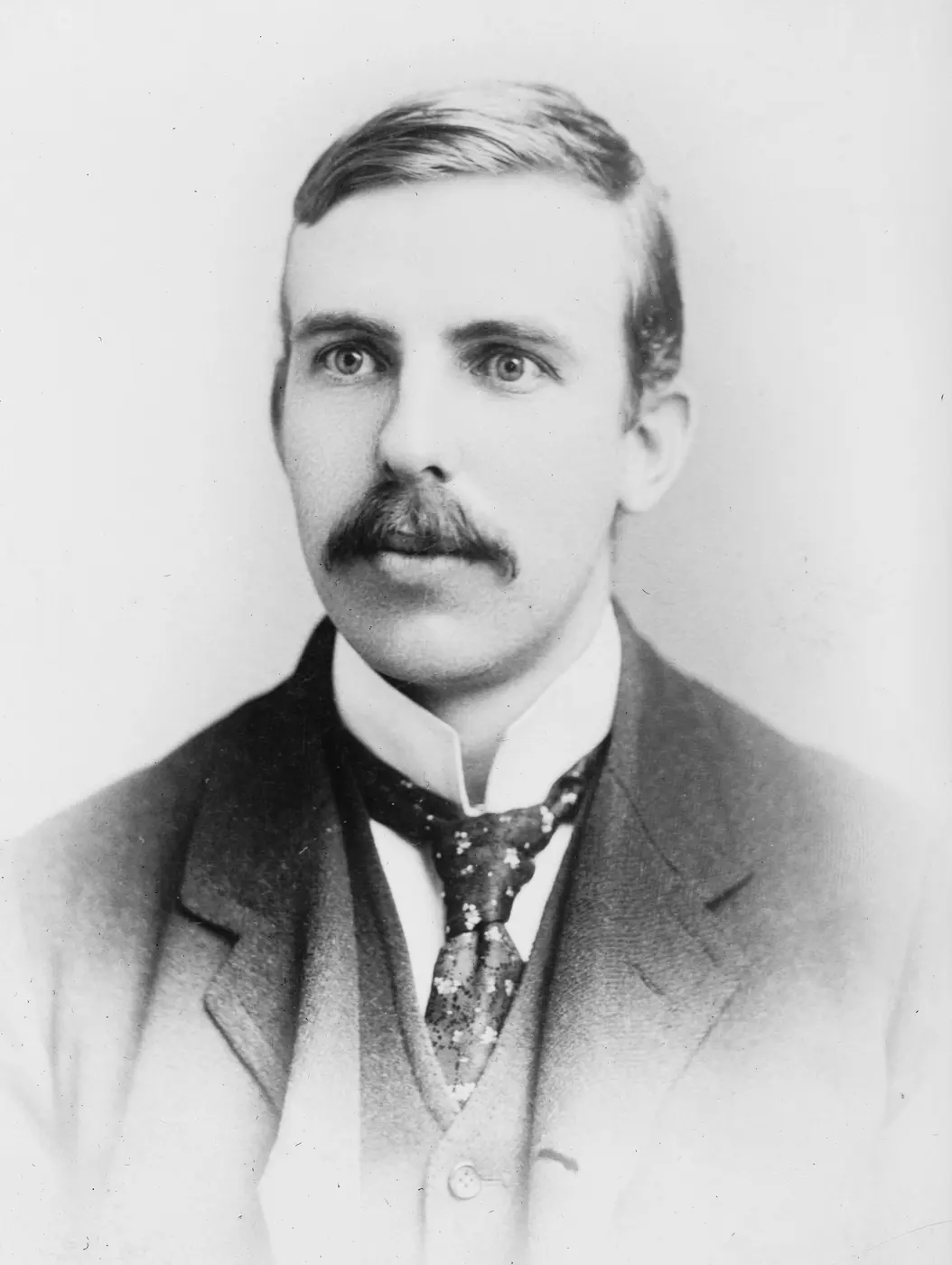

At the time, atoms were thought to be a sort of evenly spread-out positive charge with electrons scattered through it. If that were so, no particle should ever bounce back. Rutherford later compared his astonishment to firing an artillery shell at a piece of tissue paper and having it come back and hit you.
In 1911, Rutherford published the idea that at the center of the atom is a tiny nucleus in which its positive charge and mass are concentrated. Most of the particles had sailed through because most of the atom is far “emptier” than the nucleus.
Electrons aren’t tiny balls
So is the space between the nucleus and the electrons truly nothing at all? This is where the story gets a bit more complicated.
According to quantum mechanics, which developed in the 20th century, an electron is not a little ball orbiting the nucleus like a planet. Where an electron is at any given moment isn’t fixed; all we can know is the probability of finding it in a particular region. That spread of probability is pictured as a cloud wrapped around the nucleus.
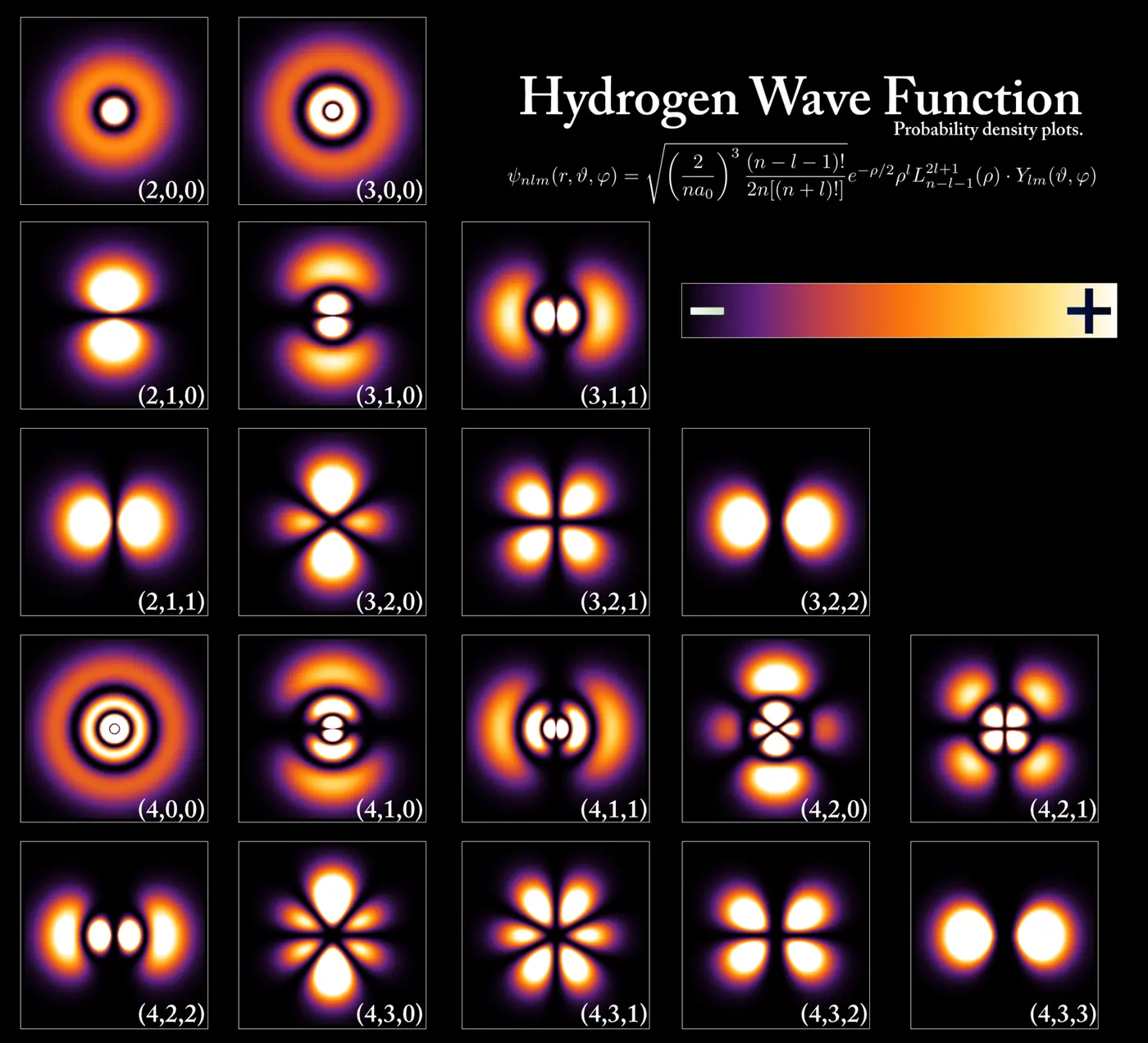

In other words, the inside of an atom isn’t a lonely nucleus and pinpoint electrons with empty space stretching between them. The electron cloud fills the whole atom. Calling it “mostly empty” is one way of looking at it, a view that focuses only on where the mass is concentrated.
Why your hand doesn’t pass through the desk
If atoms are so roomy inside, why doesn’t your hand slip right through a desk?
One reason is that the outer part of every atom is a cloud of electrons, all carrying negative charge. When two atoms come close, their clouds repel each other strongly through electric force. On top of that, quantum mechanics has the Pauli exclusion principle, which says that no two electrons can occupy the same state, and this keeps electron clouds from overlapping. Matter is thought to hold its shape without collapsing thanks to this property.