Does bamboo really flower only once every 120 years?
Two common Japanese bamboos, madake and hachiku, are said to flower about every 120 years. Other species vary.
120years
Have you ever seen a bamboo flower? Bamboo groves are scattered all over Japan, yet people who have actually seen one bloom are rare. There is a good reason for that: madake and hachiku, two of Japan’s most familiar bamboos, are said to flower only about once every 120 years.
That is longer than a human lifetime. And once flowering begins, bamboo across a wide area tends to bloom at roughly the same time—after which entire groves can die off.
A plain flower that looks like rice
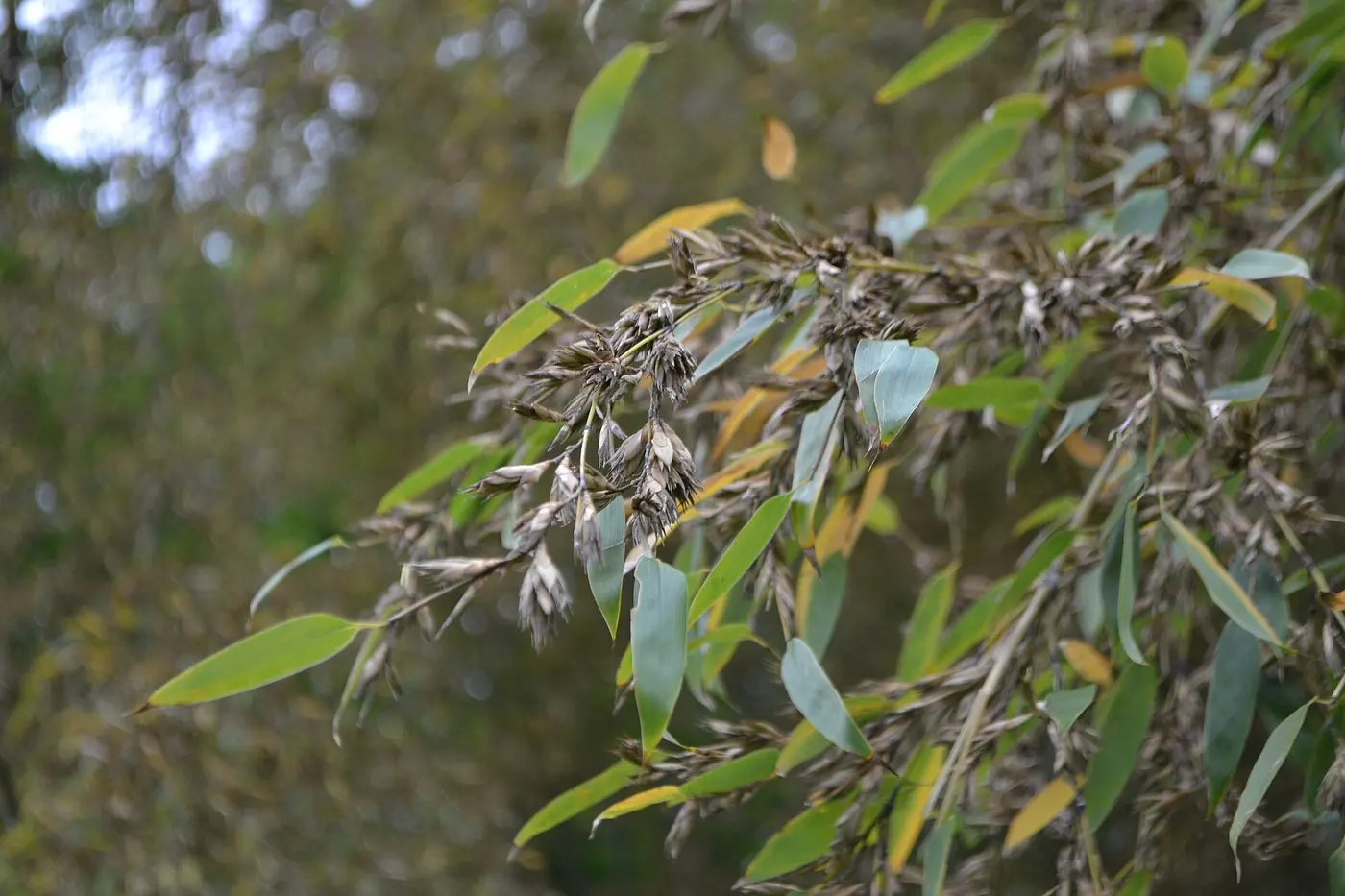
Bamboo is a member of the grass family, the same family as rice and wheat. Its flowers look a lot like theirs, with no colorful petals at all. Small brownish spikes form at the tips of the branches, and thin stamens dangle from them. If no one told you what they were, you might mistake them for dead leaves.

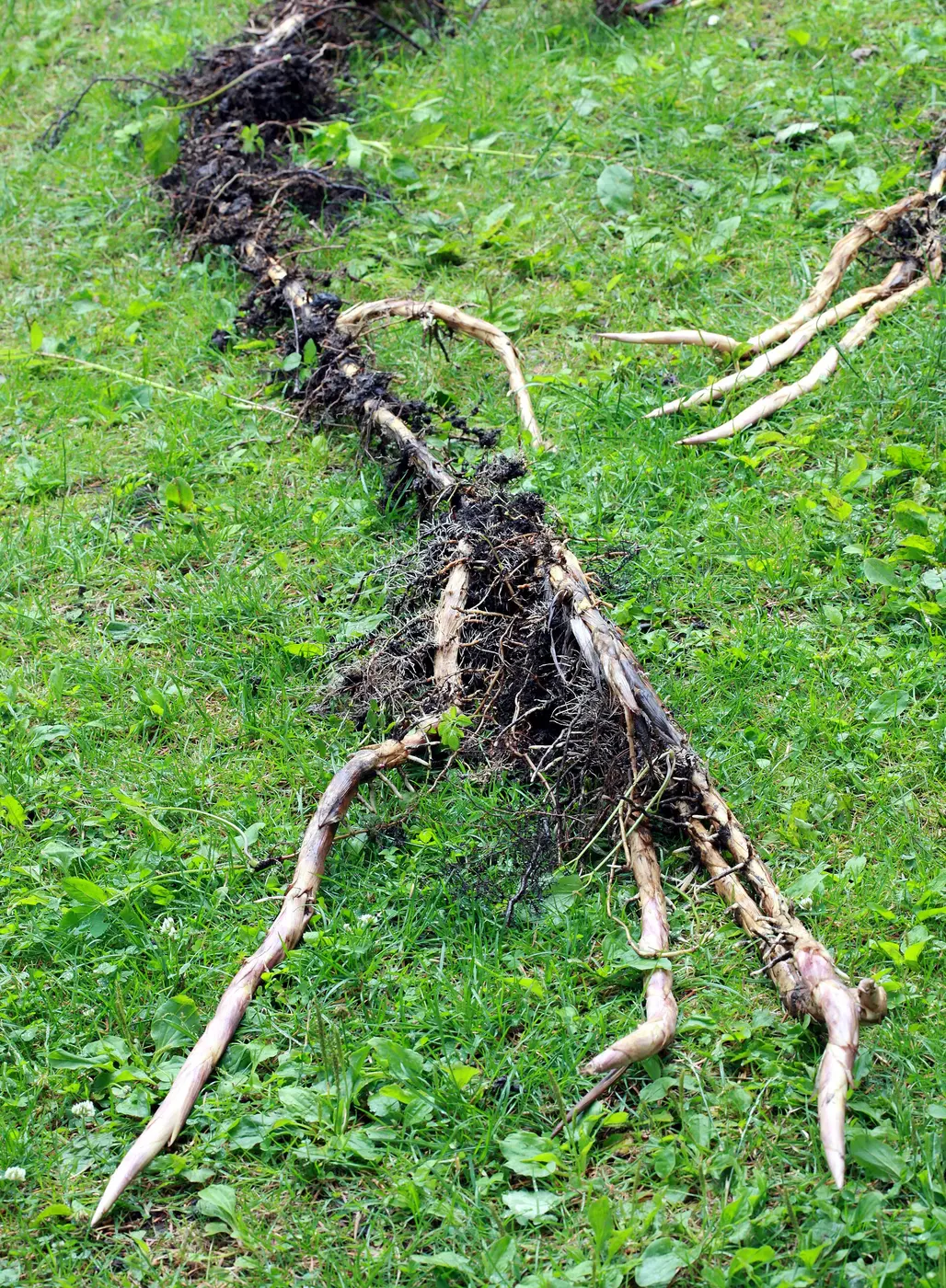
Bamboo can get by with flowering so rarely because it spreads through underground stems called rhizomes. These creep sideways beneath the soil, and every spring new shoots pop up from them one after another, so the grove keeps expanding. Even in a stand of hundreds of stalks, it is not unusual for all of them to be the same connected plant underground.
Where does “120 years” come from?
Nobody has actually sat and watched a bamboo grove for 120 years to confirm the number. It is an estimate pieced together from flowering records preserved in old documents.
For madake, a nationwide mass flowering took place in the 1960s. In 1966 alone, about 40,000 hectares—roughly a third of Japan’s madake groves—are said to have died. The resulting shortage of bamboo is also said to be one of the reasons everyday bamboo goods in Japan gave way to plastic ones. If the 120-year cycle holds, the next madake flowering would come around 2080 to 2090.
For hachiku, the last large-scale flowering was recorded in the early 1900s, in the late Meiji era (1868–1912). Then, from the late 2010s, reports of flowering hachiku began coming in from around the country, just as the 120-year mark was drawing near.
Flowers, but no seeds
Plants normally flower in order to produce seeds, and bamboo’s mass flowering was long thought to serve the same purpose: raising the next generation from seed. Recent studies of hachiku, however, have turned up a surprise.
When Japan’s Forestry and Forest Products Research Institute and its collaborators examined groves that flowered in 2017, they found no mature seeds. A team from Hiroshima University followed a grove in the city of Higashihiroshima for three years starting in 2020; it, too, produced no seeds whatsoever, and every stalk was dead by the summer of 2022. Documents from the Meiji era reportedly also note that no mature hachiku seeds were found.
So how does a grove come back? The Forestry and Forest Products Research Institute observed cases where small bamboo about a meter (3 feet) tall sprouted from surviving rhizomes. In Higashihiroshima, on the other hand, the small bamboo that appeared after flowering did not last long. How bamboo groves regenerate after a mass flowering is still not well understood.

Every species keeps its own clock
People often lump them all together—“bamboo flowers once every 120 years”—but in reality the cycle differs greatly from species to species.
Melocanna baccifera, a bamboo that covers the hills from northeastern India into Myanmar, flowers en masse about every 50 years. Rats feast on the huge crop of fruit and their numbers explode; once the bamboo fruit is gone, they turn on the grain in fields and storehouses. In the Indian state of Mizoram this phenomenon is called mautam, and it brought severe famines in 1959 and again in the late 2000s.
There are several hypotheses for why the cycles are so long and why bamboo across such wide areas blooms all at once. One leading idea is that by producing more seeds at once than predators could ever eat, the plant ensures that some survive the rats and birds. Hachiku, which makes no seeds, is hard to explain with this theory alone, though, and the mystery of bamboo’s internal clock remains unsolved.