Do plants sleep at night?
Some plants fold their leaves or close their flowers at night, a rhythm kept by an internal clock.
1729
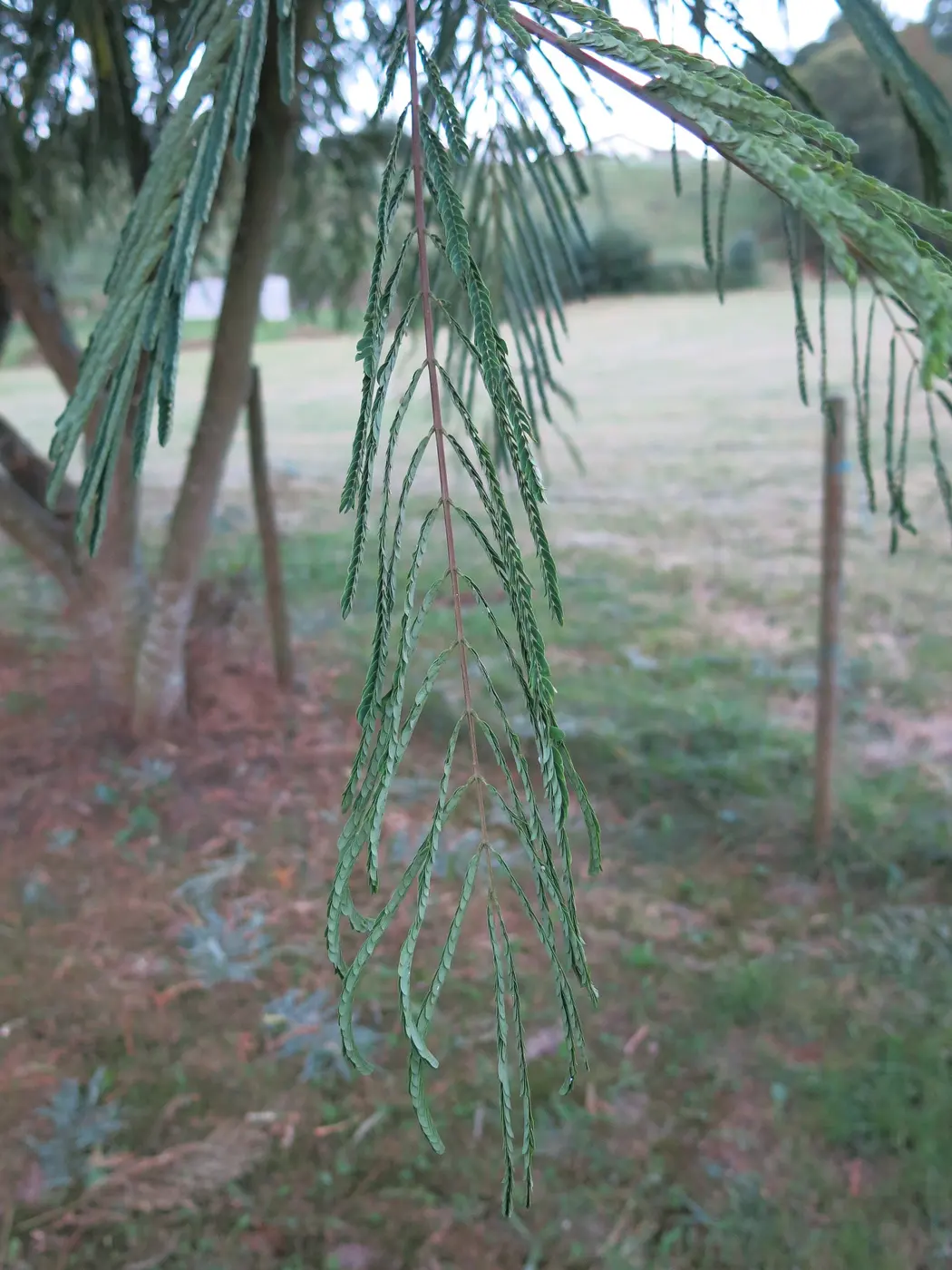
On a summer evening, look up at a silk tree, known in Japan as nemunoki. By day its fine leaves spread out like feathers, but after sunset the tiny leaflets fold neatly together and the leaves droop as if wilted. By the next morning, they have opened up again as though nothing had happened.
The Japanese name nemunoki is said to come from the word for “sleep,” likening this habit to dozing off. Many other plants close their leaves or flowers at night as well, including familiar ones such as white clover, wood sorrel and the sensitive plant, Mimosa pudica. So do plants really sleep at night?
Observations more than 2,000 years old
People noticed plant “sleep” a very long time ago. The oldest recorded observation is credited to Androsthenes of Thasos, who accompanied Alexander the Great on his campaigns in the 4th century BCE. He noted a tree whose leaves closed at night and opened at sunrise. The tree is now thought to have been the tamarind, a member of the legume family.
In the 18th century, the Swedish botanist Carl Linnaeus also took a keen interest in the phenomenon, calling it the “sleep” of plants and studying it. Today, this nightly folding of leaves and flowers is called nyctinasty, or sleep movement.

Leaves that moved in the dark
The study of sleep movements led to an unexpected breakthrough.
In 1729, the French astronomer de Mairan placed a sensitive plant somewhere dark, out of reach of daylight, and watched it. Without light, the plant should have had no way of telling day from night. Yet even in darkness, it kept opening and closing its leaves on a cycle of roughly 24 hours.
This was the first experiment to show that a plant was not merely reacting to the light around it, but had a timekeeping mechanism inside its body. Today we call that mechanism the internal, or biological, clock, and rhythms that repeat about once a day are called circadian rhythms, from the Latin words for “about” and “day.” Internal clocks were later found in animals and humans too, and in 2017 three American scientists who worked out how the clock runs at the level of genes received the Nobel Prize in Physiology or Medicine.
A “joint” at the base of the leaf
So how do the leaves move? In legumes and in the wood sorrel family, the base of each leaf has a slightly swollen section called a pulvinus.
Inside the pulvinus, cells take in and release ions such as potassium, and water flows in and out along with them. When the cells on one side, upper or lower, absorb water and swell while those on the other side shrink, the pulvinus bends like a joint, raising or lowering the leaf. Substances that make leaves close and others that make them open have also been identified, and their activity is thought to be switched by the internal clock.
Why plants fold their leaves at night is still not clear. Charles Darwin thought it was to keep the leaves from losing heat and getting too cold at night. Other explanations include making the plant harder for night-active insects to eat, reducing water loss and protecting pollen.
Linnaeus’s flower clock
Leaves aren’t the only things driven by the internal clock. Some plants open and close their flowers at set times of day.
Linnaeus seized on this, and in his 1751 book Philosophia Botanica he introduced the idea of a “flower clock.” If you planted species that open and close their flowers at different times in a circle like a clock face, you could tell the time just by looking at which flowers were open. In Linnaeus’s records, for example, the dandelion opens around 5 a.m. and closes around 8 or 9 a.m.
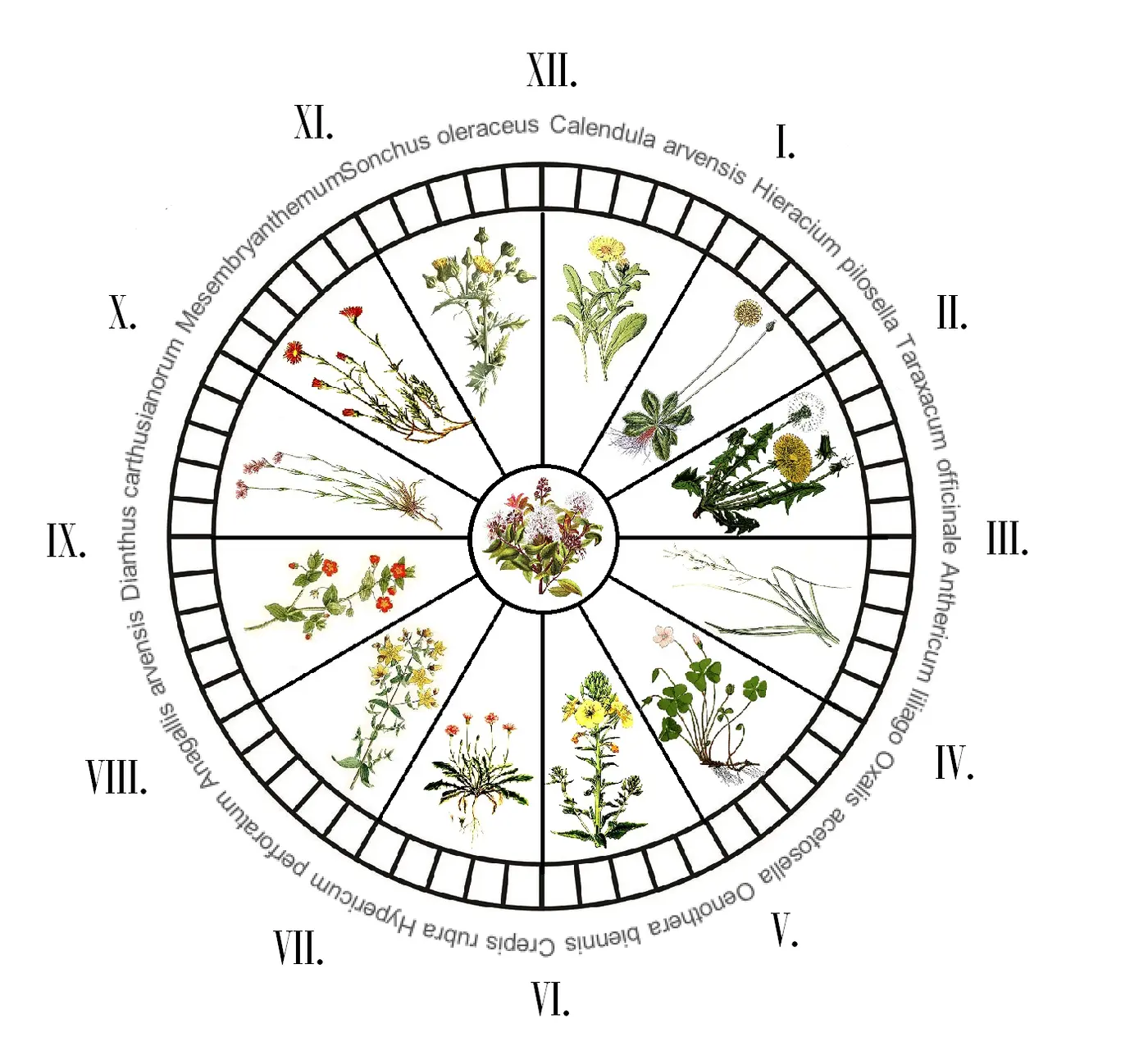

Whether Linnaeus ever actually planted such a garden, however, is unknown. In the 19th century several botanical gardens tried to build flower clocks, with mixed results, because the time a flower opens shifts with the weather, the season and the latitude. The times Linnaeus recorded were themselves based on observations in Uppsala, Sweden, where he lived.