Can seeds thousands of years old still sprout?
Sometimes. In one well-known case, a date palm seed about 2,000 years old sprouted in 2005.
2000years
A seed is a tiny time capsule made by a plant. Inside a tough coat it packs the beginnings of a shoot and a root, plus the food it needs to start growing, and then it waits patiently for the right conditions.
Most seeds lose the ability to sprout within a few years to a few decades. Yet there are a number of records of astonishingly old seeds, pulled from archaeological sites or frozen ground, coming back to life.
A lotus from Japan’s Yayoi period?
On March 30, 1951, an excavation was underway at an archaeological site on a University of Tokyo farm in Kemigawa, in the city of Chiba, east of Tokyo. It was led by Ichirō Ōga, a botanist known for his research on lotuses. That evening, a local junior high school girl found a single lotus seed in a layer of peat about 6 meters (20 feet) below ground. Two more were dug up later, bringing the total to three.
Ōga tried to germinate them, and one of the three sprouted. On July 18 of the following year, 1952, it produced a large pink flower. The plant was named the Ōga lotus, and after the American magazine Life introduced it as “the world’s oldest flower,” it became famous almost overnight.
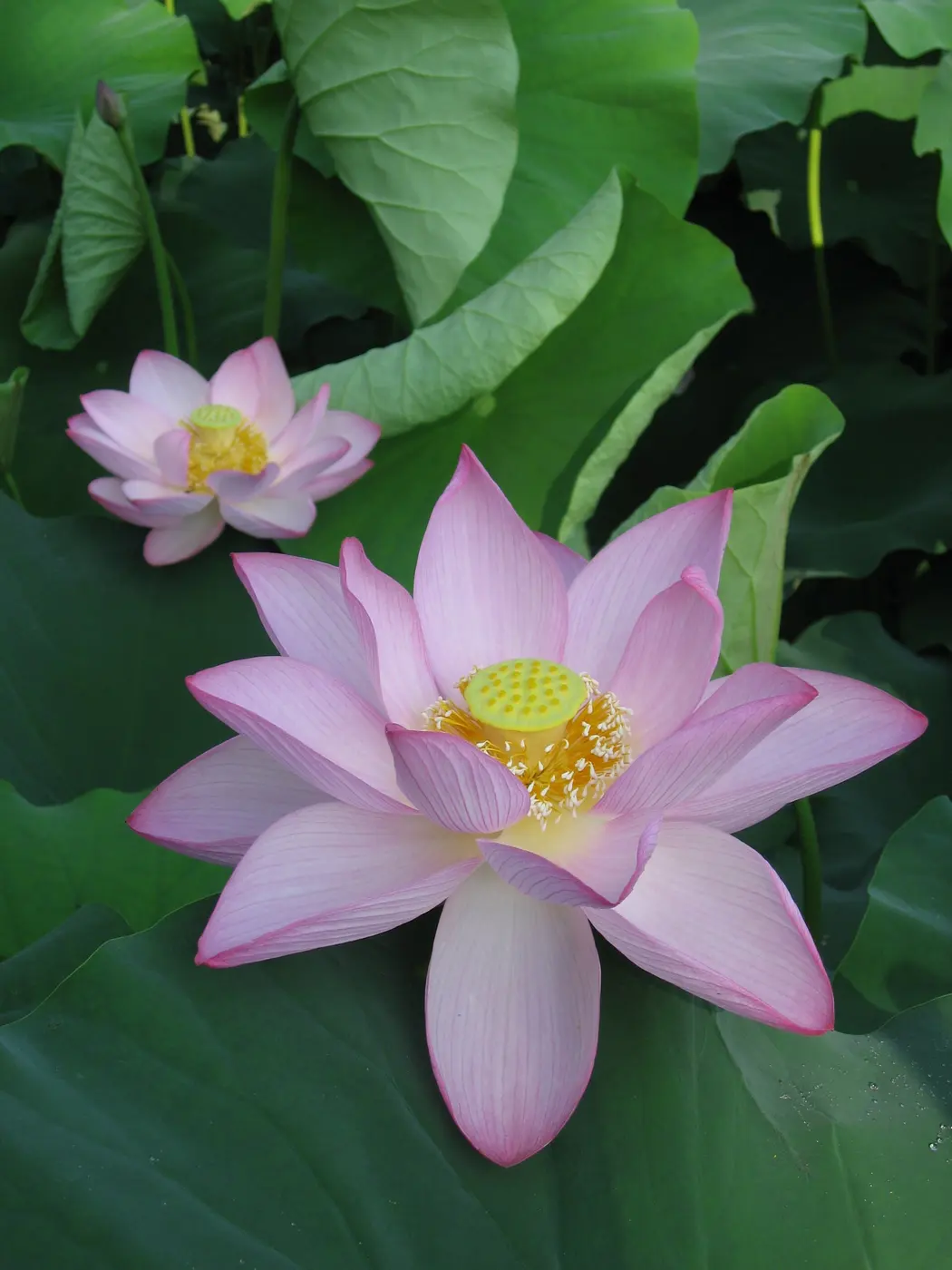

The Ōga lotus’s age, though, comes with a caveat. What the University of Chicago radiocarbon-dated was not the lotus seed itself but a piece of wood from a dugout canoe found in a layer above it. Based on that result, the seed was judged to be at least 2,000 years old, dating to the Yayoi period (traditionally put at around 300 BC to AD 300) or earlier. With the technology of the time, dating required many seeds, so the three precious ones could not be measured. Strictly speaking, the age of the seed itself has never been confirmed.
A dated 2,000-year-old date palm
A clearer case comes from Israel. In the 1960s, excavations at Masada, an ancient fortress overlooking the Dead Sea, turned up date palm seeds stored in a jar. Radiocarbon dating put them between 155 BC and AD 64.
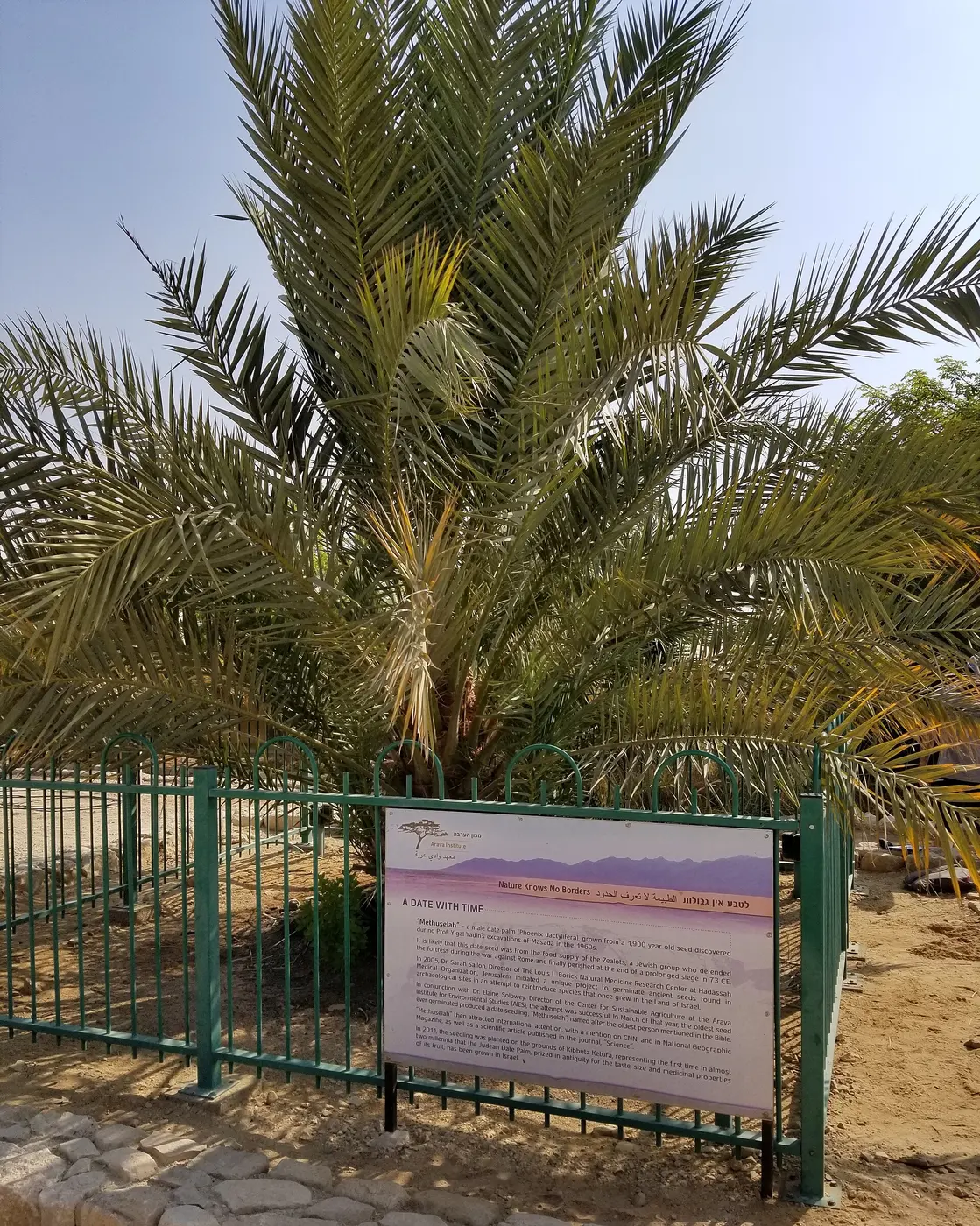
In 2005, botanist Elaine Solowey and her colleagues soaked some of these seeds in water, treated them with plant hormones and planted them, and one of them sprouted. The seedling was named Methuselah, after the long-lived figure in the Old Testament.
Methuselah turned out to be a male tree, and it eventually grew big enough to produce pollen. Since then, other ancient seeds from other sites have sprouted too, and since 2021 a female tree named Hannah, pollinated with Methuselah’s pollen, has been bearing fruit. After some 2,000 years, “ancient dates” have been harvested once again.

Flowers from 32,000-year-old fruit
There is an even more staggering record. In 2012, a research team from the Russian Academy of Sciences announced that it had found fruit of Silene stenophylla, a member of the carnation family, in the burrows of ancient ground squirrels buried 20 to 40 meters (about 65 to 130 feet) deep in the permafrost along the Kolyma River in northeastern Siberia. Radiocarbon dating put their age at about 31,800 years.
In this case, however, the seeds themselves did not sprout. The team took tissue from unripe fruit and used a technique called tissue culture to grow entire plants. The plants produced white flowers, and their seeds went on to grow the next generation.
It is a captivating result, but others have pointed out that the seeds did not naturally “germinate,” and that the work needs confirmation by other researchers. Stories of ancient seeds call for caution. In 1967, seeds from lemming burrows in Canada’s Yukon were reported to have sprouted as “10,000-year-old” seeds, but when the seeds themselves were radiocarbon-dated in 2009, they turned out to be very recent.