What is the coldest place in the universe?
The coldest known natural place is the Boomerang Nebula, at about 1 kelvin (about −272°C).
−272°C
Most of us picture space as cold. So where is the coldest place of all? Not the far side of the Moon, and not Pluto, far out from the Sun. The answer is a nebula about 5,000 light-years from Earth, in the direction of the constellation Centaurus.
It is called the Boomerang Nebula. The gas drifting there is estimated to be about 1 kelvin, or roughly −272°C (−458°F). That is just one degree above absolute zero, the temperature below which, in theory, nothing can go.
Space has a “minimum temperature” of −270°C
To appreciate how remarkable the Boomerang Nebula is, you first need to know the temperature of space itself.
In the empty stretches of the universe, far from stars and planets, temperature is set by a faint glow called the cosmic microwave background. It is leftover light from the hot early universe, stretched and cooled as the universe expanded. It was discovered by accident in 1965, when Arno Penzias and Robert Wilson of Bell Labs in the United States picked it up as a mysterious radio hiss coming from every direction.
This light fills every corner of the universe, and its temperature is about 2.7 kelvin, or around −270°C. Ordinarily, nothing in space can get colder than this, because everything is constantly bathed in that light and warmed by it. Think of it as the universe’s minimum temperature, a floor that ordinary matter cannot sink below.
The one place colder than the background
The gas in the Boomerang Nebula, however, is colder still, and that is what makes it so extraordinary.
The nebula was named in 1980 by astronomers observing it with a telescope in Australia, who thought it looked like a boomerang. Then in 1995, Raghvendra Sahai and Lars-Åke Nyman studied its gas in detail with a radio telescope in Chile and found that it was colder than the background radiation. In 1997, they published the result in a paper titled “The Boomerang Nebula: The Coldest Region of the Universe?”
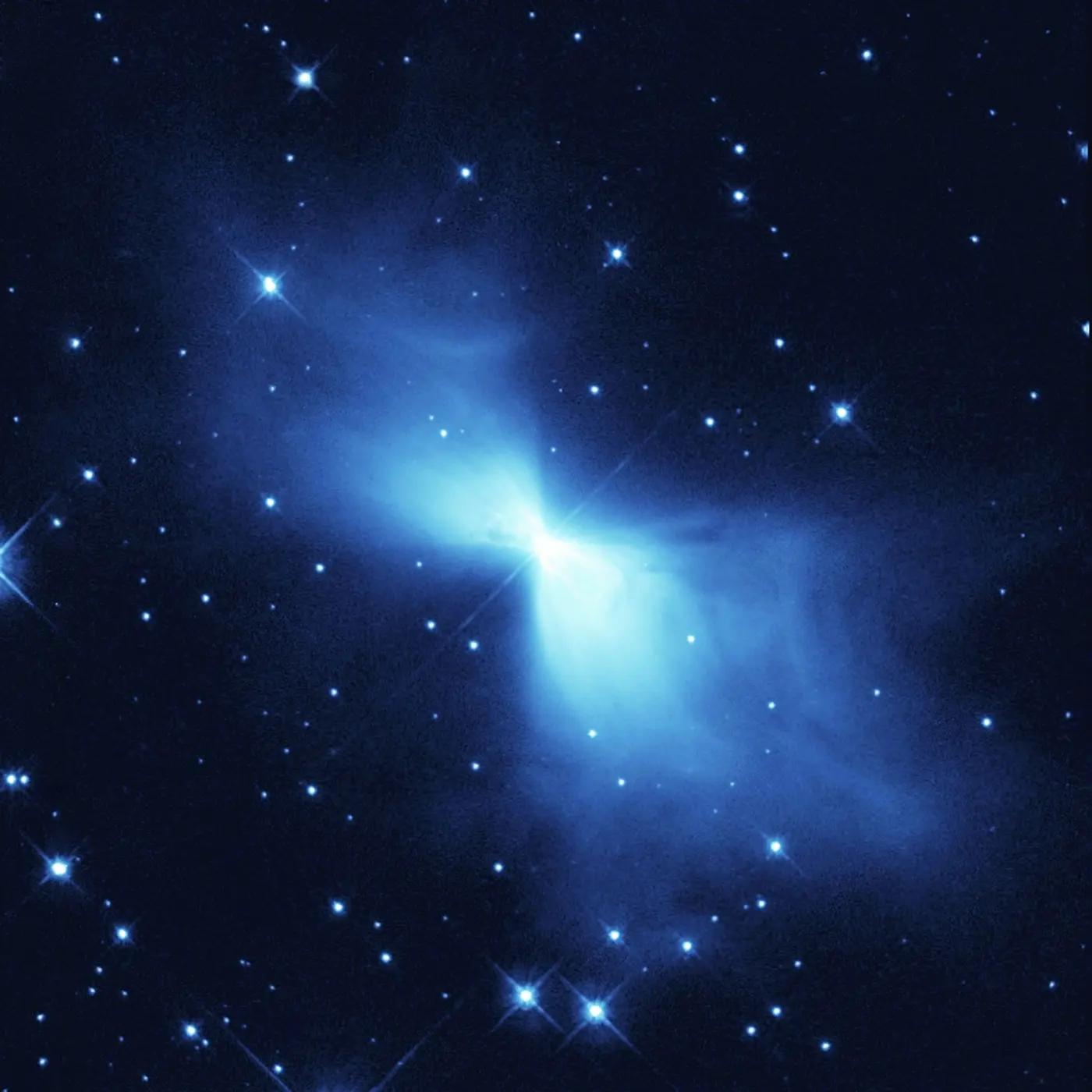

It was the first time a natural object had been found that was colder than the background radiation. Since then, the Boomerang Nebula has held its place as the coldest known spot in nature.
Gas that expands fast gets cold
How can it get that cold? The key is the old star at the nebula’s heart.
Nearing the end of its life, this star is blasting out its outer gas at tremendous speed: a little over 160 kilometers per second, or more than 500,000 kilometers per hour. As that gas rushes out into space, it cools rapidly.
When a gas expands suddenly, too fast to take in heat from its surroundings, its temperature drops. It is the same reason clouds form on Earth: rising air expands and cools. The Boomerang Nebula’s gas is thought to spread so quickly that it cools faster than the background radiation can warm it back up.
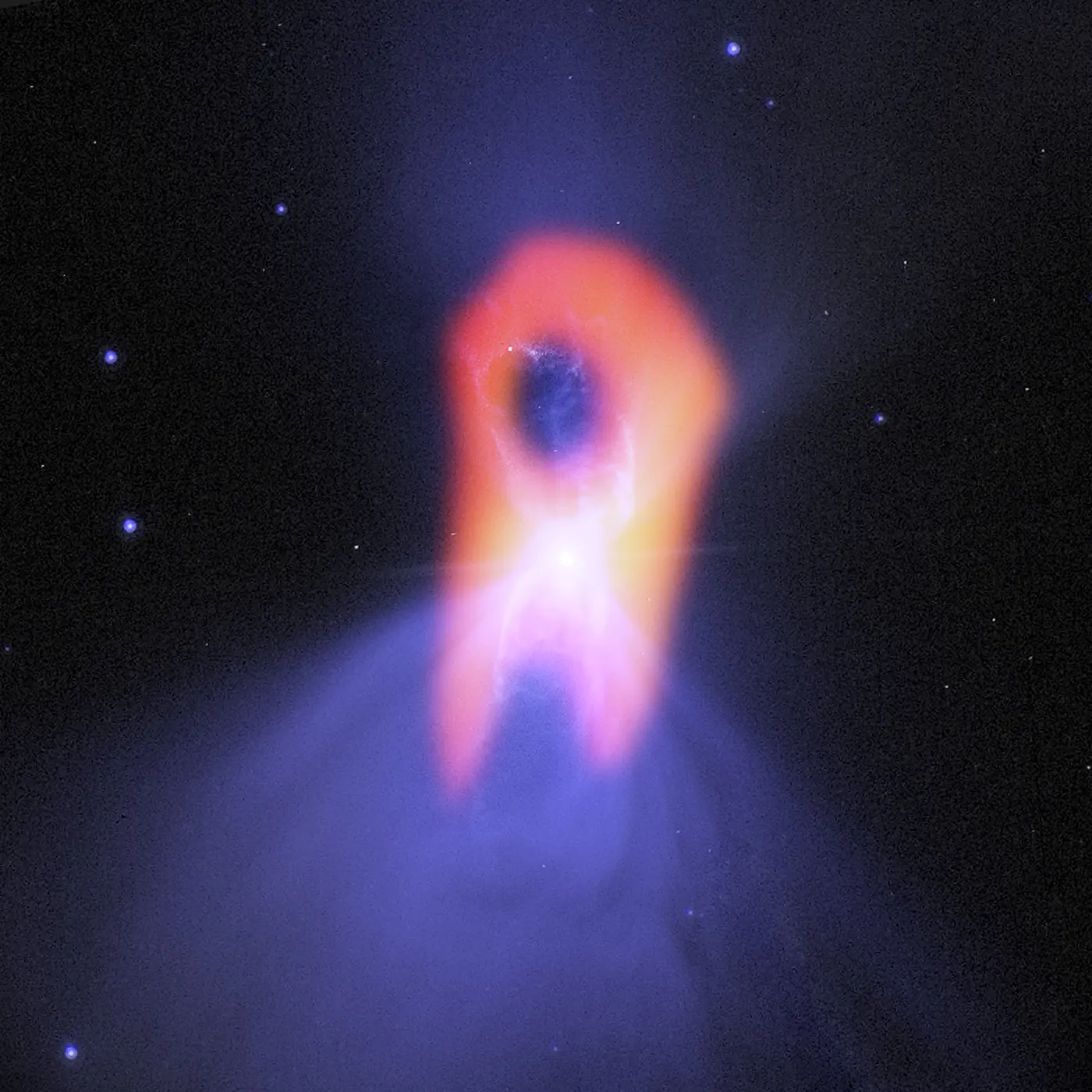

In 2013, observations with ALMA, an array of radio telescopes in Chile, revealed the nebula in finer detail. Apart from the hourglass shape seen in visible light, the cold gas turned out to stretch into a longer, narrower form. One theory holds that the central star went through a violent episode, perhaps swallowing a companion star, and that this triggered such an extreme outflow.
Our laboratories go even colder
The title “coldest place in the universe” does come with one footnote, though: it applies only to nature.
In the laboratory, humans have created temperatures far lower than the Boomerang Nebula’s. In 2018, NASA’s Cold Atom Lab aboard the International Space Station chilled a gas of atoms to about one ten-millionth of a degree above absolute zero. In Bremen, Germany, an experiment that let atoms fall freely inside a tall drop tower reportedly reached just 38 trillionths of a degree above absolute zero.
Our own solar system also has natural deep-freezes. Near the Moon’s poles are craters that never see sunlight, and temperatures of about −249°C have been measured on their floors. Even so, that is about ten times the temperature of the background radiation, nowhere near as cold as the Boomerang Nebula.