What is the strongest muscle in the human body?
It depends on how you measure “strong.” For force relative to size, the jaw’s masseter is often named.
442kg
The human body is said to have more than 600 muscles. Which of them is the strongest? Some people, picturing an arm-wrestling match, will say the arm muscles. Others will say the thighs, which hold up the weight of the whole body.
But this question has no single right answer, because the word “strong” covers a lot of ground. Do we mean the greatest force a muscle can produce in an instant? The force it can produce relative to its size? Or the stamina to keep working without rest? Every time you change the yardstick, a different muscle takes the title. So let’s go through the contenders one by one.
Strongest for its size: the jaw
The muscle most often named as “the strongest” is the masseter, found on each side of the jaw. Clench your teeth and feel the muscle that bulges hard toward the back of your cheek; that is it.
The masseter itself would fit in the palm of your hand, but it is positioned where leverage works in its favor, so it can deliver a large force to the teeth for its size. Pound for pound, few muscles can match it. According to the Library of Congress in the United States, when the jaw muscles work together, they can close the front teeth with a force of about 25 kilograms (55 pounds) and the back teeth with about 90 kilograms (200 pounds).
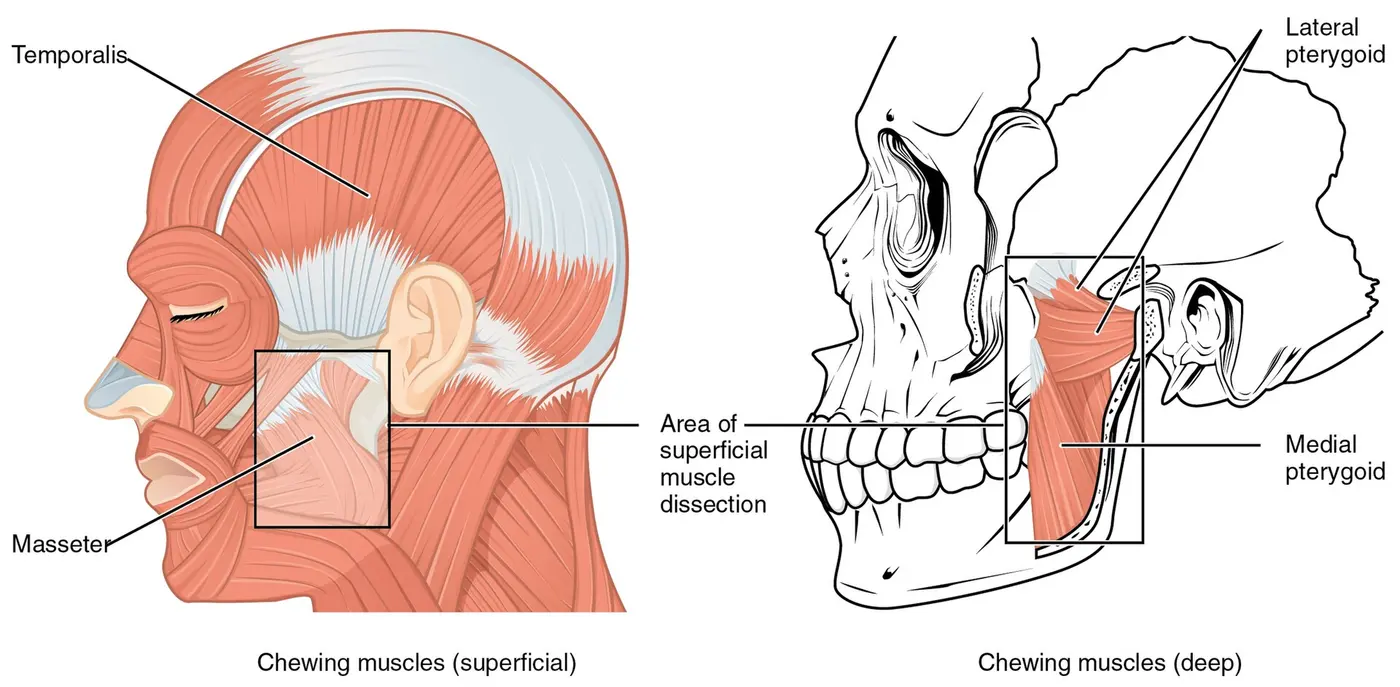

Guinness World Records lists a human bite force of 442 kilograms (975 pounds), measured at the University of Florida in 1986. That is, of course, an exceptional case, several times what an ordinary person can manage. In connection with the record, Guinness also describes the masseter as “the strongest muscle.”
Biggest in the buttocks, best puller in the calf
Change the yardstick to the total force a muscle can produce, and the spotlight moves to the lower body.
The largest muscle in the body is the gluteus maximus, which shapes the buttocks. It does the work of lifting your body weight when you stand up, climb stairs or run, and it is thought to be closely tied to the fact that humans came to stand and walk on two legs. In that sense, it is a very human muscle.
The Library of Congress also names the soleus, deep in the calf, as the muscle that can pull with the greatest force. The soleus is a flat muscle hidden beneath the gastrocnemius, the muscle at the surface of the calf. Every time you walk, run or stand on tiptoe, it takes your body weight and holds firm. It is an unglamorous muscle, rarely shown off, but it works hard every day.
For tireless strength, the heart
If the yardstick is the ability to keep working without tiring, nothing beats the heart.
The heart is made of a special kind of muscle called cardiac muscle, and it keeps contracting without rest, even while we sleep. It beats about 100,000 times a day, which works out to more than 2 billion beats over a lifetime. Each individual beat can’t match the force of a bite, but no other muscle can rival the endurance of one that works nonstop from birth to the very last moment of life.
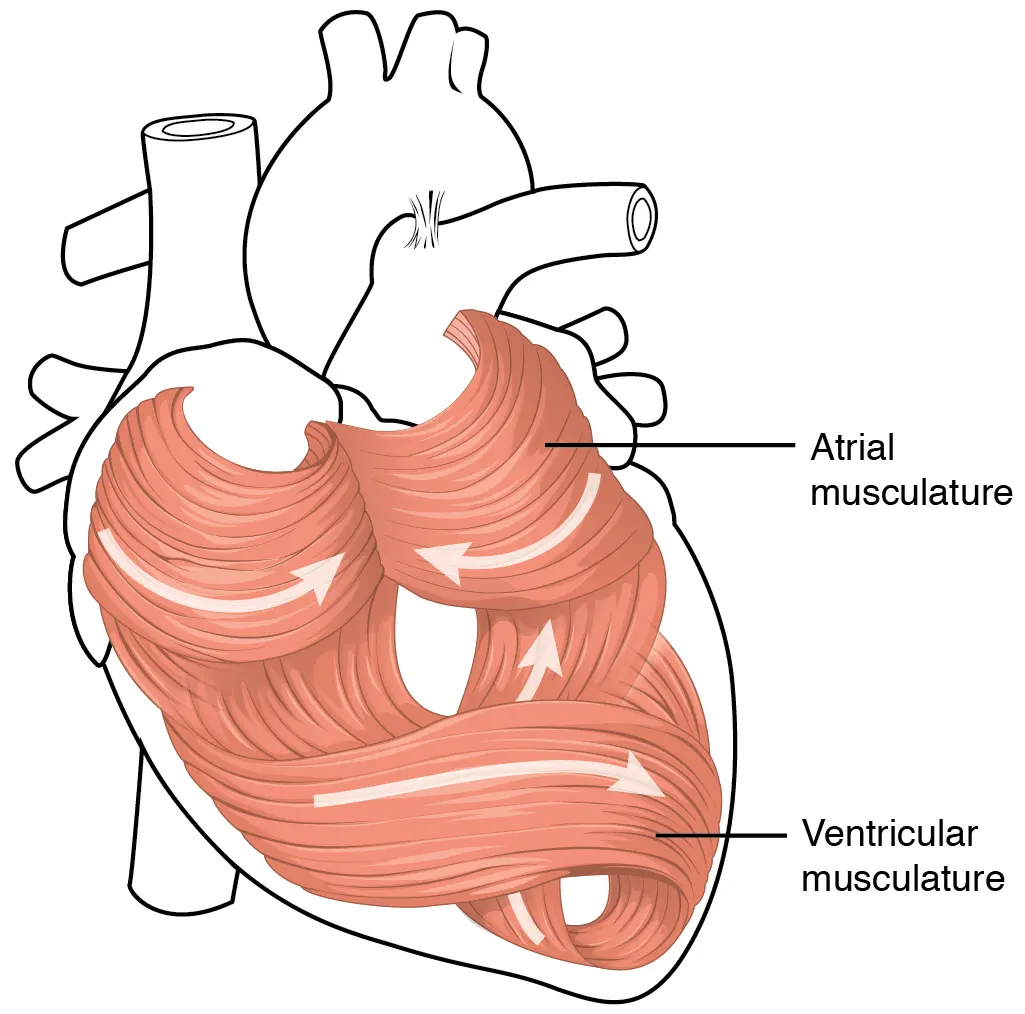

Other muscles sometimes put forward as “strongest,” each in its own sense, include the eye muscles, which keep making tiny adjustments even while you read a book, and the muscles of the uterus, which contract with great force during childbirth.
Is the tongue really the strongest?
One claim you sometimes come across online is that “the tongue is the strongest muscle in the body.” But that isn’t accurate, for a couple of reasons.
For a start, the tongue isn’t a single muscle at all; it is made up of several muscles working together. That is why it can change shape so remarkably nimbly for swallowing and speaking. The tongue is certainly a hard worker, making small movements all day long, but in terms of sheer force, it comes nowhere near the masseter or the gluteus maximus.
If someone asks, “What’s the strongest muscle?”, perhaps the most accurate reply is to ask back, “What kind of strength do you mean?”