Where did the stones of Stonehenge come from?
The giant stones came from woods about 25 km north, the smaller ones from Wales some 225 km away, and the Altar Stone from far-off Scotland.
750km
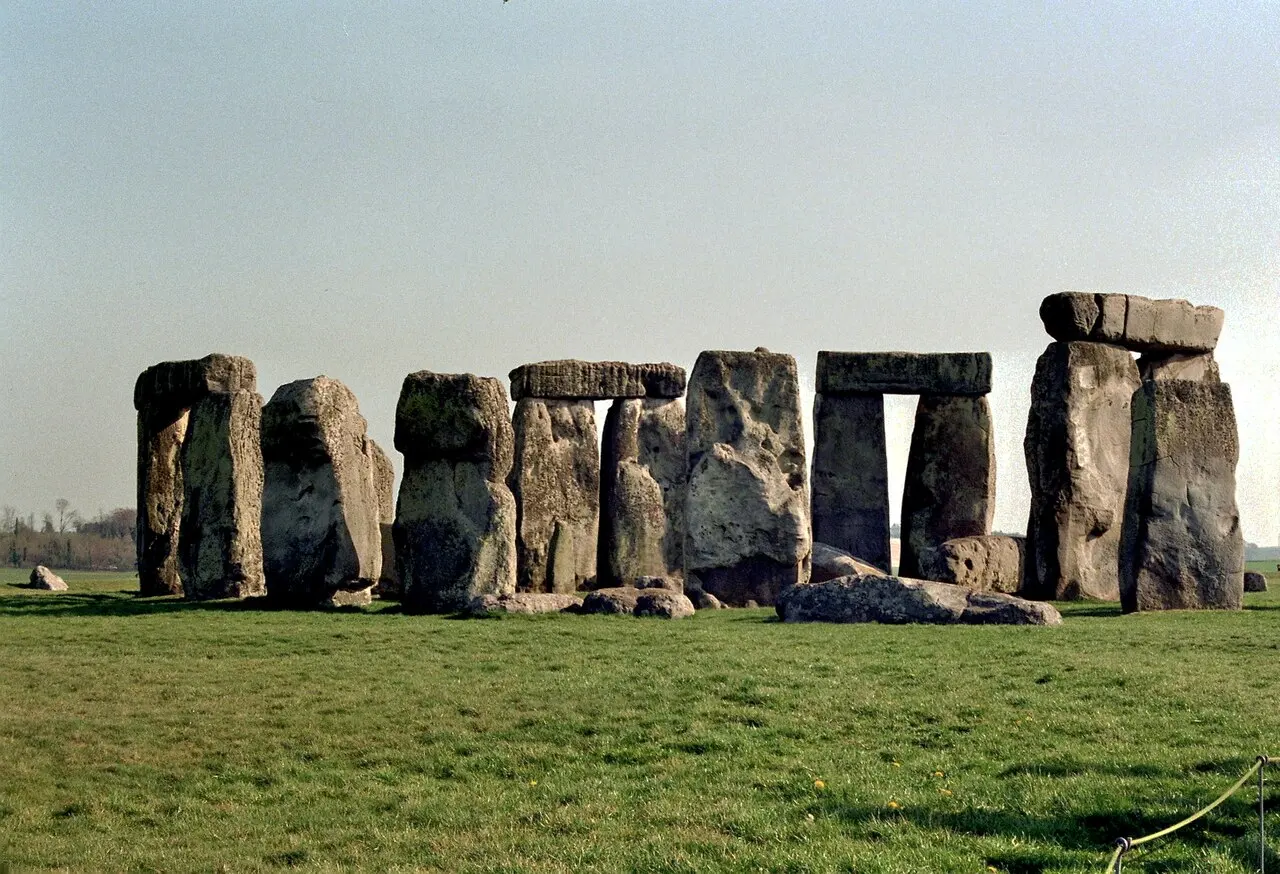
On the grassland of Salisbury Plain in southern England, enormous stones stand in a ring. This is Stonehenge. Its first circular bank and ditch were dug around 3000 BCE, and the great stones at its center were raised around 2500 BCE.
Stonehenge is built mainly from two kinds of stone: huge blocks of a sandstone called sarsen, up to 7 meters (23 feet) tall, and smaller stones known as bluestones. The surrounding plain has almost none of either. So where did the stones come from?
In legend, a wizard moved them
In medieval Britain, people said Stonehenge had been built by the wizard Merlin. In his History of the Kings of Britain, written around 1136, Geoffrey of Monmouth tells how Merlin used his magic to bring the stones over from Ireland. The tale was widely believed until around the 16th century.
It is, of course, a legend. The real origins of the stones have come to light only in recent decades, as techniques for analyzing the makeup of rocks have improved.
The giant stones came from woods 25 km north
Start with the sarsens. On average they weigh more than 20 tonnes, and the heaviest is around 30 tonnes. In 2020, a team led by Professor David Nash of the University of Brighton showed that 50 of the 52 surviving sarsens share almost the same chemical makeup.
The key was a cylindrical core drilled out of one of the stones during repair work in the 1950s. Robert Phillips, who had worked on the repairs, had taken it home, and in 2019 it was returned from the United States. Comparing the core with sarsens from across southern Britain pointed to an area called West Woods, about 25 kilometers (15 miles) north of Stonehenge, as the most likely source.

The smaller stones came from the hills of Wales
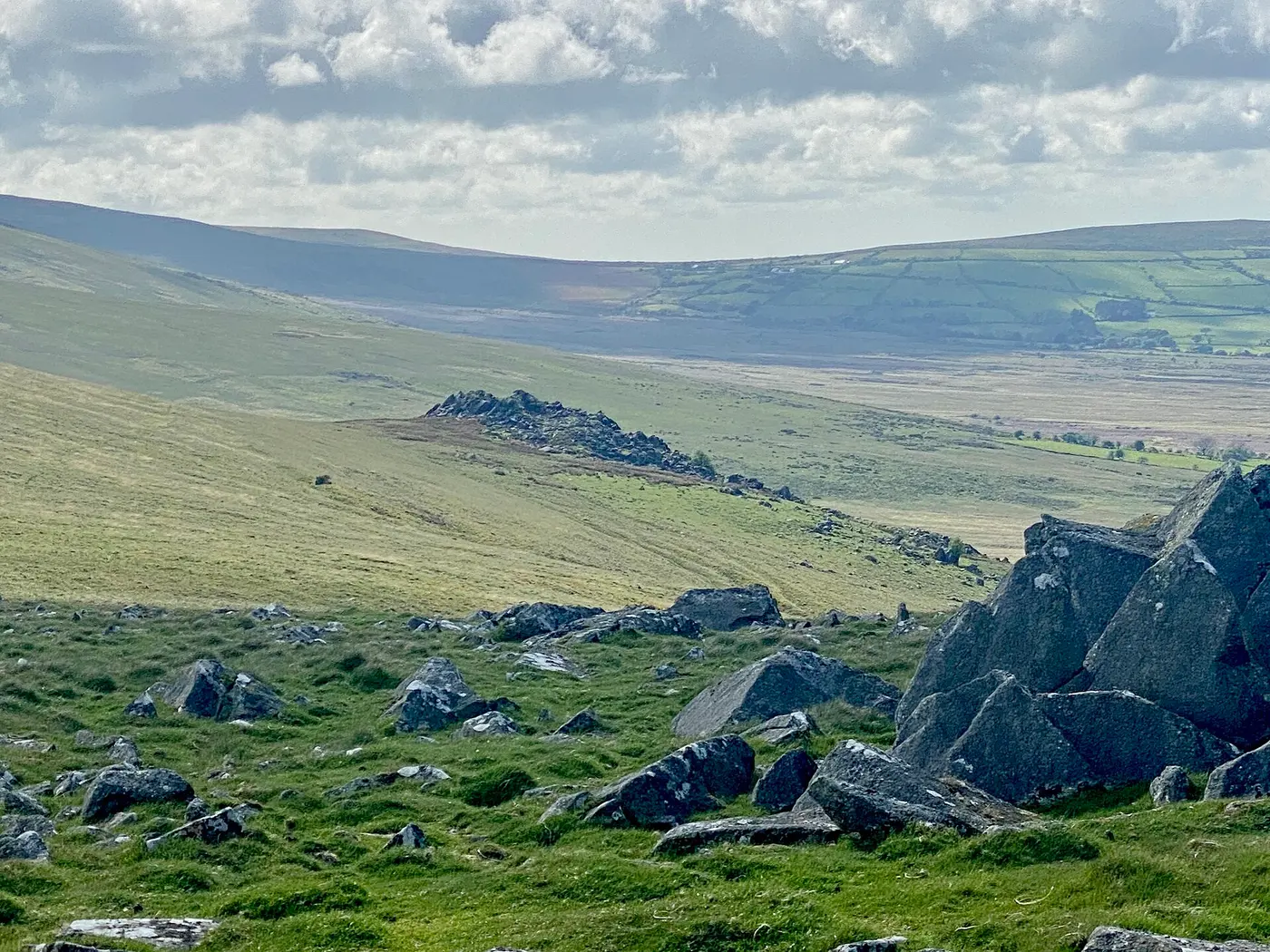
Each bluestone weighs about 2 to 5 tonnes. Smaller than the sarsens, perhaps, but hardly something you could carry by hand. These are known to have come from the Preseli Hills in west Wales, about 225 kilometers (140 miles) from Stonehenge in a straight line.
Professor Mike Parker Pearson of University College London and his colleagues found the remains of quarries at two rocky outcrops in the Preseli Hills, Carn Goedog and Craig Rhos-y-felin. The quarry workers seem to have driven wedges into natural cracks to prise off pillar-shaped stones, and the quarrying is thought to date to around 3000 BCE. Parker Pearson points out that every other Neolithic monument in Europe was built of megaliths brought from no more than 10 miles (16 kilometers) away. Stonehenge’s long-distance haulage is exceptional.

The Altar Stone came from distant Scotland
An even more surprising discovery was announced in 2024. The Altar Stone, lying at the heart of Stonehenge, is a sandstone slab about 5 meters (16 feet) long and weighing about 6 tonnes. It had long been thought to come from Wales. But when a research team including Curtin University in Australia analyzed the ages and chemistry of mineral grains in the stone, they matched rocks in northeast Scotland.
That is a distance of at least 750 kilometers (470 miles). Hauling it over land would have been extremely difficult, so the stone may have been carried by boat along the coast of Britain. The researchers say it shows that Neolithic Britain had the social organization to pull off a feat on this scale.
Twenty-five kilometers, 225 kilometers, then 750. People who had not yet learned to write gathered stones from all over the island to build a single monument.