Did people in Edo-period Japan bathe every day?
Most homes had no bath, but many people are said to have gone to the neighborhood bathhouse almost daily.
600bathhouses
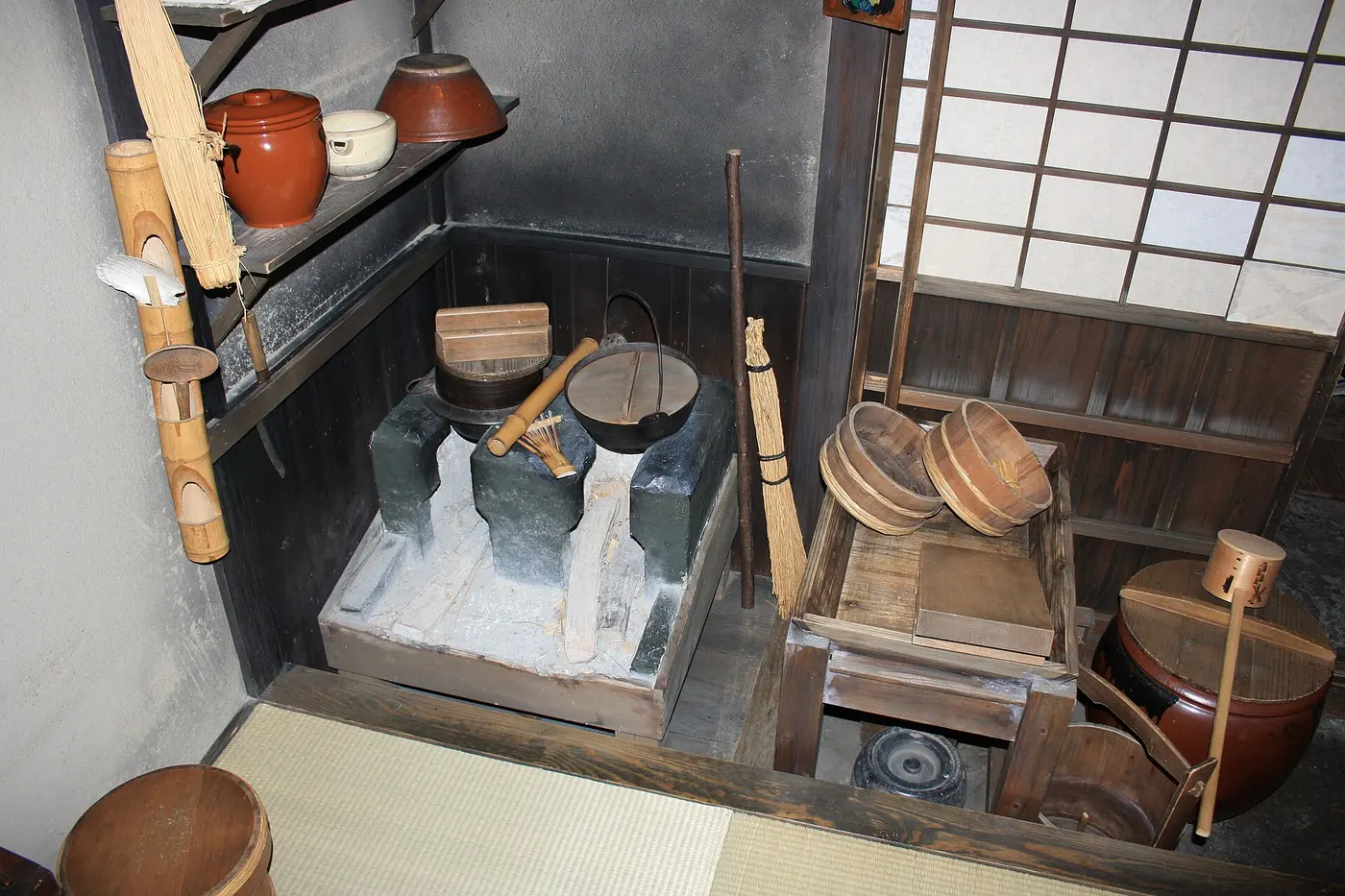
The nagaya, the long row houses where ordinary townspeople lived in Edo (today’s Tokyo) during the Edo period (1603–1868), had a cooking stove and a water jar but no bath. Does that mean people went unwashed? Quite the opposite. They are said to have visited the yuya, the public bathhouses dotted around town that Japanese today call sentō, almost every day.
Because there was no bath at home, there was a big bath down the street. That was how bathing worked in Edo.
The first bathhouse, a year after Ieyasu arrived
Edo’s first bathhouse is said to have been opened in 1591, the year after Tokugawa Ieyasu moved into Edo, by a man named Ise Yoichi. It stood at the foot of the Zenigame Bridge, near today’s Tokyo Station. Admission was a single Eiraku coin.
Early bathhouses, though, are said to have been closer to steam baths, warming the body with vapor, than to the deep tubs of hot water we picture today. Gradually, soaking in a tub caught on, and the number of bathhouses grew with the city. Records from the early 19th century count a little over 500 of them, and by the end of the Edo period there were said to be about 600. In a great city thought to have held around a million people, every neighborhood had one or two close at hand.
The zakuroguchi, beyond the steam
An Edo bathhouse was laid out much like a sentō today: a changing room, a washing area, then the tub. The big difference was the zakuroguchi, or “pomegranate entrance,” between the washing area and the tub. It was a doorway with its lintel hung very low, so bathers had to stoop to pass through to the tub on the other side.
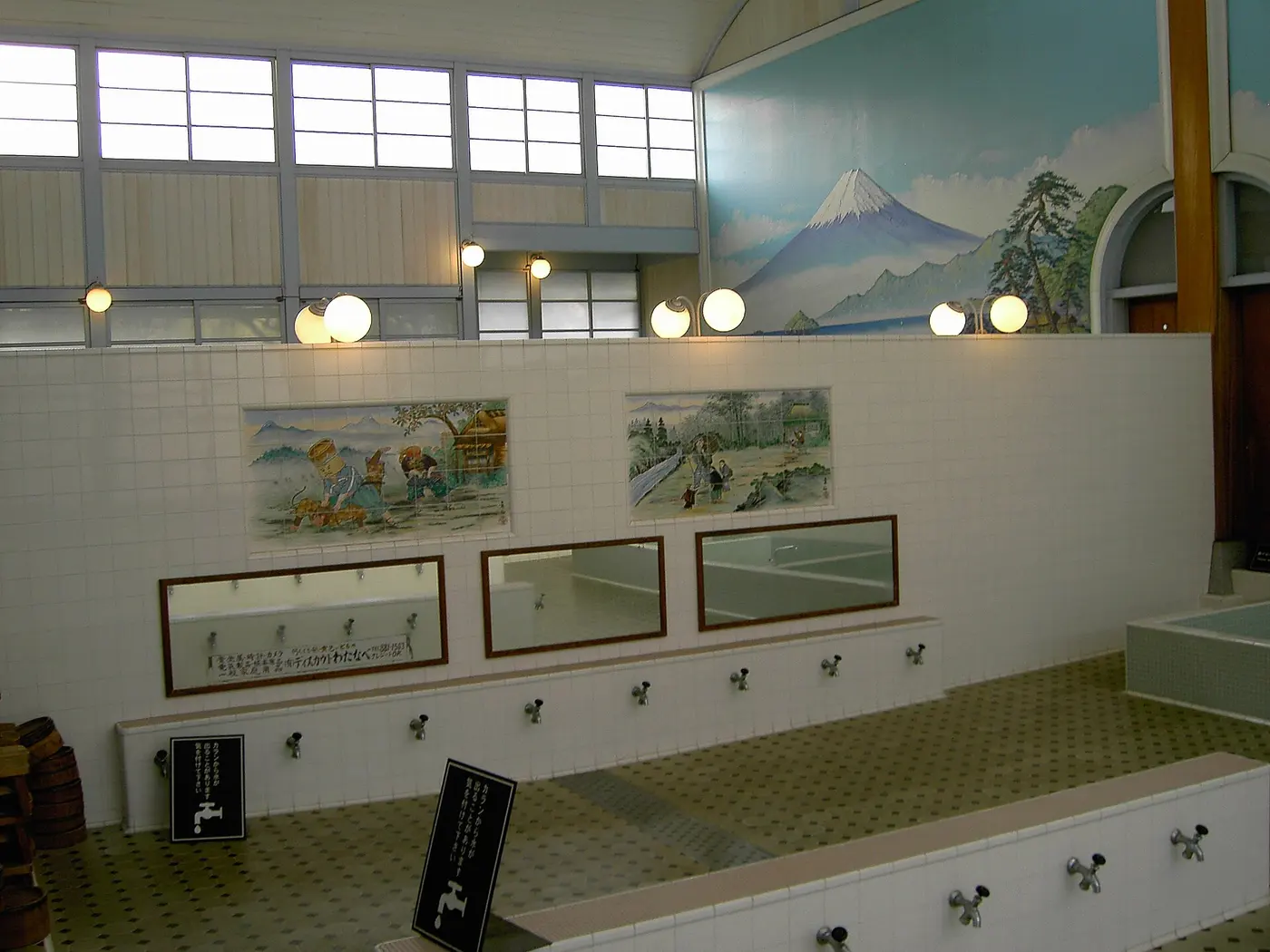

The low entrance kept the steam and heat from escaping. Inside it was dim and thick with vapor, and it is said that etiquette called for announcing yourself to those already in the water with a phrase like “Hiemono de gozai” (roughly, “Pardon my cold body”) before climbing in. Upstairs on the men’s side was a tatami room where bathers could relax after their soak, drinking tea or playing go and shogi, making it a social spot as well.
The price was modest. According to the Morisada Mankō, a record of customs in the late Edo period, admission in 1841 was 8 mon for an adult. It went up as prices rose near the end of the period, but it remained something ordinary people could afford as part of daily life.
Reasons to go every day
One reason Edo’s residents flocked to the bathhouse was the dust. Edo was a windy city, and dirt blew up from its unpaved streets. A body caked in sweat and grime did not feel clean without a soak. Heading to the bathhouse after work is said to have been a daily habit for craftsmen.
There was even a monthly pass, called a hagaki, for people who bathed several times a day. That alone shows how often some customers came.
Homes with their own bath, on the other hand, were very rare. Water and firewood were precious, and heating a large amount of water was hard work. On top of that, Edo was a city of great fires, and the use of fire was watched closely. Private baths are thought to have been limited to wealthy merchant households, samurai families, and the like.

Mixed bathing and the bans
In Edo bathhouses, it was not unusual for men and women to share the same tub, a practice called irikomi-yu. Worried about public morals, the shogunate banned mixed bathing in 1791 as part of the Kansei Reforms led by Matsudaira Sadanobu. After Sadanobu fell from power, though, some bathhouses went back to their old ways, and the practice was cracked down on again during the Tenpō Reforms. The Morisada Mankō notes that most bathhouses in Edo separated men and women, while mixed bathing was common in the Kamigata region around Kyoto and Osaka.
Mixed bathing nonetheless survived in the provinces. Members of Commodore Perry’s fleet, which arrived in Japan near the end of the Edo period, were startled to see men and women bathing together at a public bath in Shimoda, and their official account of the expedition questioned Japanese modesty. In the Meiji era, enforcement tightened with an eye on Western opinion, and in 1872 Tokyo Prefecture banned mixed bathing. Mixed-bathing sentō gradually disappeared.