Why does your stomach growl?
Gas and liquid slosh as the gut squeezes its contents along, loudest during strong contractions when empty.
A hushed meeting room, or a classroom in the middle of an exam. That, of course, is exactly when your stomach decides to let out a long, loud growl. Almost everyone knows the feeling of turning red at that moment.
The sound seems like a simple announcement that you’re hungry. Yet your stomach can rumble even when you don’t feel hungry at all. Trace the noise back to its source, and you arrive at a remarkably regular rhythm that your stomach and intestines keep up around the clock.
The sound of gas and liquid on the move
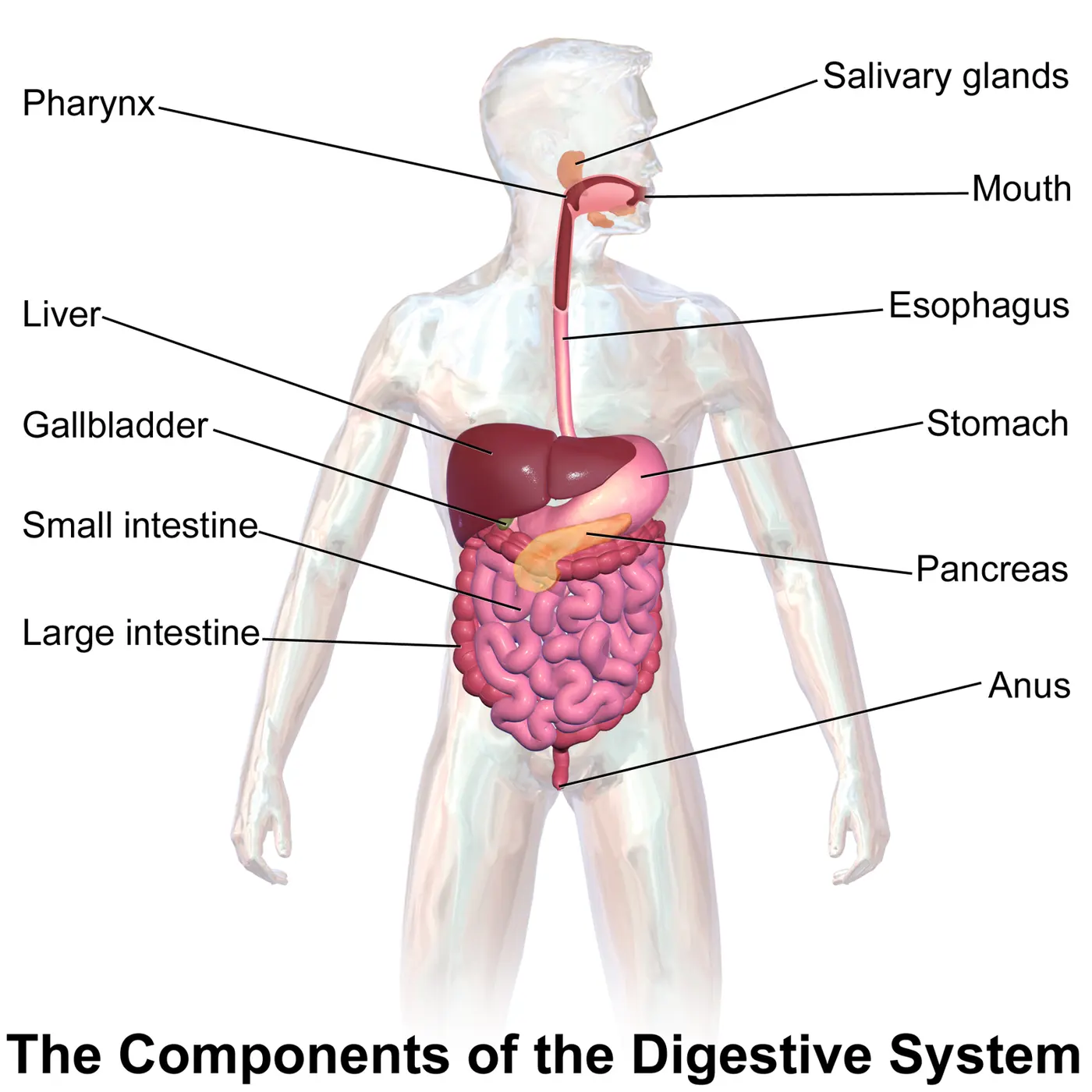
Your digestive tract is one long tube running from mouth to anus. Its walls are lined with muscle that squeezes and relaxes in waves, pushing the contents steadily onward. This motion is called peristalsis.
The tube holds more than food and digestive juices. It also carries air you swallowed while eating or talking, along with gas produced during digestion. When the muscles squeeze, gas and liquid get churned together and forced through narrow spots, and the resulting vibrations carry all the way to the outside of your belly.
Doctors call the noise borborygmus (in Japanese, fukumei). The word comes from ancient Greek and is thought to be onomatopoeic, an imitation of the rumbling itself. And the stomach isn’t the only culprit: a good share of the sounds is said to come from the small intestine.

The cleaning wave that comes when you’re empty
So why is the rumbling so often loudest when you’re hungry? The key is a pattern of movement called the migrating motor complex (MMC).
Once a meal has left the stomach and the digestive tract has finished its work, a quiet period follows. Then, from the stomach down into the small intestine, gentle movements gradually build in strength until, for a few minutes, a wave of very powerful contractions sweeps through. While you aren’t eating, this cycle repeats roughly every hour and a half to four hours.
These strong waves are thought to sweep leftover, undigested material onward toward the large intestine, which has earned them the nickname “the housekeeper of the gut.” The pattern was discovered in 1969 at the Mayo Clinic in the United States by a researcher studying fasting dogs, who also reported that the activity stops once the animal eats.
An empty gut holds a lot of gas and liquid in place of food. When a powerful wave rushes through, the sound carries well, or so the explanation goes.
The trigger for these strong contractions is thought to be a hormone called motilin, released by the small intestine. A research group led by Zen Itoh at Gunma University in Japan studied the link between motilin and the fasting contractions in dogs in detail. They also found that the antibiotic erythromycin moves the gut in much the same way motilin does. That discovery later led, through joint work with Satoshi Ōmura’s team at the Kitasato Institute, to compounds that keep the gut-stimulating effect but lose the antibacterial one.
Being hungry and growling are two different things
Some researchers set out to test the link between stomach movement and hunger on their own bodies. In 1912, the American physiologist Walter Cannon worked with a graduate student named Washburn. Washburn swallowed a balloon attached to a thin rubber tube, and his stomach contractions were recorded. The moments when his stomach squeezed hard lined up closely with the moments he reported feeling hunger pangs.


The experiment helped spread the idea that hunger comes from stomach contractions. But in 1931, doctors reported a patient whose entire stomach had been surgically removed, yet who still often felt hungry. Studies like this led to the view that hunger isn’t decided by the stomach’s movements alone. Today it is thought that the brain pulls together information such as blood sugar levels and various hormones. In 1999, Masayasu Kojima, Kenji Kangawa and colleagues at Japan’s National Cardiovascular Center Research Institute discovered a hormone released by the stomach called ghrelin. It was later found to rise when you are hungry and to boost appetite.
The MMC wave, on the other hand, keeps time not by your mood but by how long it has been since your last meal. So even if you don’t feel hungry, your stomach can rumble a few hours after eating. The reason you’re more likely to growl after a fizzy drink, or after wolfing down a meal and swallowing plenty of air, is simply that there is more gas in the tube. A growling stomach, it seems, is a sign that your gut is hard at work.