How much does hair grow in a day?
Scalp hair grows roughly 0.3–0.4 mm a day, or about 1 cm a month.
0.3–0.4mm
About a month after a haircut, something shifts. Your bangs start brushing your eyes, and the back of your neck starts to feel shaggy. You never notice it in the mirror day to day, and then one morning you think, “That’s grown.”
No wonder: the amount hair grows in a single day is tiny. But behind that small number lies a surprisingly orderly bit of biology, and some unexpected uses for it.
Growing a third of a millimeter a day
Scalp hair is generally said to grow about 0.3 to 0.4 millimeters a day. That works out to roughly 1 centimeter a month, or around 12 centimeters (nearly 5 inches) a year. Fingernails are said to grow about 3 millimeters a month, so hair grows about three times as fast. Of course, there are individual differences, and the rate also varies with age, health and other factors.
A single hair barely moves, but the average head is said to have about 100,000 hairs. If each of those 100,000 hairs grew 0.35 millimeters a day, the combined length would come to 35 meters (about 115 feet) every day. Your head is like a little factory, busily turning out hair around the clock, whether you notice it or not.
Only the root grows
So which part of a hair is doing the growing? The answer is the root. In the skin is a pouch-like structure called a hair follicle, and in its swollen base, cells called hair matrix cells divide rapidly. Newly made cells get pushed up from below, fill with keratin, a tough protein, and become hair.
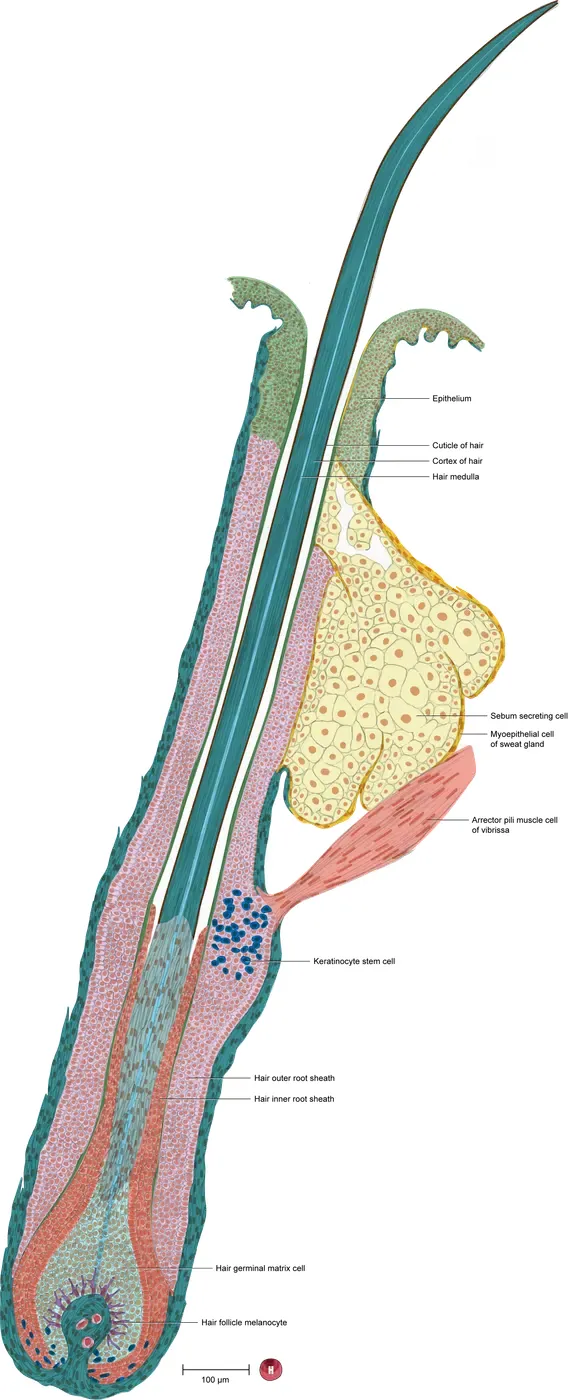

The part sticking out of the skin is no longer made of living cells. That is why a haircut doesn’t hurt. For the same reason, the old idea that shaving makes hair grow back thicker is considered baseless. The blunt cut end may look thicker, and stubble growing back may be more noticeable, but the hair being made at the root hasn’t changed. The razor only ever touches the dead part.
Every hair has a lifespan
Hair does not keep growing forever, though it may seem that way between haircuts. Each individual hair goes through a hair growth cycle, alternating between growing and resting.
For scalp hair, the growing phase, called anagen, is said to last about two to six years. It is followed by a transition phase of a few weeks (catagen), then a resting phase of a few months (telogen), after which the hair falls out naturally. A new hair then grows from the same follicle. Most scalp hairs are in the growing phase at any given moment, and losing around 50 to 100 hairs a day is said to be perfectly normal.
How long your hair can get depends on the length of this growing phase. The longer it lasts, the longer your hair can grow. Eyebrows and eyelashes, by contrast, have a short growing phase of only a few months, so even if you leave them alone, they fall out and are replaced at a fixed length. That is why your eyebrows never grow down to your shoulders, the way the hair on your head can.
Hair as the body’s diary
That pace of about 1 centimeter a month turns out to be useful in unexpected ways. As a hair is formed, it takes in traces of substances that were circulating in the body at the time. Cut a hair into 1-centimeter segments from the root and analyze each one, and you can roughly trace which substances entered the body and when.
This method is used in forensic testing, for example to check a person’s history of drug use. In archaeology, too, researchers have analyzed hair from people of long ago to learn what they ate in the months before they died.
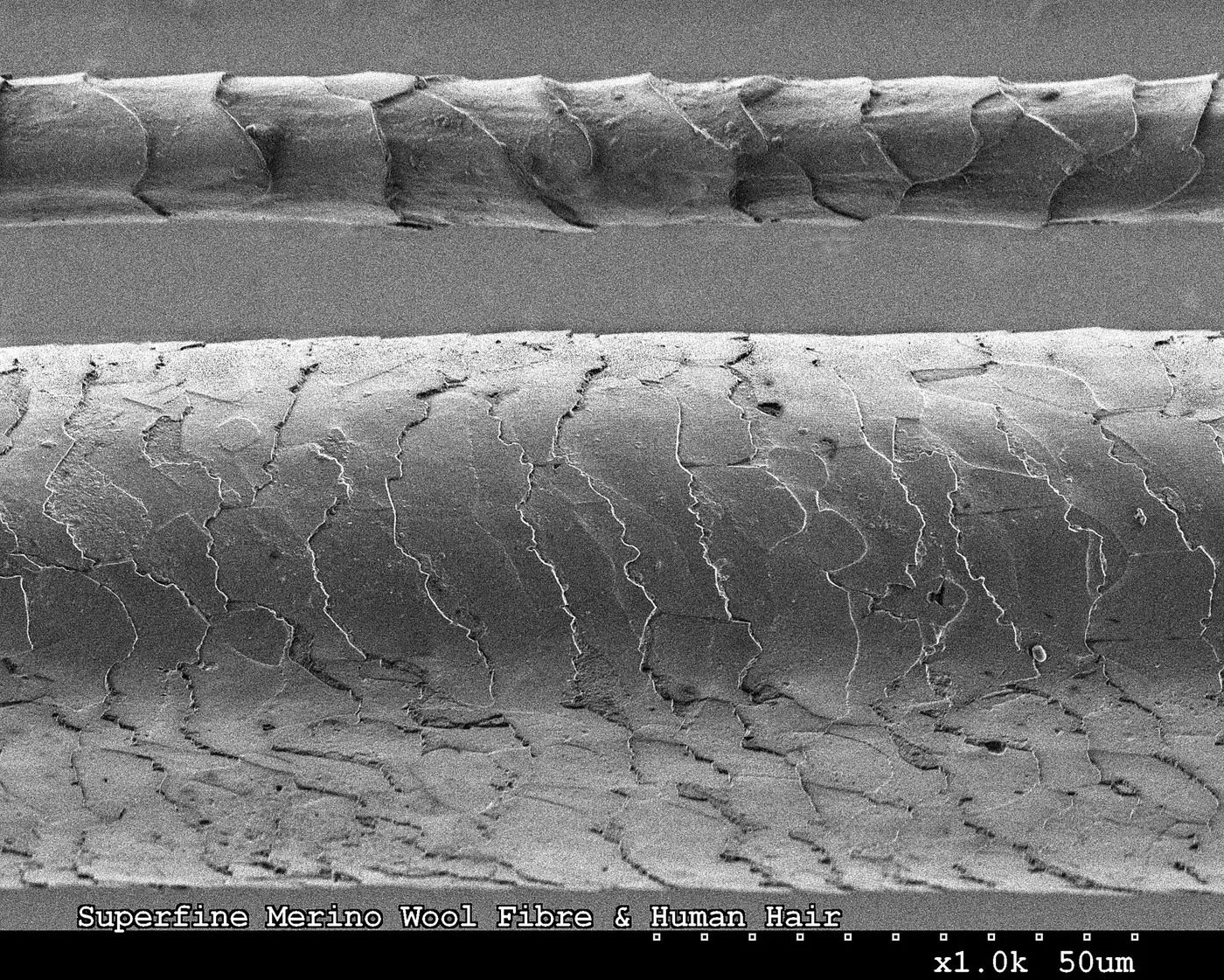

Every hair records the time that has passed, one length at a time.
A daily gain of just 0.3 millimeters or so quietly adds up to a record of many months. Thought of that way, the hair in the mirror starts to look a little different.