How does a steel ship float?
Its hull holds so much air that the ship as a whole is lighter than water. The weight of water it pushes aside holds it up.
Drop an iron nail into water and it plunges straight to the bottom. Iron is about 7.9 times heavier than the same volume of water. By any measure, it is not a material that should float.
Yet go down to any port and you will see steel ships hundreds of meters long, loaded with thousands of containers, bobbing calmly on the water. If a tiny nail sinks, why doesn’t a ship, which looks like a gigantic lump of iron?
Buoyancy is the weight of the water pushed aside
Put an object in water and it pushes some of the water out of the way. The water pushes back upward with a force equal to the weight of the water displaced. This is buoyancy, described in what we call Archimedes’ principle, after the ancient Greek thinker credited with discovering it.
A nail sinks because it only displaces its own small volume of water. With so little water pushed aside, the buoyant force cannot match its weight.
Now imagine hammering that same kilogram of iron into a thin open box. Put it in water, and the box displaces not only the volume of its iron but also the volume of the air inside it. One liter of water weighs about one kilogram, so if the box is bigger than one liter, the water it pushes aside outweighs the iron, and the box floats. Same material, different shape, and sinking iron becomes floating iron.
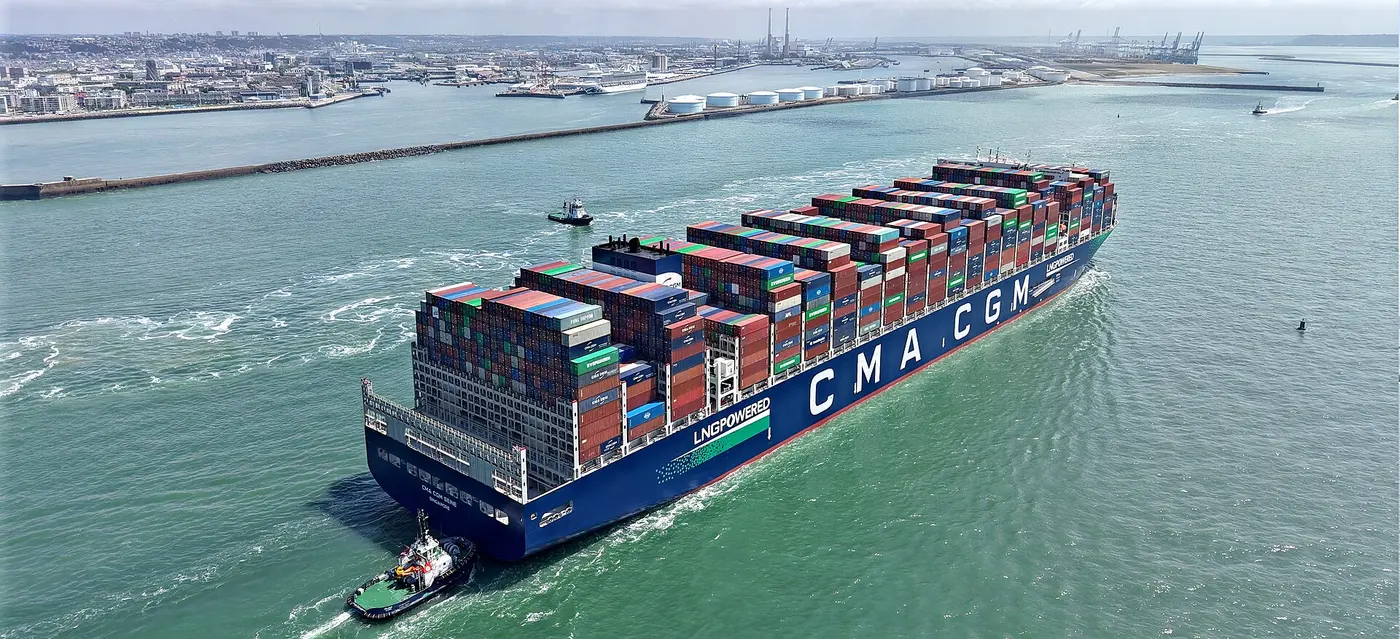

Counting the air, a ship is light
A real ship works just like that box. Even with cargo and machinery aboard, the inside of a hull made of steel plates is mostly air. Add up the weight of the steel, the air and the cargo, divide by the volume of the hull below the waterline, and the result is lighter than water.
A ship sinks when that balance breaks. If the hull is holed and water pours in, the spaces that held air fill with water, and the ship displaces less and less. That is why large ships are divided inside by walls into many compartments: if one is breached, the water cannot spread through the whole vessel.
This principle is also why the size of a ship is often given as its displacement. The weight of the water a floating ship pushes aside is exactly equal to the weight of the ship itself.
Nobody thought iron would float
Iron ships, so ordinary today, were not trusted at first. In 1787 the English ironmaster John Wilkinson launched a barge made of wrought iron, the Trial, on the River Severn. Many of the people who gathered to watch were sure an iron boat would sink.
The Trial floated perfectly well, and before the month was out it had carried more than 20 tons of iron to Birmingham. Over the 19th century, shipbuilders moved from wood to iron and then to steel, making possible ships far larger than anything that could be built from timber.
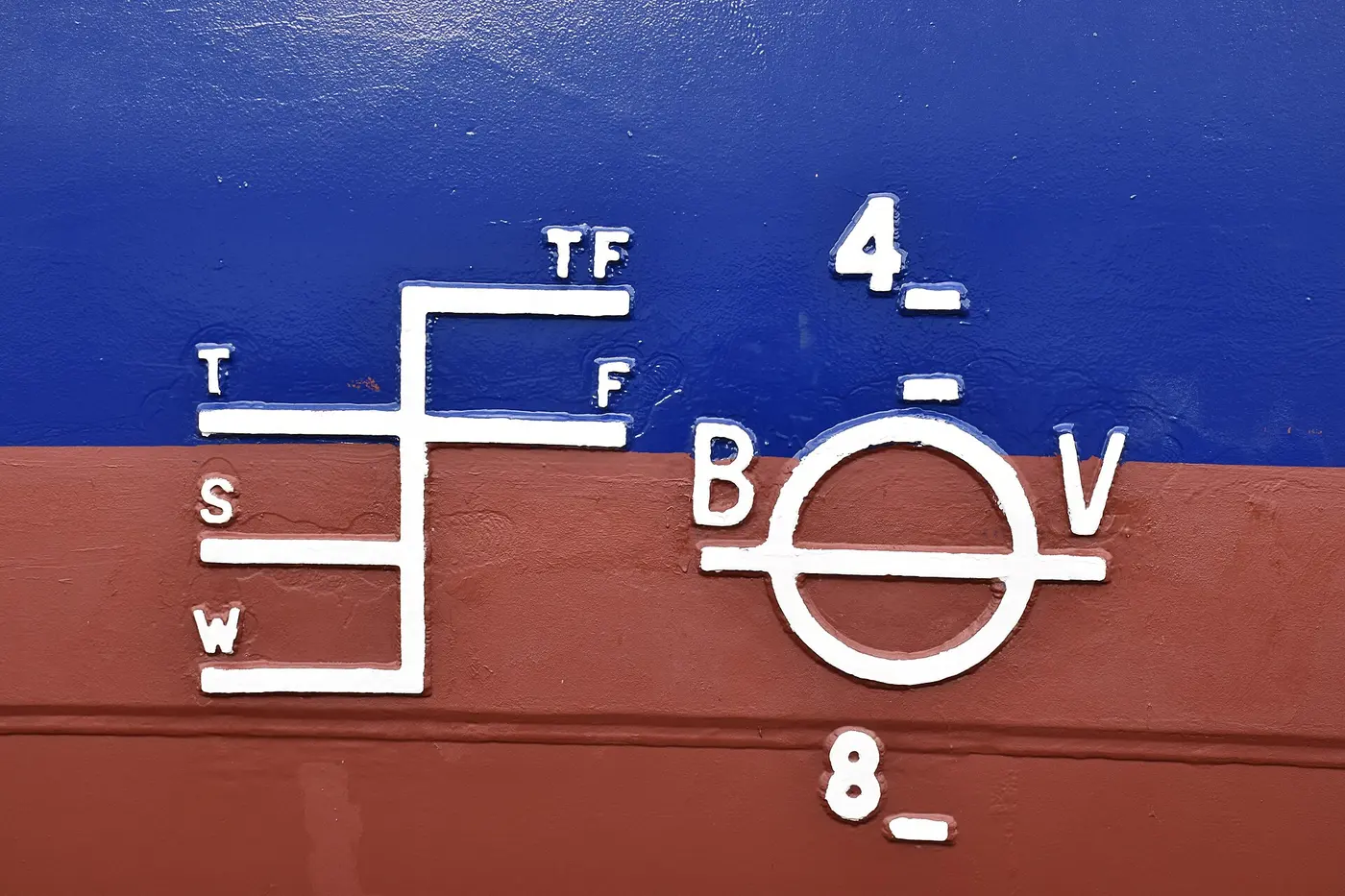

The limit line on a ship’s side
Float it may, but the more you load a ship, the deeper it sits. In 19th-century Britain, overloaded ships went down in storms one after another, and many sailors lost their lives. The politician Samuel Plimsoll campaigned against this, and partly thanks to him, an 1876 law made it compulsory to paint a line on the hull showing how far a ship could be allowed to sink. The mark is still called the Plimsoll mark.
Interestingly, there is more than one line. Seawater, with salt dissolved in it, is heavier than fresh water, so the same ship rides a little higher at sea and sits deeper in a river or lake. On top of that, ships must be loaded with more margin in stormy winter seas than in calm summer ones. So a ship carries a whole set of lines, for summer seas, winter seas, tropical seas, fresh water and more.