How many elements are there?
118 elements have been confirmed. The first 94 occur in nature; everything heavier has been made in the lab.
118elements
Break the things around you into smaller and smaller pieces and you eventually reach elements, substances that cannot be split into anything simpler by chemistry. Water is hydrogen and oxygen; table salt is sodium and chlorine. Our bodies, too, are combinations of oxygen, carbon, hydrogen, nitrogen and others.
So how many elements are there, making up everything in the world?
The answer is 118
The International Union of Pure and Applied Chemistry (IUPAC), the international body for chemistry, recognized 118 elements as of November 2016. That year, elements 113, 115, 117 and 118 received their official names, completing the seventh row of the periodic table.
Not all 118 are found in nature, though. The ones that occur naturally on Earth are the 94 from hydrogen, number 1, to plutonium, number 94, and some of those exist only in tiny traces. The remaining 24 were created artificially in nuclear reactors and particle accelerators.
What’s more, only about 80 of the naturally occurring elements are stable, meaning they do not give off radiation and turn into other elements over time.
Mendeleev’s empty seats
The number of known elements has grown over time. Gold, silver, copper, carbon and sulfur were known in ancient times, though nobody yet thought of them as “elements.”
In 1869 the Russian chemist Dmitri Mendeleev arranged the 60-odd elements known at the time in order of weight, noticed that elements with similar properties turned up at regular intervals, and published the first version of the periodic table.
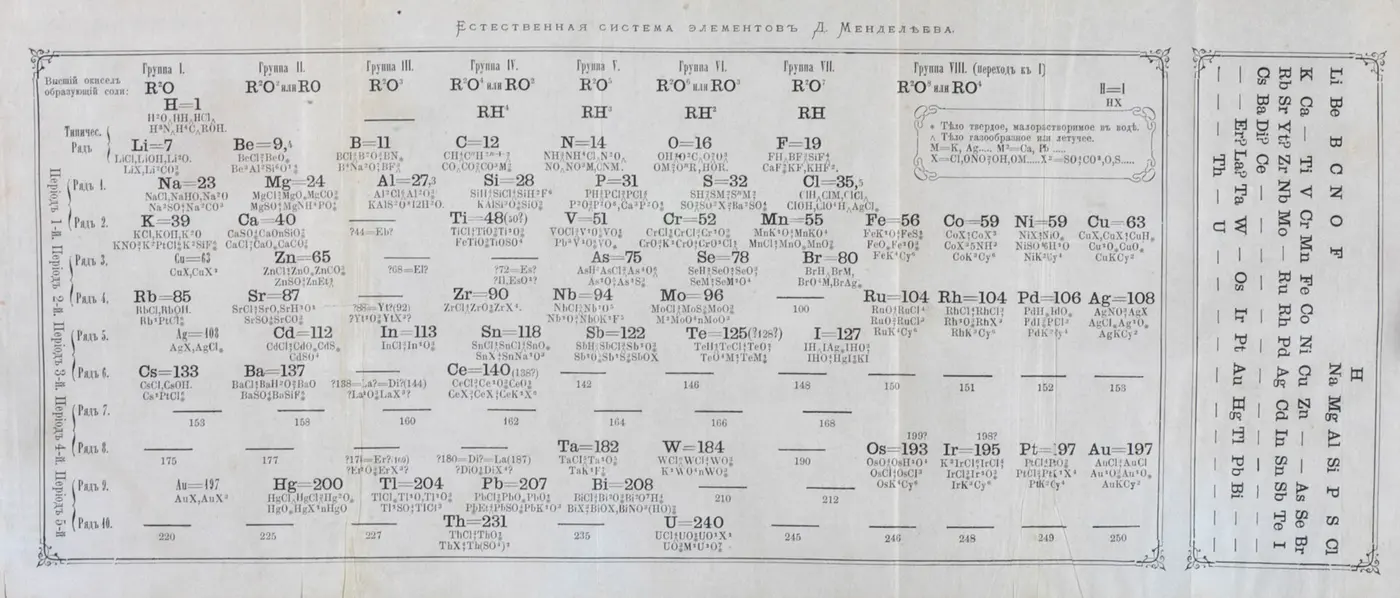

The genius of Mendeleev’s table was that he deliberately left gaps. Arranged his way, the elements left certain spots with nothing to fill them. He argued that undiscovered elements belonged there and even predicted their properties. Sure enough, gallium was discovered in 1875 and germanium in 1886, and both turned out to have the properties he had predicted.
Nihonium, made in Japan
The team that filled seat 113 in the periodic table was Japanese. Starting in 2003, Kosuke Morita and his colleagues at RIKEN, a national research institute in Wako, Saitama Prefecture near Tokyo, fired zinc atoms at bismuth atoms at tremendous speed, hoping to fuse the two.
The odds of a successful fusion were astronomically low. They caught an atom of element 113 only three times: in July 2004, April 2005 and August 2012. Each new atom broke down almost at once, turning into one element after another, and by tracing that chain of decays the team confirmed that it had indeed been element 113. Three atoms, caught over nine years, were the evidence for a new element.
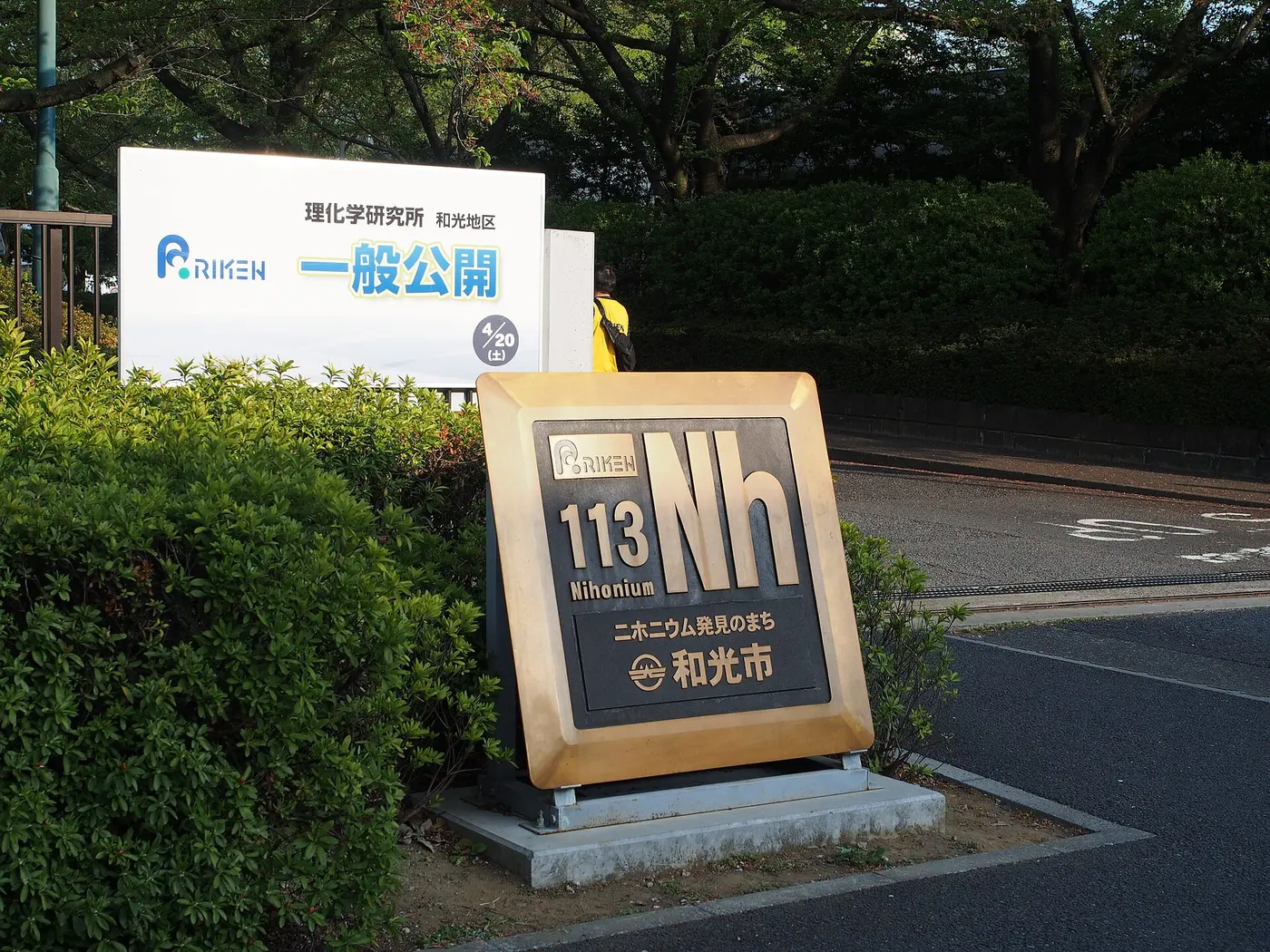

In December 2015, IUPAC gave RIKEN the right to name element 113, and on November 28, 2016, the name nihonium (symbol Nh) became official, after Nihon, the Japanese name for Japan. It was the first element to be named by a research team in Asia.
Chasing number 119
Nothing says the periodic table has to stop at 118. Since 2018, RIKEN has been firing vanadium atoms at curium in an attempt to make element 119, but as of 2024 it had yet to detect a single atom. Laboratories in Russia and China are also planning attempts at elements 119 and 120. Researchers around the world are racing to see whether the count will ever reach 119.