Do astronauts get taller in space?
Yes. The gaps in the spine open up and they can grow up to about 3%, but it vanishes back on Earth.
3%
In January 2018, a social media post from Japanese astronaut Norishige Kanai, then aboard the International Space Station, caused a small stir. About three weeks after arriving in space, he wrote, he had measured his height and found he had grown a full 9 centimeters.
The next day, Kanai posted a correction. His Russian commander had pointed out that nobody grows that much, so he measured again, and the real gain was about 2 centimeters. Kanai had been worried that he might not fit into his seat on the Soyuz spacecraft for the ride home, and he was relieved to find he probably would. The 9 centimeters was a measuring error, but the basic idea was sound: people really do get taller in space. The question is how, and why.
A spine that is always being squeezed
Your spine is a stack of bones called vertebrae. Between each pair sits an intervertebral disc, which works as a cushion. On the ground, the weight of your head and upper body presses down on that stack all day long, so the discs are always slightly compressed. We never notice it, because it is simply the normal state of a body living under gravity.
In the weightless environment of a space station, that load disappears. The discs, no longer squeezed, swell a little, and the natural curves of the spine straighten slightly. The result is a taller body, with no exercise or effort required. According to NASA, astronauts can grow by up to about 3% during a mission. For someone 180 centimeters tall (about 5 feet 11 inches), that works out to roughly 5 centimeters, or 2 inches. Most of the growth is said to happen soon after arrival. Since 2013, NASA has also been studying how astronauts’ spines change during their stay, using an ultrasound scanner carried up to the station.
A year in space, measured against a twin
From 2015 to 2016, NASA astronaut Scott Kelly spent 340 days on the International Space Station. Scott has an identical twin brother, Mark, who is also an astronaut. NASA seized the opportunity and ran the “Twins Study,” comparing Scott, who lived in space, with Mark, who stayed on the ground. Beyond height, researchers looked at a wide range of changes, from gene activity to eye health to gut bacteria. Having a genetically identical brother on the ground made for an unusually clean comparison.
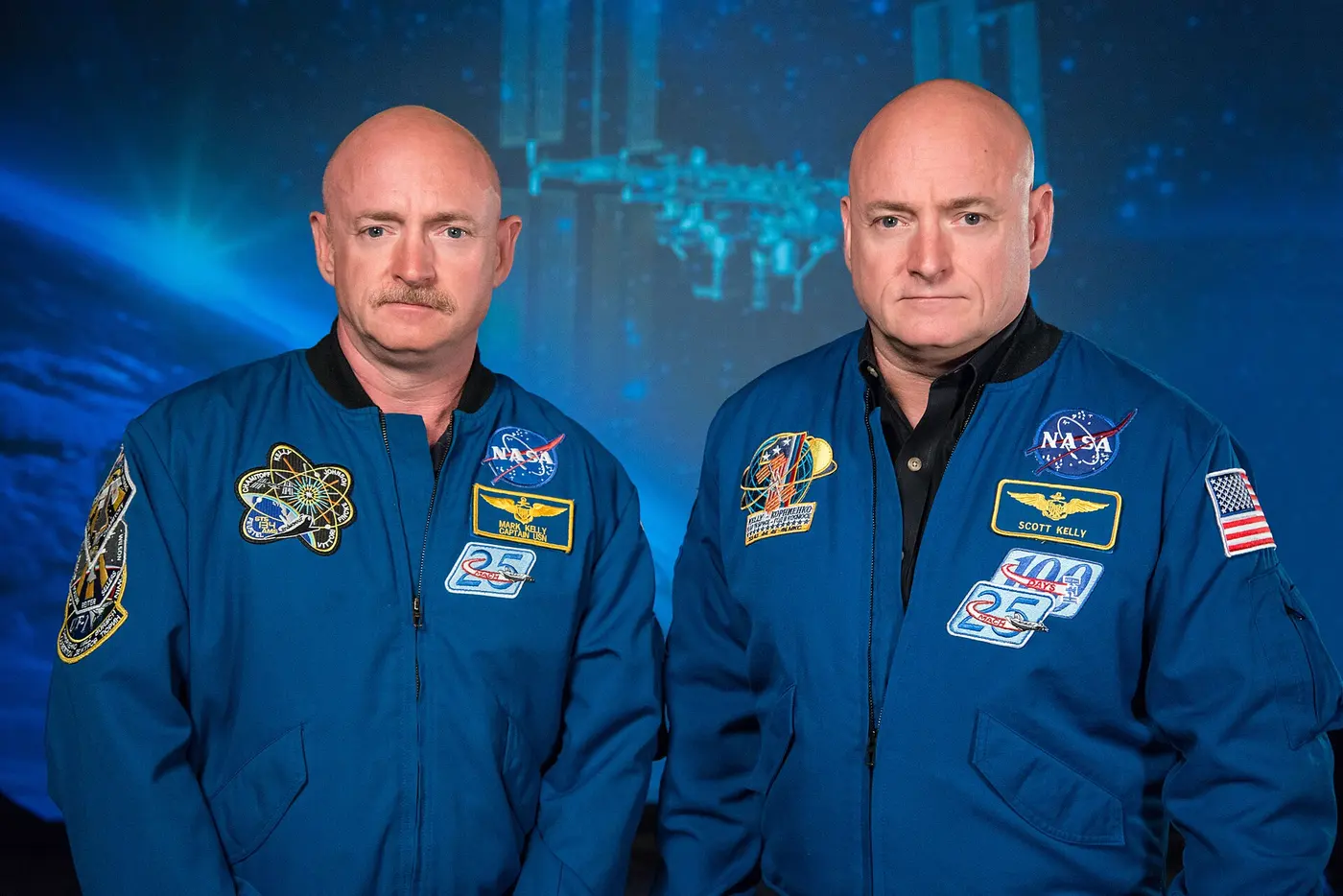

During his stay, Scott reportedly grew about 5 centimeters and was, for a while, taller than his twin. The difference did not last. Once he was back on Earth, gravity pressed his spine down again, and within a short time he was back to his old height. Growing in space is a limited-time offer that expires the moment you come home.
Growing taller isn’t all good news
Extra height might sound enviable, especially to anyone who has ever wished for a few more centimeters, but for astronauts it can be a nuisance. Early in a mission, many of them complain of lower back pain. The likely cause is strain on the suddenly lengthened spine and the muscles and nerves around it. There are also reports that disc problems become more common for a while after astronauts return to the ground.
The change affects clothing and equipment too. Spacesuits are designed with in-flight growth in mind, and spacecraft seats are built for a specific range of body heights. Kanai had good reason to worry about that Soyuz seat. In a cramped spacecraft, a few centimeters can matter a great deal.
Puffy faces, skinny legs
Height is not the only thing that changes in space. On the ground, gravity tends to pull blood and other body fluids toward the lower half of the body. In weightlessness, those fluids shift upward. Faces swell and grow rounder, while legs get thinner. Astronauts have a name for it: “puffy face, bird legs.” It is exactly what it sounds like.
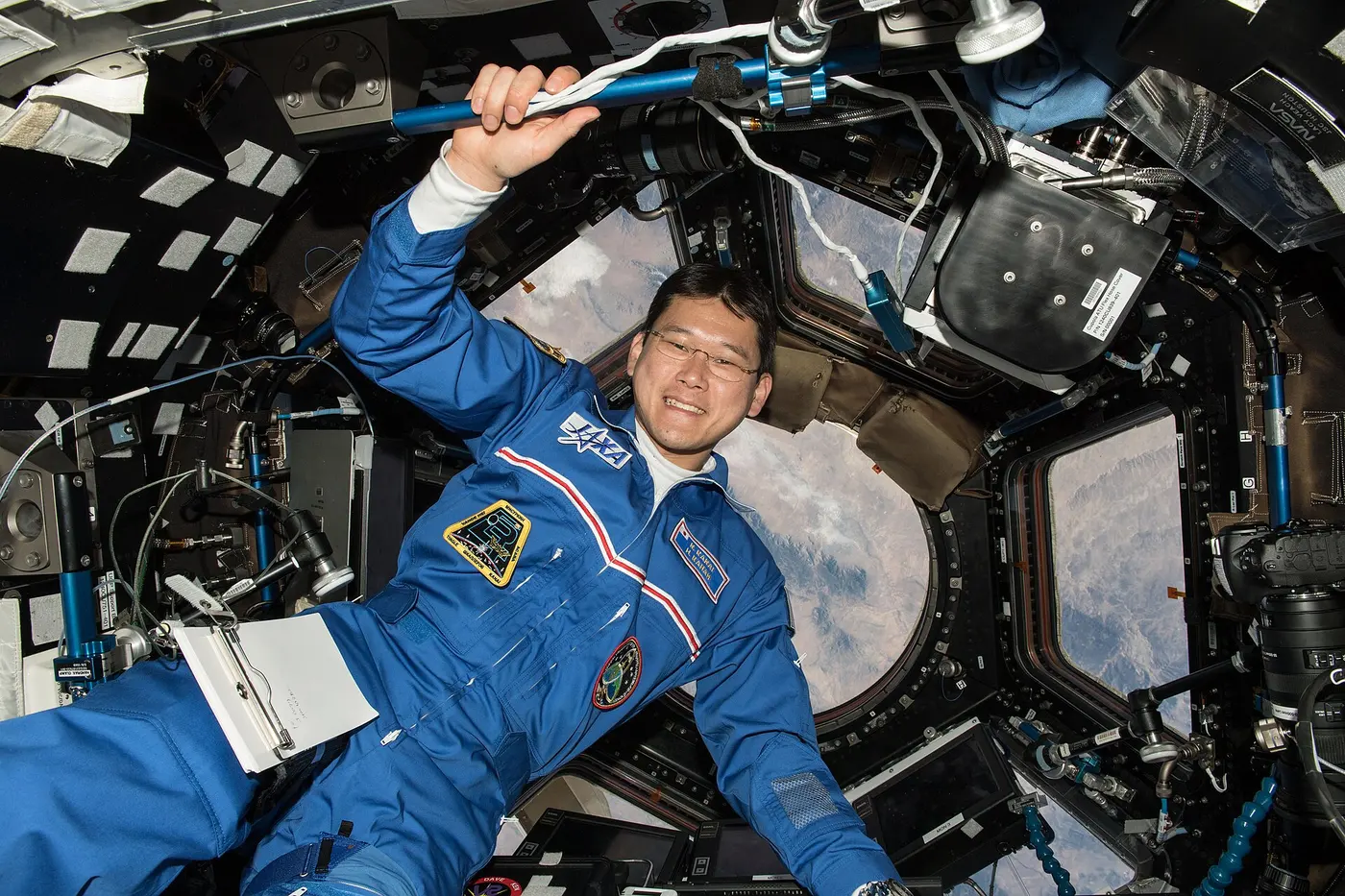

Most of these changes fade once astronauts are back on the ground. Others, such as weakened bones and muscles, take much longer to recover. That is one reason astronauts exercise for about two hours every day in orbit: they are keeping their bodies in shape for the day they return to Earth.