Can you see the Great Wall of China from space?
Almost certainly not with the naked eye. A wall a few meters wide is too narrow to stand out from space.
“The Great Wall of China is the only man-made structure visible to the naked eye from space.” Plenty of us remember reading something like that as children, in an encyclopedia or a book of fun facts. And with a total length of more than 20,000 kilometers, surely a wall that enormous could be seen from space?
Yet when you consider how our eyes work, and listen to the people who have actually been up there, the answer is: with the naked eye, almost certainly not. And as for the claim you sometimes hear that it can be seen from the Moon, that is simply never the case.
A rumor older than the space age
Where did this idea come from? Curiously, people were repeating it long before anyone had ever gone to space.
One well-known source is a 1938 children’s book by Richard Halliburton, an American adventurer and writer. It included a passage to the effect that, according to astronomers, the Great Wall was the only human-made object visible to the naked eye from the Moon. Similar claims are said to appear even earlier, in 18th-century British writings. Since nobody at the time had ever looked down at Earth from space, of course, there was no way to check.
In reality, the Moon is about 380,000 kilometers (236,000 miles) from Earth. Picking out a wall a few meters wide from that distance would be, by the numbers, like trying to see a single human hair from several kilometers away. The Apollo astronauts who traveled to the Moon have said that from there, Earth showed little more than clouds, oceans and land, with no human structures they could make out.
Long, but narrow
What about from much closer, at the height of the International Space Station?
There is no doubt the Great Wall is staggeringly long. According to survey results released in 2012 by China’s National Cultural Heritage Administration, the walls built over the centuries add up to about 21,196 kilometers in total. That is more than half the circumference of Earth at the equator.
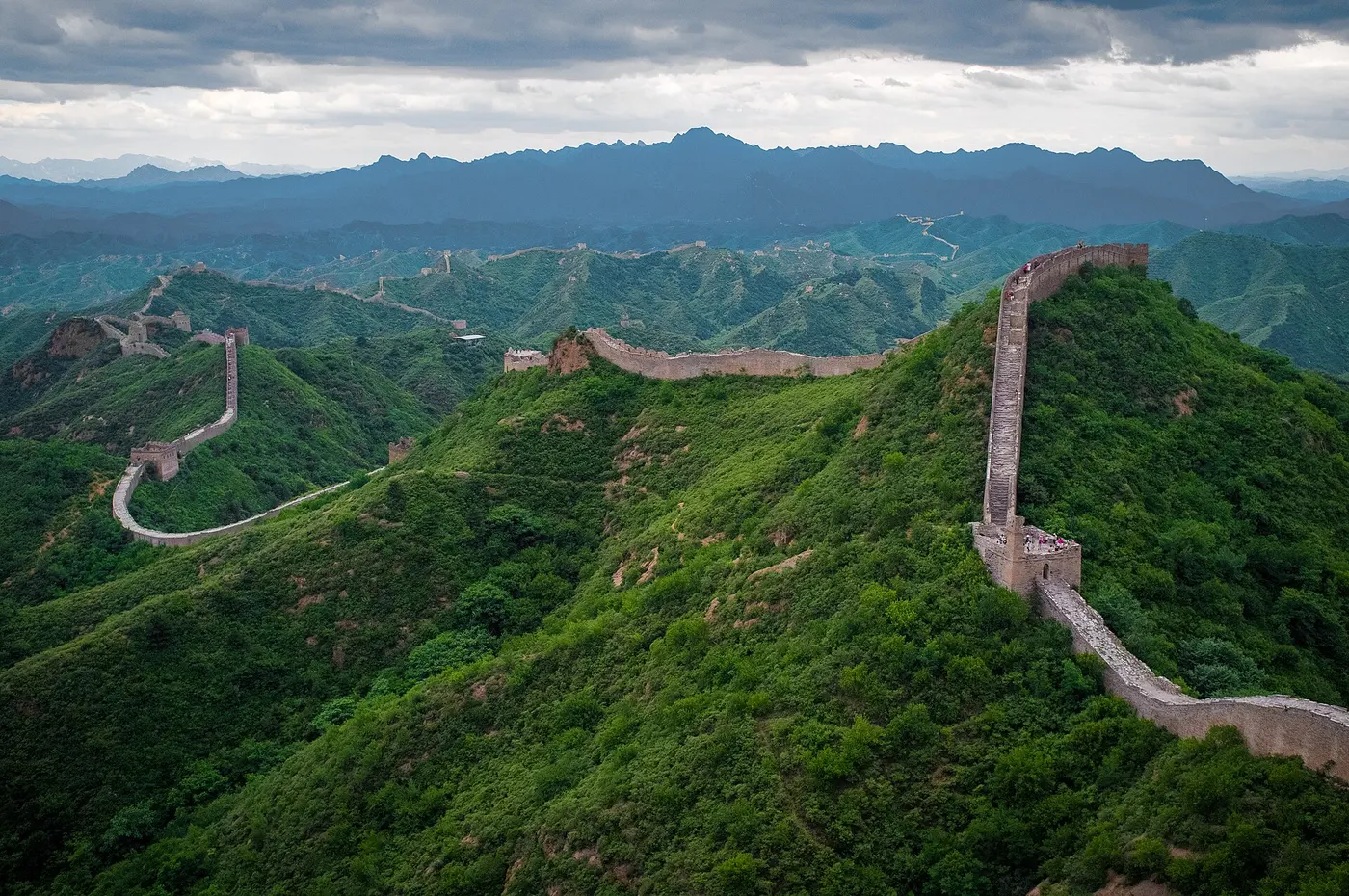

But what decides whether something is visible is not its length but its width. Even the Ming-dynasty sections familiar to tourists average only about 6 meters (20 feet) across the top. The International Space Station orbits about 400 kilometers (250 miles) above the ground. Seeing something 6 meters wide from 400 kilometers away is like trying to make out an object about 1.5 centimeters (just over half an inch) wide from a kilometer away.
On top of that, the wall is built from materials much like the surrounding soil and rock, so its color blends into the landscape. Narrow, and hard to tell apart from its surroundings: that is the main reason the Great Wall is so difficult to see from space.
What the astronauts say
In 2003, Yang Liwei, who flew China’s first crewed spacecraft, Shenzhou 5, said after returning that he had not seen the Great Wall. Coming from a national hero, his words caused a stir, and they reportedly led to moves in China to revise textbooks that had said the wall was visible from space.
In 2004, on the other hand, later analysis confirmed that a photo taken by Leroy Chiao, then commander of the International Space Station, with a digital camera and a telephoto lens had captured part of the wall. Chiao himself said, however, that he had not been able to pick out the wall with his own eyes when he took the picture.
Some argue that under the right conditions, such as when snow outlines the wall sharply, it might catch the eye. Even so, the reality is a far cry from the popular image of a wall anyone can see clearly from space.
Signs of human life from space
Does that mean human activity is invisible from space altogether? Not at all.
From the height of the International Space Station, astronauts say that in good conditions they can make out large cities, big airports and long, straight roads with the naked eye. When something contrasts clearly in color with its surroundings, even a narrow feature can show up as a line.
Most striking of all are the city lights that glitter across Earth at night. Spreading over the dark land like a net of light, they are probably the clearest sign of human presence visible from space.
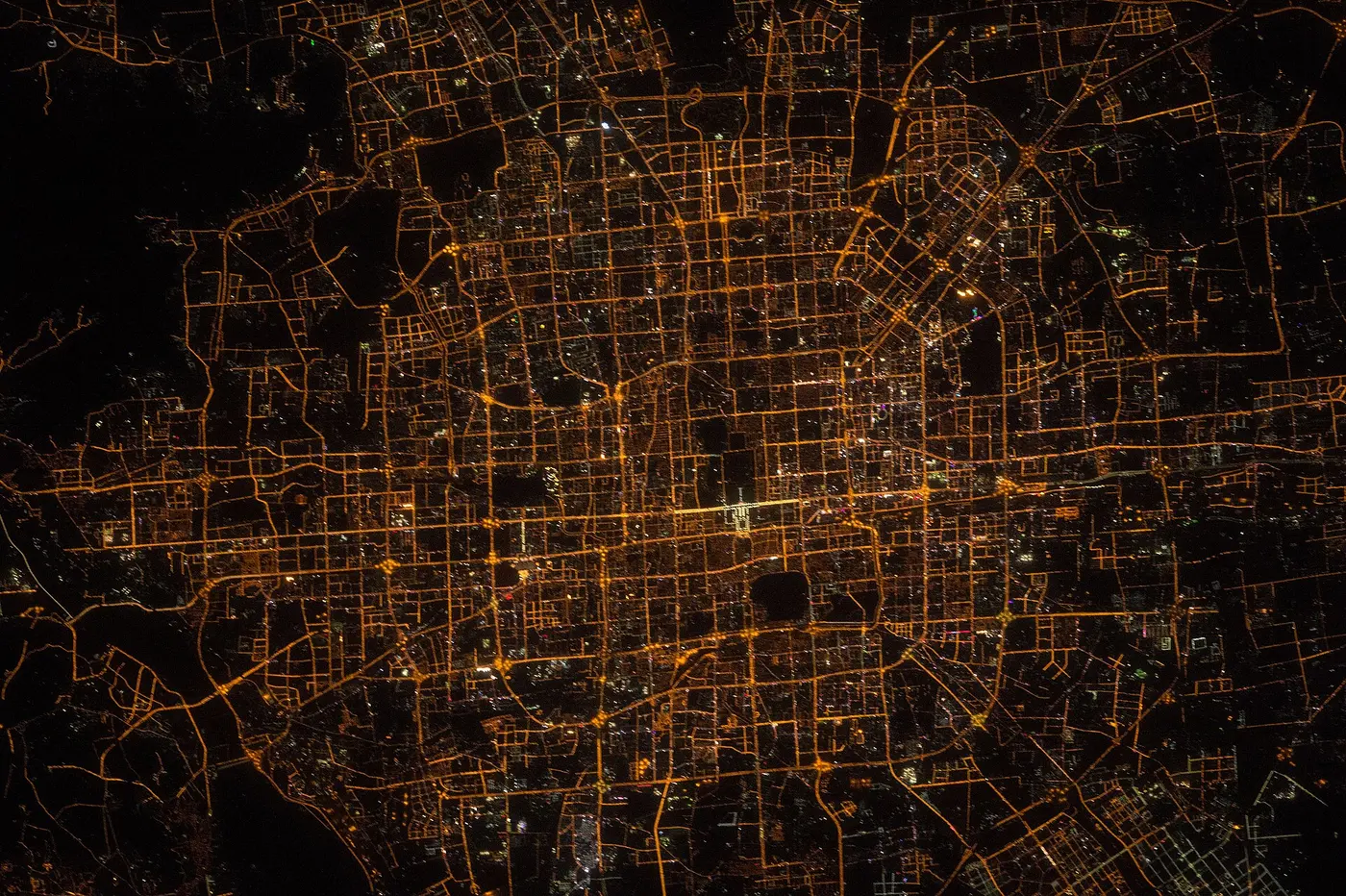

The Great Wall may be out of sight, but the way we live is plainly visible from space.