Where does the name “mayonnaise” come from?
A famous theory links it to Mahón, a port on Menorca in Spain, but there is no firm evidence and accounts differ.
1925
Salads, egg sandwiches, okonomiyaki (savory pancakes). In Japan, mayonnaise has become so beloved that people who put it on everything even have a nickname: mayorā, “mayo-ers.”
It is a simple sauce made by whisking egg, oil and vinegar together. But where does the name “mayonnaise” come from? The story most often told involves a battle in the 18th-century Mediterranean.
“Mahonnaise” from the port of Mahón
The setting is Menorca, an island in the Mediterranean east of Spain. In the mid-18th century, it was ruled by Britain.
In 1756, during the Seven Years’ War between Britain, France and others, French forces invaded Menorca, led by the Duke of Richelieu. Landing in April, they besieged the fort near the port of Mahón where British troops held out, and forced its surrender at the end of June.
According to legend, Richelieu, or perhaps his cook, came across a sauce made from egg and oil in Mahón and took it back to France. Named for its place of origin, it was called “mahonnaise,” the “sauce of Mahón,” and eventually became “mayonnaise.” Kewpie, the Japanese mayonnaise maker, also tells this tale as the story of mayonnaise’s birth.
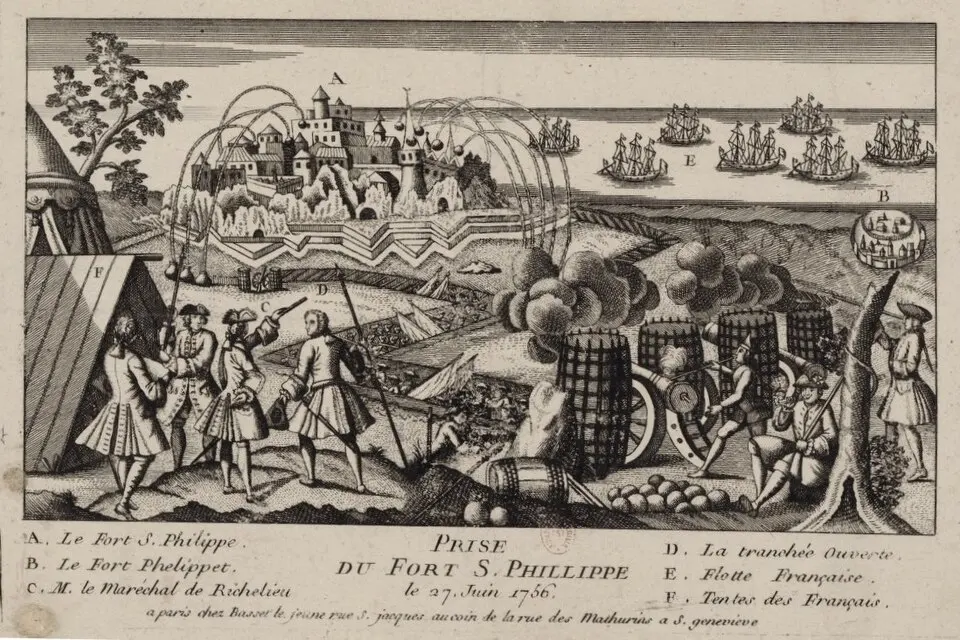

No hard evidence
The story has a weak point, however. The word “mayonnaise” does not appear in writing until several decades after 1756. A sauce matching modern mayonnaise, with egg yolk and oil emulsified together, is said to be clearly recorded in a French cookbook only in 1806. If the sauce of Mahón had become a hit in France right away, you might expect it to have been written down sooner.
So there are several other theories. One is that the name comes from moyeu, an old French word for egg yolk. Another is that it comes from a verb such as manier, “to handle” or “to work.” Both suggest the name came from the ingredients or the method itself.
The early-19th-century French gourmet Grimod de La Reynière insisted that both “mayonnaise” and “mahonnaise” were wrong, and that the proper name was “bayonnaise,” after the town of Bayonne in southwestern France. His reason: the town had many inventive gourmets and made the best hams in Europe. The great chef Antonin Carême, for his part, used the spelling “magnonaise” in 1815.
None of these theories is conclusive. The honest answer is that the origin of the word “mayonnaise” remains unclear.
Japan’s yolk-rich mayonnaise
Mayonnaise was first made and sold in Japan in 1925. The man behind it was Nakashima Tōichirō, the founder of Kewpie.
In the 1910s, Nakashima spent time in Britain and the United States as a government-sponsored overseas trainee in industry, and there he encountered mayonnaise. Hoping to improve the physique and health of the Japanese people, he set out to popularize nutritious mayonnaise in Japan, and chose a style made with plenty of egg yolk.
At first, though, it barely sold. According to Kewpie, first-year sales were 120 cases (600 kilograms). The word “mayonnaise” was so unknown that some people mistook it for hair pomade.
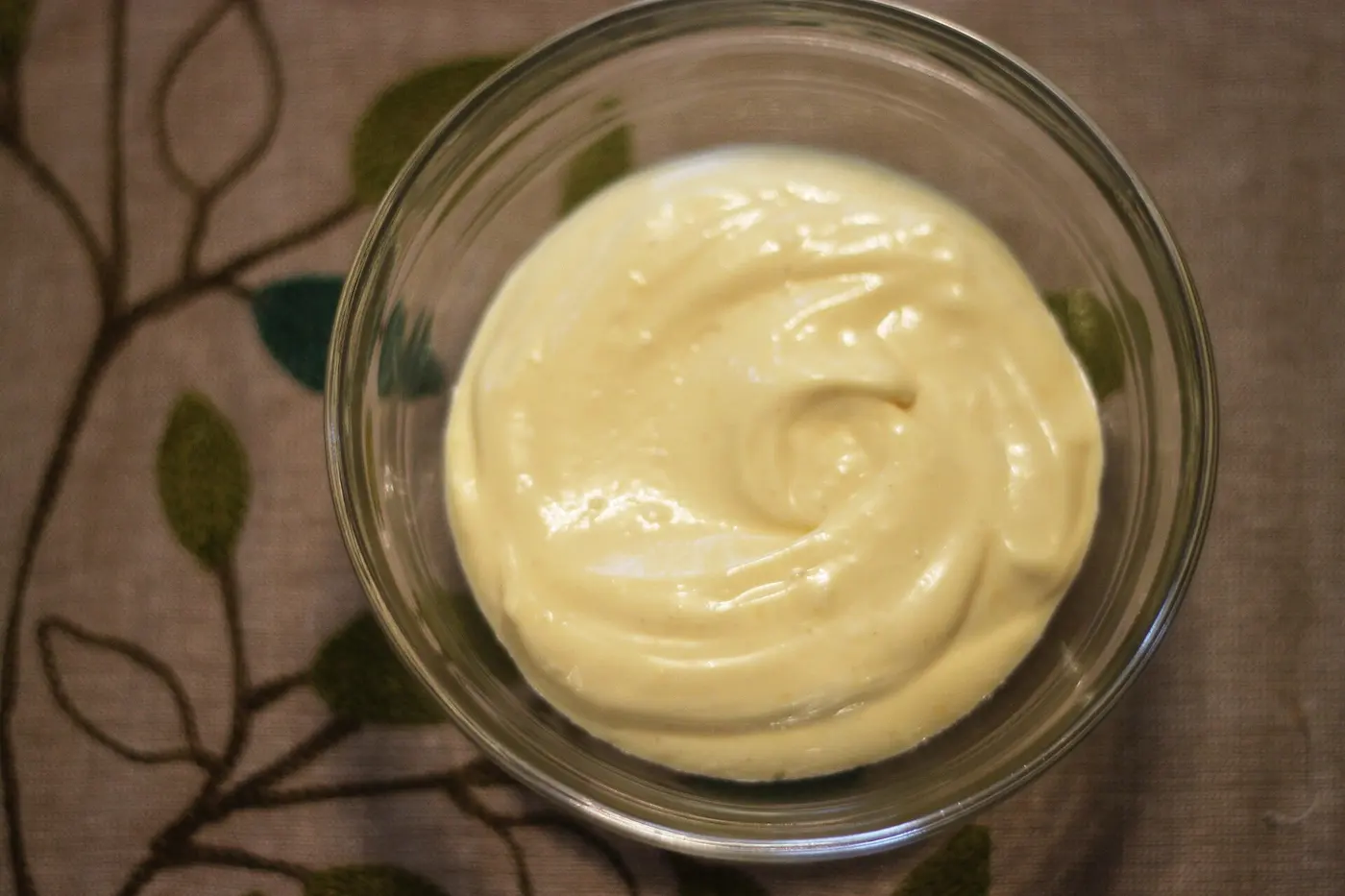

Today, Japanese mayonnaise comes in two types: one made with egg yolks only, and one made with whole eggs, whites included. Kewpie makes mainly the yolk type, while Ajinomoto makes mainly the whole-egg type. Whole-egg mayonnaise is the norm around the world, so Japan’s richer, yolk-heavy version has reportedly found its own following abroad as “Japanese mayo.”