What does the “shoku” in Japanese “shokupan” mean?
The leading theory says “bread for meals,” as a staple, but there are others, such as telling it apart from eraser bread.
340g
Toasted golden brown and spread with butter, shokupan, Japan’s soft white sandwich loaf, is a breakfast staple. It is so familiar that people rarely stop to think about its name.
Look closely, though, and the name is odd. Pan is the Japanese word for bread, and shoku (食) means “food” or “eating.” But anpan (bread filled with sweet bean paste), melon pan and curry pan are all for eating too. So why does only that square loaf get the word “eating” attached to it? In fact, there is no settled answer to what this shoku means. Let’s look at the theories one by one.
“Bread for meals”
The most widely supported theory is that shokupan is a shortened form of “bread for use as a staple food.” The Pan Shoku Fukyū Kyōgikai, an industry body that promotes bread eating in Japan, explains that the name seems to have been given in the early Meiji era (1868–1912), when dome-topped loaves went on sale, because this was bread meant as a staple.
In Meiji Japan, bread was still a novelty. What first caught on among Japanese people were sweet “kashi pan” (confectionery breads) such as anpan. The unsweetened bread that foreigners ate at everyday meals, the way Japanese ate rice, needed a name that set it apart from these sweet breads. According to this view, shokupan, meaning “bread for meals” or “staple bread,” was born that way.
Shokupan is said not to be a translation of any foreign word, but a name coined in Japan.
“True meal bread” and “eraser bread”
There are a few other theories as well.
One holds that the word is a shortening of honshoku pan, roughly “true meal bread.” The idea is that this was the bread at the foundation of Western cuisine, the bread of a proper meal, and bakers of old are said to have used the name honshoku pan.
Another holds that the name was meant to distinguish it from keshi pan, “eraser bread.” When Western-style art education reached Japan in the Meiji era, so did the technique of rubbing out lines with bread when drawing in charcoal and the like. Bread used this way was called keshi pan, and bread for eating, by contrast, was called shokupan.

No document has been found that settles the matter for any of these theories. What they share, though, is the idea that shoku was added to tell this bread apart from other kinds, such as sweet breads or eraser bread.
The dome-topped loaf that started in Yokohama
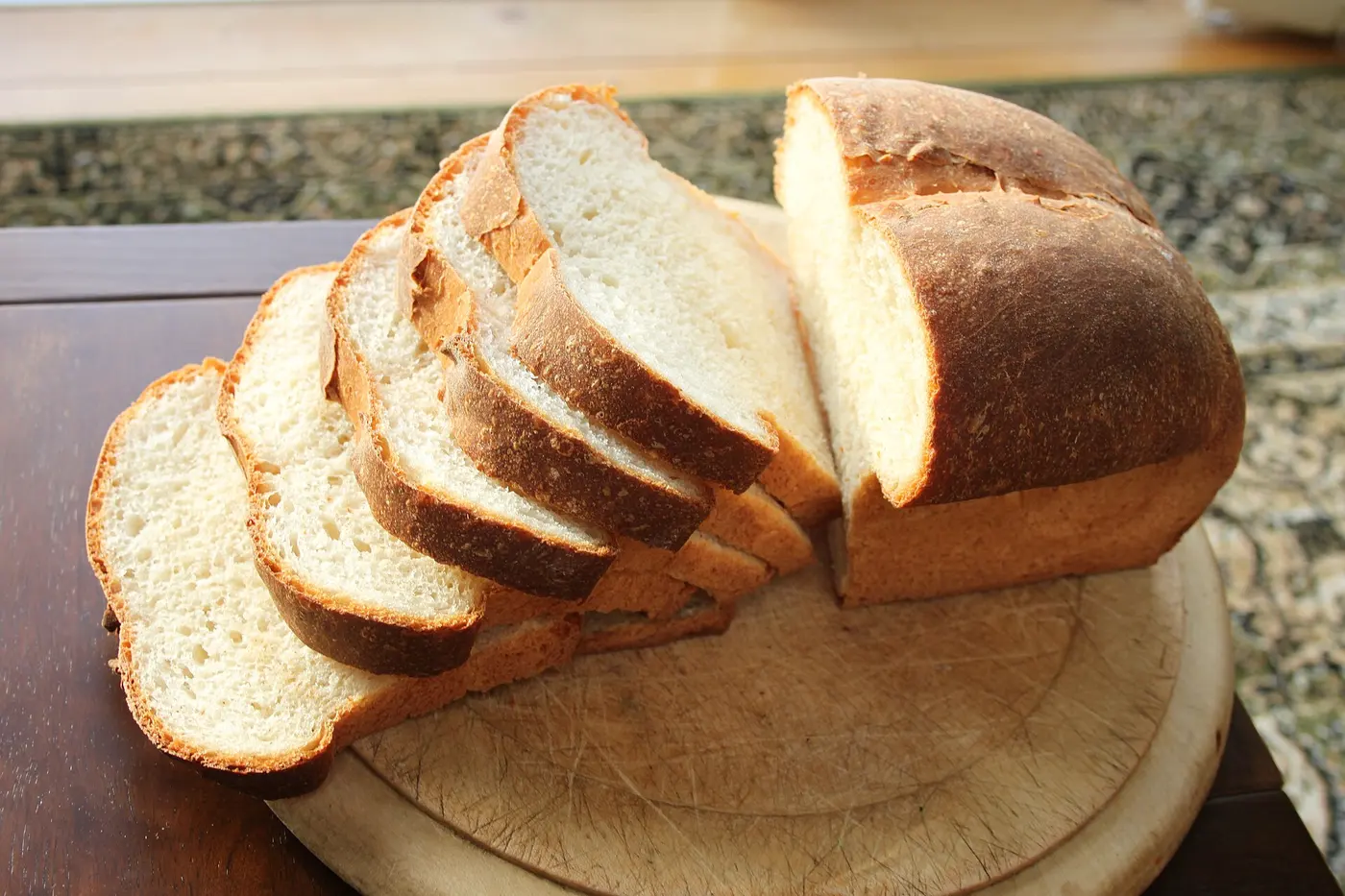
The history of shokupan in Japan is said to begin in Yokohama at the end of the Edo period (1603–1868). In 1862, an Englishman named Robert Clark opened a bakery there called the Yokohama Bakery. Clark is said to have baked English-style dome-topped loaves using a hop-based starter he had brought from home.
Uchiki Hikotarō, who trained at that bakery, opened his own shop in Yokohama’s Motomachi district in 1888. It still operates today as Uchiki Pan. Shokupan in Japan began with English-style loaves like these.

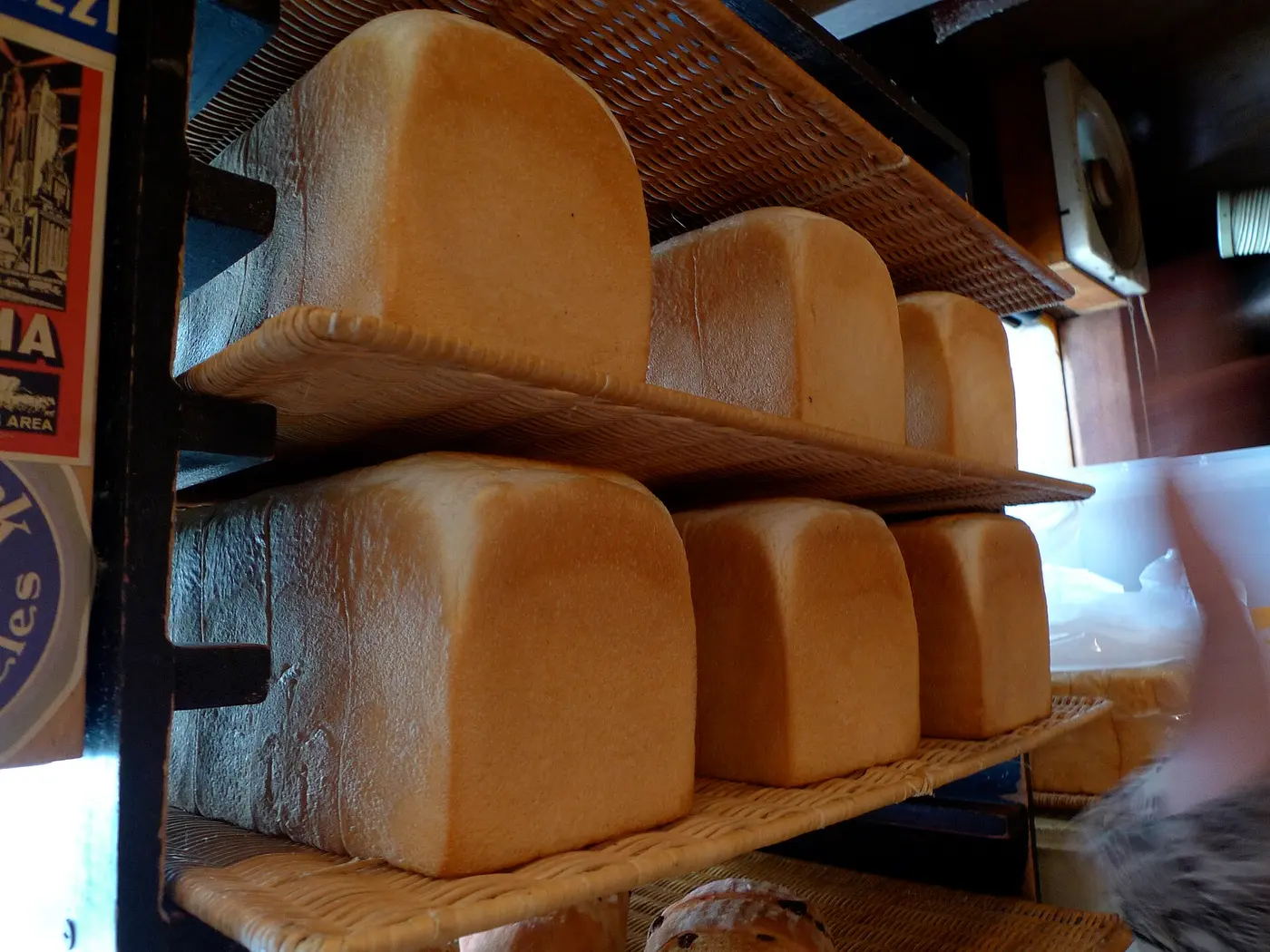
The square loaves common today, meanwhile, are baked in lidded pans that give them their shape. After World War II, square loaves are said to have been sold cut into eight slices at the request of soldiers of the occupying forces.
A “kin” was once a pound
Shokupan comes with one more curious word: kin (斤), the unit it is counted in.
Kin was a traditional Japanese unit of weight, and one kin was 600 grams. Yet one kin of shokupan today is much lighter. Under the industry’s rules, it must be at least 340 grams (about 12 ounces).
According to the Pan Shoku Fukyū Kyōgikai, shokupan in the Meiji era was made in baking pans imported from the United States and Britain, sized so that a loaf weighed at least one pound (about 453 grams) once baked. The pound was written with the character 听, also read kin, and this came to be confused with 斤, which has the same reading. So the kin of shokupan has no direct connection to the old Japanese kin; trace it back and it was really the British and American pound.
Both shoku and kin may be traces of Meiji-era Japanese trying to name a new food from across the sea in their own words.