Why do stars twinkle?
Starlight gets bent this way and that as it passes through Earth’s restless atmosphere.
As “Twinkle, Twinkle, Little Star” reminds us, the stars in the night sky seem to flicker. It looks as though the stars themselves are growing brighter and dimmer, but that isn’t what is happening. Seen from above the atmosphere, stars hardly twinkle at all; they simply shine on, steady and quiet.
The twinkling doesn’t come from the stars themselves. It comes from the air above our heads: Earth’s atmosphere.
The culprit: restless air
The atmosphere is never truly still. High above us, winds blow, warm and cold air mix, and tiny eddies are constantly forming and fading away. And air at different temperatures bends light by slightly different amounts; it has a slightly different refractive index.
Think of the shimmer above a hot road on a summer day, when the scenery seems to waver. The same thing is happening to starlight. Light that has traveled through space for hundreds or thousands of years spends only the briefest moment at the end of its journey passing through the atmosphere, and in that moment the turbulent air nudges it back and forth. As a result, the amount of light reaching your eye, and where it seems to come from, changes from instant to instant, and the star appears to twinkle. Astronomers call this scintillation.
Why don’t planets twinkle?
Watch the night sky carefully and you will notice some bright lights that hardly twinkle at all. These are planets such as Venus, Jupiter and Mars. “If it shines steadily without twinkling, it’s a planet” has long been one of the rules of thumb for picking out planets in the night sky.
The difference comes down to apparent size. Stars are so far away that even through the largest telescope they look like points with almost no size at all. Light from a point is like a single thin beam, and it takes the full brunt of the atmosphere’s turbulence.
Planets are much closer. To the naked eye they may look like points, but in reality we see them as very small disks. Light from different parts of the disk is jostled separately, but the brightening in one spot and the dimming in another cancel each other out, so overall the light stays steady.
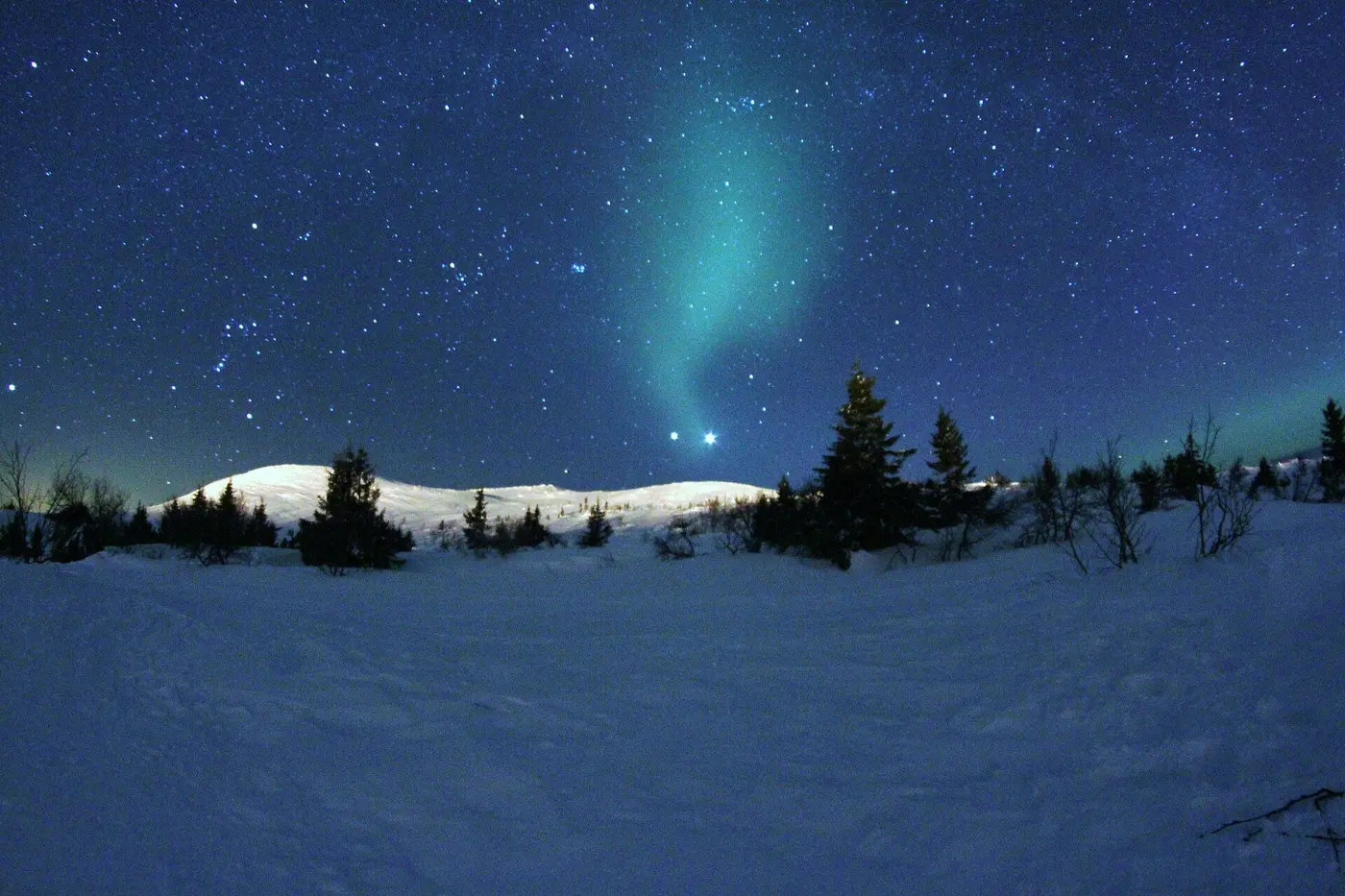

Near the horizon, stars even change color
How strongly a star twinkles also depends on how high it is in the sky. Light from a star directly overhead takes the shortest path through the atmosphere. Light from a star near the horizon, by contrast, has to travel a long, slanting route through the air. It is affected that much more by turbulence, and it twinkles all the more fiercely.
On winter nights, Sirius, in the constellation Canis Major, can sometimes be seen low in the sky flashing red, green and blue. The atmosphere acts like a prism, bending different colors of light at slightly different angles. Low in the sky, each color takes a slightly different path and gets jostled separately, so the colors seem to flicker and trade places.
A headache for astronomers
Twinkling stars are beautiful, but for astronomers they are a headache. Atmospheric turbulence blurs the images that telescopes capture and hides fine detail. That is one reason large observatories are built on high mountaintops where the air is steady.
The solution astronomers came up with is adaptive optics, a technology that cancels out atmospheric turbulence in real time. It measures the distortion in the light reaching the telescope and corrects it with a mirror that can change shape freely, hundreds of times a second or more. When there is no bright star nearby to use as a reference for measuring the distortion, a laser is fired into the sky to make a layer of sodium atoms about 90 kilometers (56 miles) up glow, creating an artificial star known as a laser guide star.
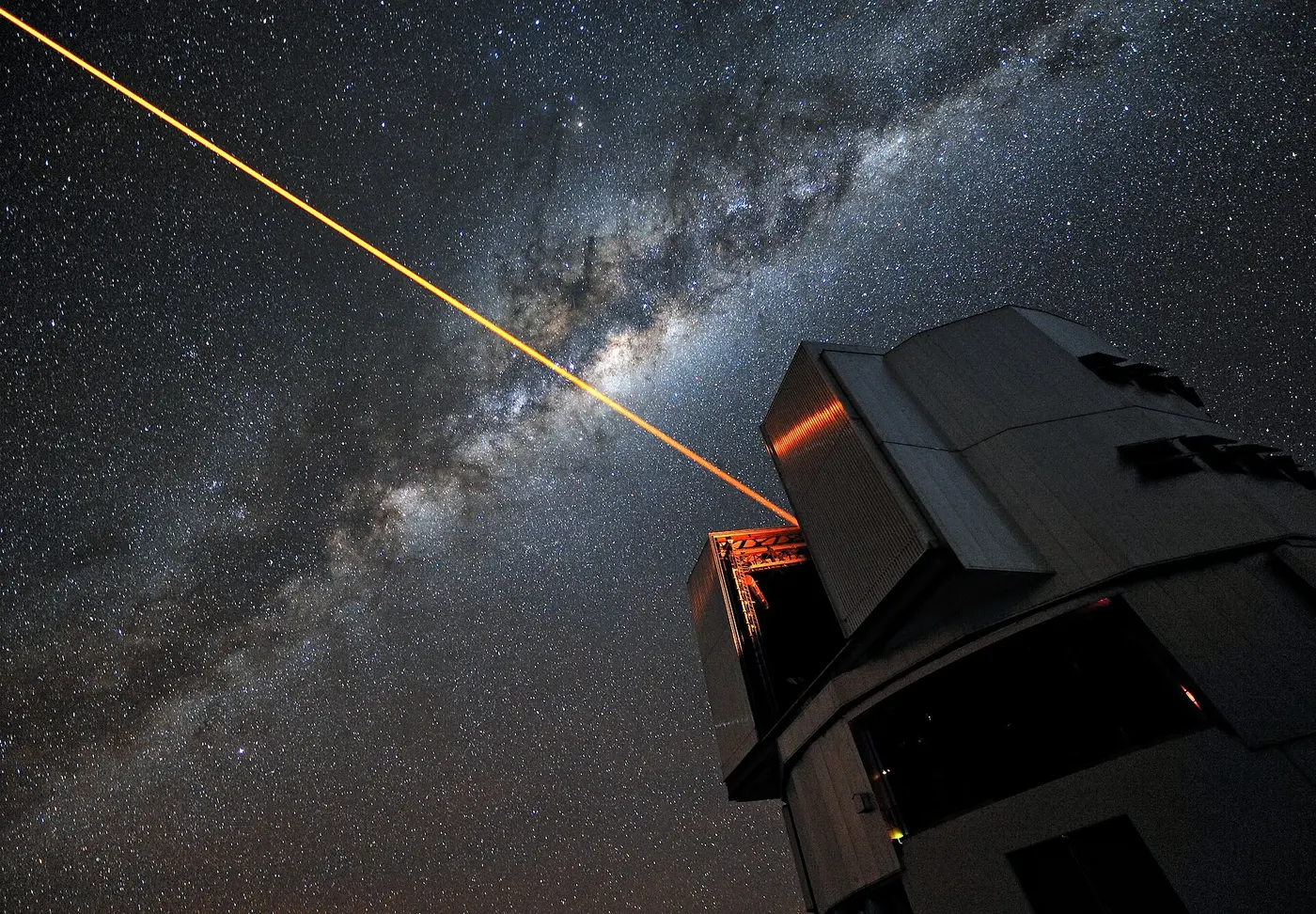

Of course, once you get above the atmosphere, twinkling is no longer a problem. Part of the reason the Hubble Space Telescope, launched in 1990, has been able to keep sending back such sharp images is that it views the universe from above the air. Seen from space, the stars don’t twinkle. They simply shine, quietly.