Why can’t we see the far side of the Moon?
The Moon spins once in exactly the time it takes to orbit Earth, so it always keeps the same face toward us.
59%
In Japan, people see a rabbit pounding rice cakes in the Moon; in Europe, a human face or a crab. Cultures have read the Moon’s markings in all sorts of ways, but everyone, everywhere, has been looking at the same pattern. Full or half, the Moon always turns the same face toward Earth.
Does that mean the Moon doesn’t rotate? Quite the opposite. The Moon does spin on its axis. It just does so with uncanny precision.
Spin and orbit, perfectly matched
The Moon takes about 27.3 days to circle Earth once. And the time it takes to turn once on its own axis is also about 27.3 days. Because its orbit and its rotation are in step, the Moon keeps the same side facing us all the way around.
If that’s hard to picture, put a chair in the middle of a room and walk a full circle around it while keeping your face toward the chair. From the chair’s point of view, you are always facing it head-on. But from the walls of the room, it’s clear that you have turned around exactly once during your lap.
This is no coincidence. The young Moon is thought to have spun faster than it does today. But Earth’s strong gravity stretches the Moon slightly toward it. As the Moon rotated, this bulge was carried out of line with Earth, and Earth’s pull tugged it back, acting as a brake on the spin. Over a very long time the rotation slowed until it settled into today’s state, with the bulge always pointing at Earth. This is called “tidal locking,” or “synchronous rotation.”
The far side isn’t the dark side
In English, the far side is sometimes called the “dark side” of the Moon. But it isn’t always dark. Day and night on the Moon depend on where sunlight falls. At new Moon, when the Moon looks completely dark from Earth, it is the far side that is bathed in sunlight. It’s probably best to read “dark” here as meaning “unknown” rather than “unlit.”
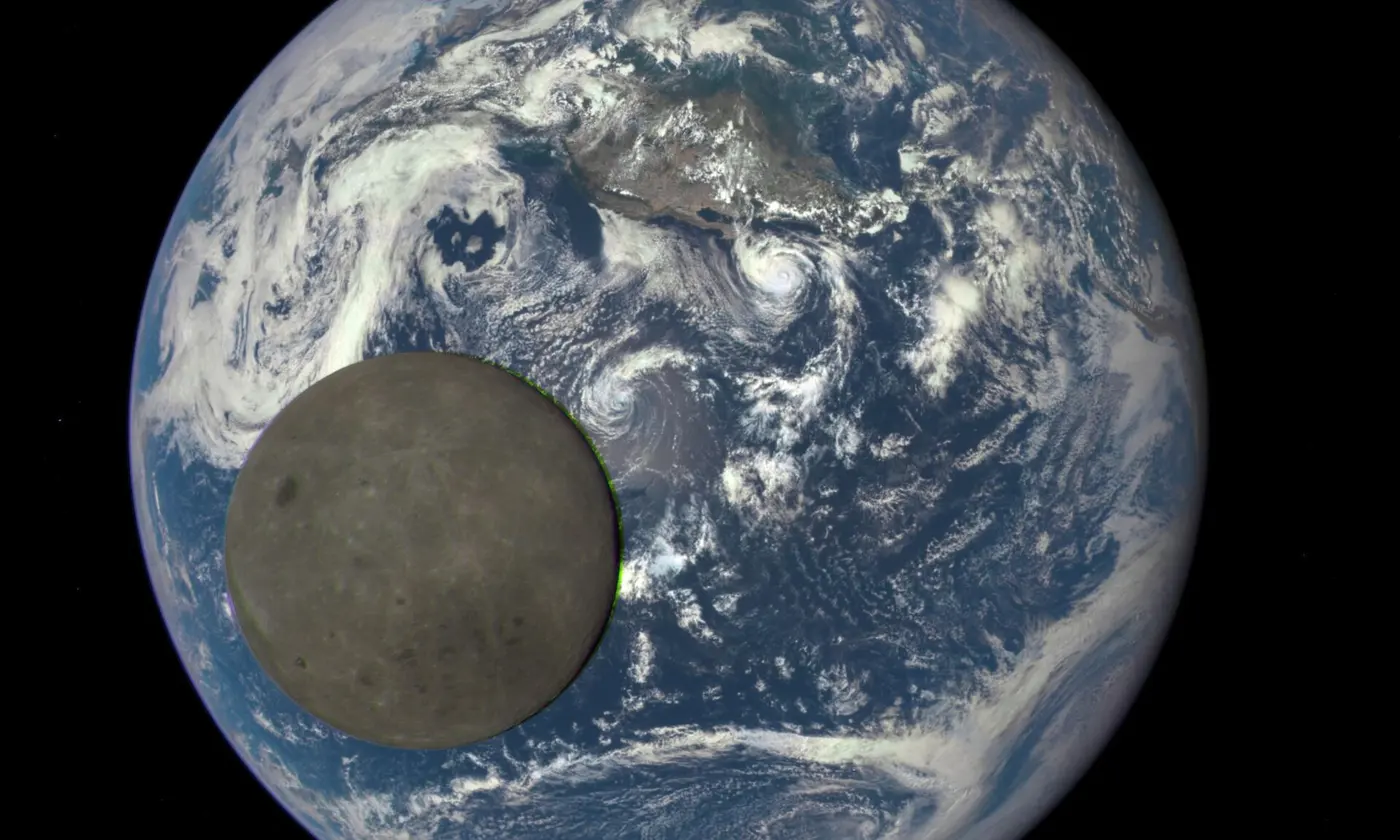

Strictly speaking, the part of the Moon visible from Earth isn’t exactly half. Because the Moon’s orbit is slightly elliptical and its axis is slightly tilted, among other reasons, the Moon seems to rock gently back and forth, as if shaking its head, when seen from Earth. This apparent wobble is called “libration.”
Thanks to libration, if you watch at different times you can peek a little way around the edges. All told, about 59 percent of the Moon’s surface can be seen from Earth. The remaining 41 percent or so can never be seen from the ground, no matter what.
A first look revealed a different face
Humanity got its first look at the far side in 1959, in a blurry photograph taken by the Soviet probe Luna 3. The first people to see it with their own eyes were the Apollo 8 astronauts, who orbited the Moon in 1968.
The far side turned out to look nothing like the near side. The dark patches that form the rabbit on the near side are called “maria,” or seas: flat plains of lava that flowed out and hardened. On the near side, maria cover about 30 percent of the surface; on the far side, only about 1 percent. The far side is almost entirely bright, crater-covered highlands.
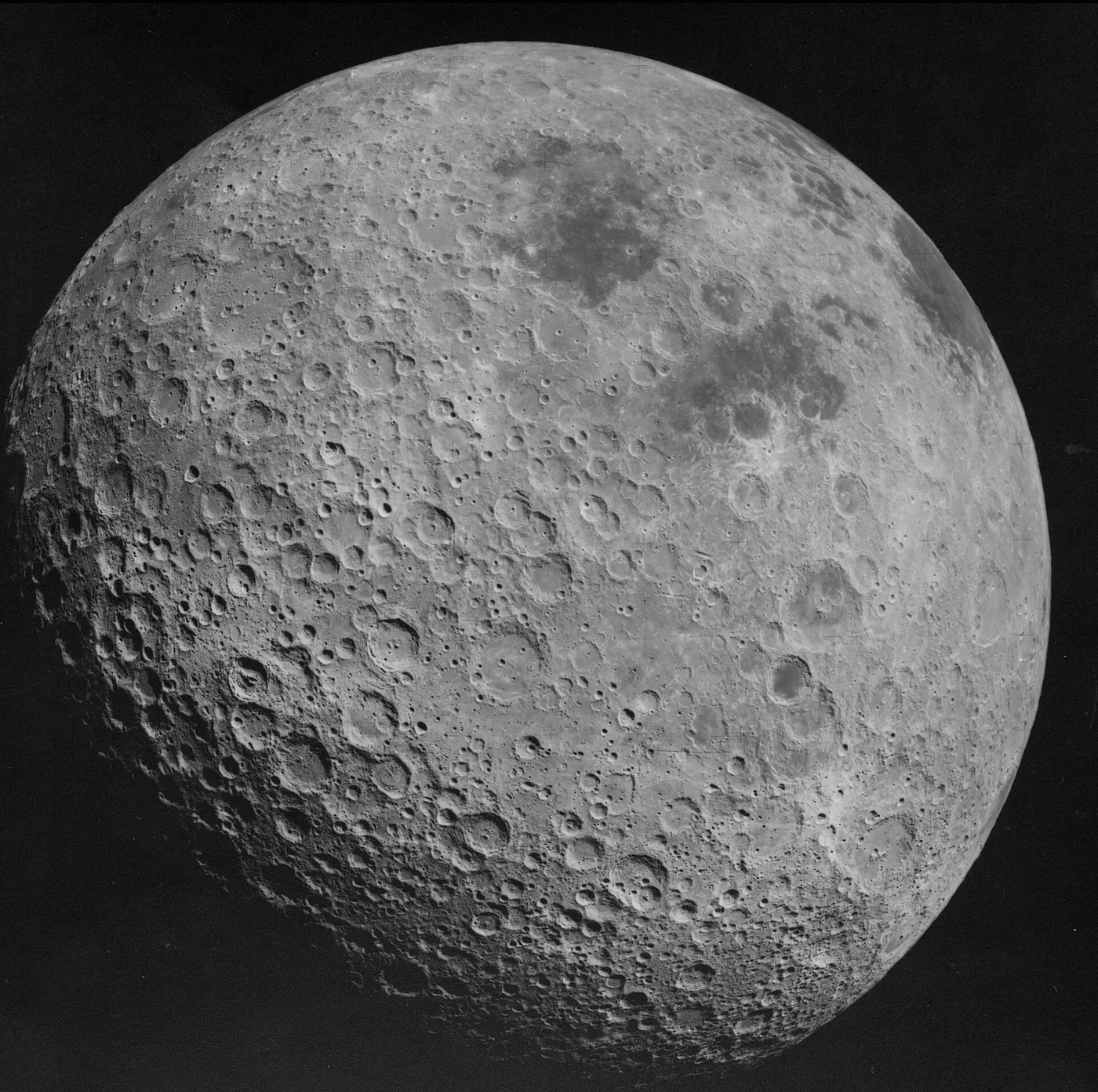

The likely reason is that the crust on the far side is considerably thicker than on the near side, making it harder for lava to reach the surface. Why the two sides ended up with such different thicknesses, though, is a mystery researchers are still working on.
Landing where radio can’t reach
If you can’t see the far side directly from Earth, you can’t communicate with it directly either. That made landing a spacecraft there no simple matter.
In 2019, China’s Chang’e 4 overcame the problem by launching a separate satellite to relay signals, and became the first mission ever to land on the far side of the Moon. Then in 2024, Chang’e 6 brought rocks and soil from the far side back to Earth for the first time. The Moon’s other face, hidden for thousands of years, is now rapidly revealing itself.