What is the world’s most expensive spice?
Saffron. Its threads are picked from flowers by hand, and a kilogram takes about 150,000 blossoms.
150,000flowers
Spanish paella, French bouillabaisse, Italian risotto alla milanese: what gives each of these dishes its lovely golden color and distinctive aroma is a spice called saffron.
It comes as slender red threads in a tiny jar, and anyone who spots it in a shop is likely to be taken aback by how much so little costs. Top-quality saffron often sells for more than 5,000 dollars a kilogram, and it is known as the most expensive spice in the world. Why is it so pricey?
Just a pinch from each flower
Saffron comes from the flowers of the saffron crocus, a member of the iris family. In autumn it opens pale purple blossoms, and the red tips of the pistil that reach out from the center, called stigmas, are what become the spice. Each flower has only three of them.
A single flower yields about 30 milligrams of fresh saffron, and only about 7 milligrams once dried. That means making 1 kilogram (2.2 pounds) of dried saffron takes roughly 150,000 flowers. Counted in stigmas, that is more than 400,000 threads.
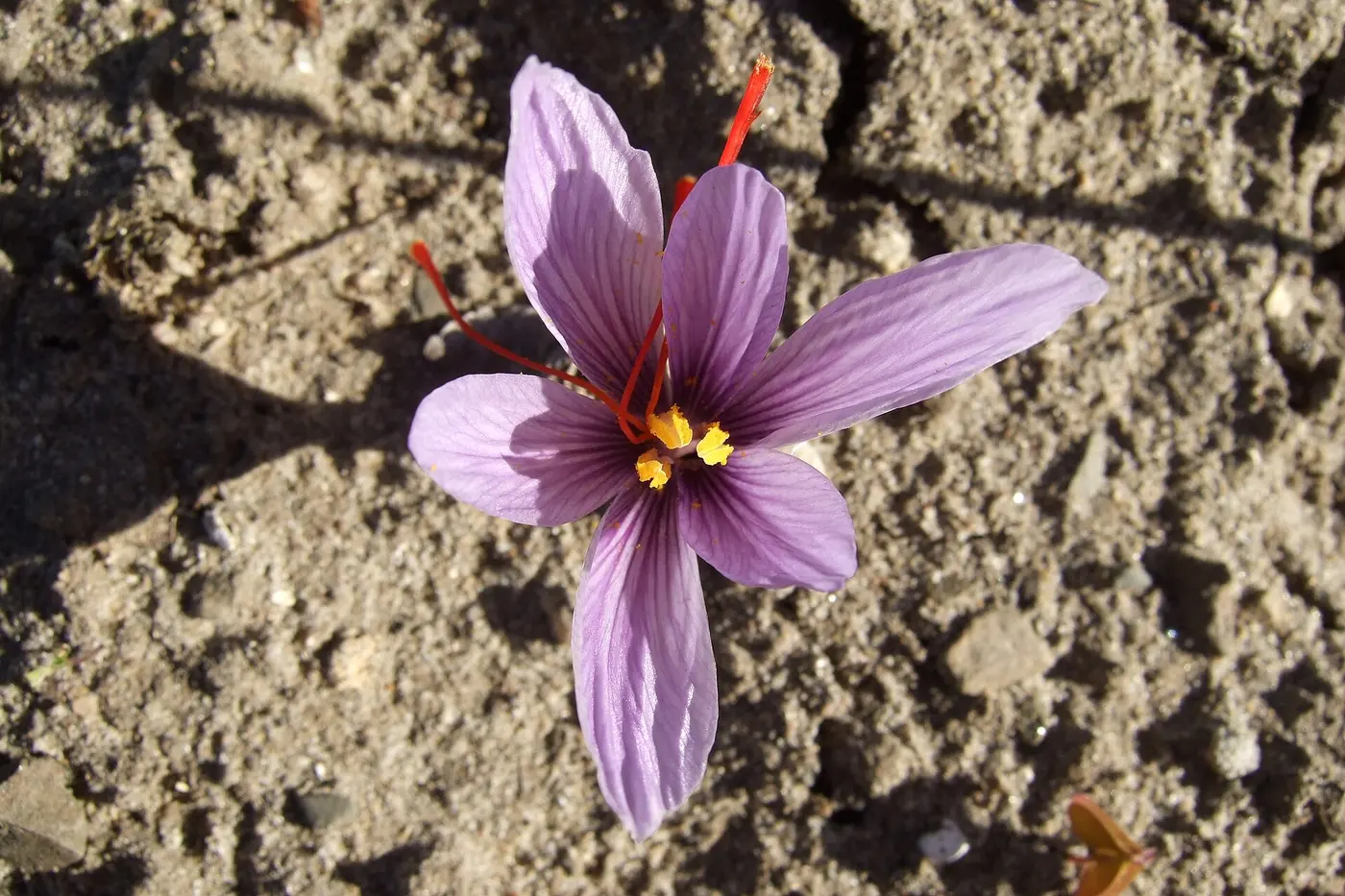

What’s more, the work can hardly be done by machine. In a given field, saffron flowers all bloom within a window of just one or two weeks, and blossoms that open at dawn wilt as the sun climbs higher. Workers pick the flowers one by one by hand in the morning, then carefully pull out the fine stigmas with their fingertips. Only after the stigmas are dried does the spice finally become a product.
A flower that can’t make seeds
There is another reason saffron takes so much work: the plant cannot produce seeds.
The saffron crocus is a “triploid,” carrying three sets of chromosomes, and although it flowers, it never sets fruit. Instead, growers dig up the bulb-like corms that form underground, divide them and replant them. Saffron is not known in the wild; it is thought to have arisen through human hands from another crocus native to Greece and elsewhere in the eastern Mediterranean, and to have been passed down ever since. It is a plant that cannot leave descendants without people.
Three compounds for color, taste and aroma
Saffron’s appeal rests on three compounds. Its color comes from crocin, a pigment that dissolves readily in water and dyes food a brilliant gold. Its distinctive slightly bitter taste comes from picrocrocin, and its aroma from a compound called safranal.
With such a high price, fakes have a long history. In medieval Nuremberg in Germany, people who sold adulterated saffron are said to have faced fines, imprisonment and even execution. Even today, counterfeits mixed with or swapped for turmeric, paprika powder, corn silk and the like still turn up.
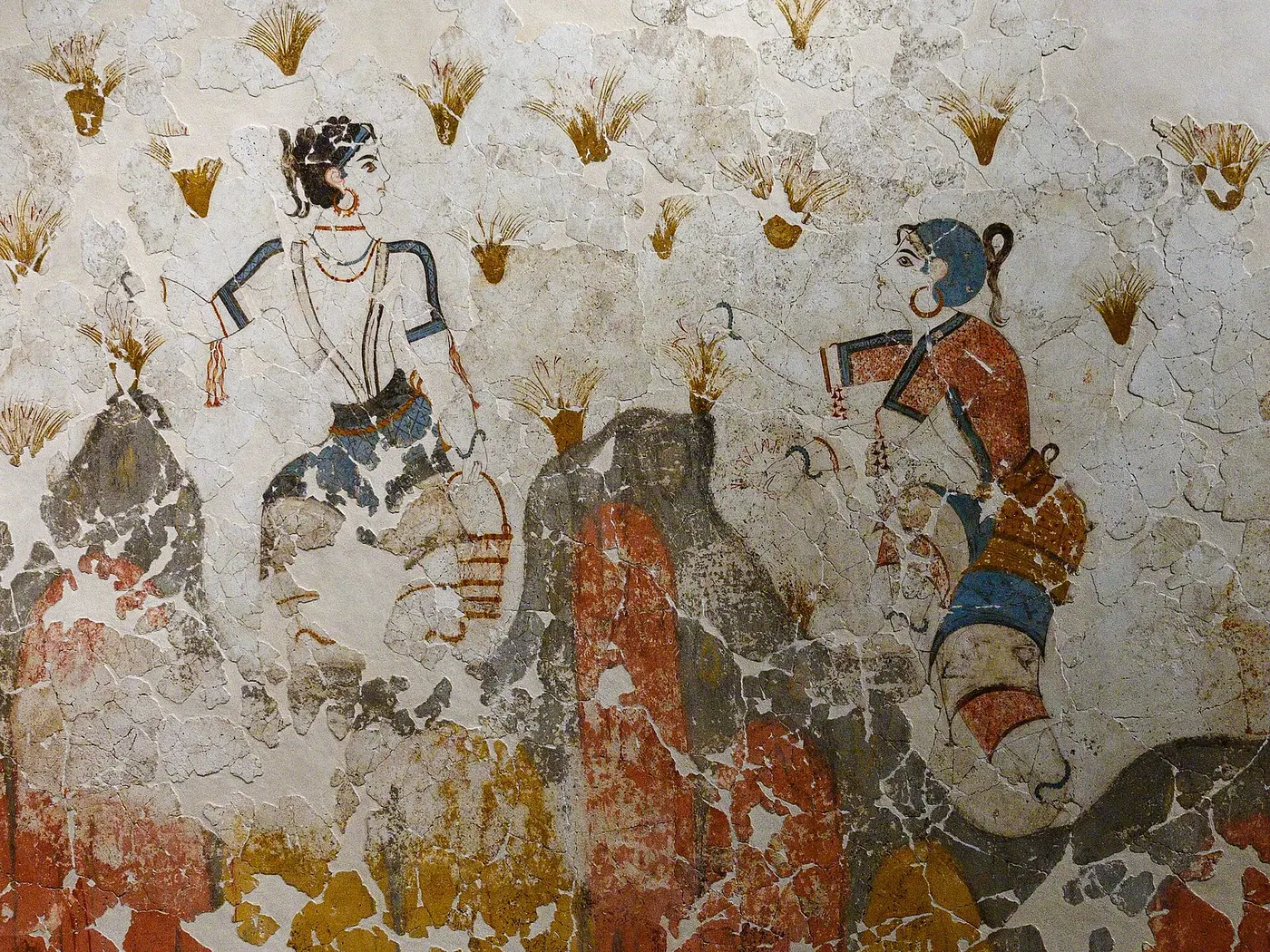
Today Iran accounts for roughly 90% of world production. People have prized saffron for a very long time: at the Akrotiri site on the Greek island of Santorini, archaeologists found a wall painting of people gathering saffron that is believed to date from around the 17th century BCE.

Japan’s saffron comes from Ōita
Saffron cultivation in Japan began in the Meiji era (1868–1912). The story goes that in 1886, Soeda Tatsugorō of Ōiso in Kanagawa Prefecture imported saffron bulbs and grew them for his sick mother.
In 1903, Kira Bunpei, who had received bulbs from Tatsugorō, brought saffron growing to the city of Taketa in Ōita Prefecture, on the island of Kyushu. Today about 80% of the saffron produced in Japan comes from Taketa. There, a distinctive method suited to Japan’s humid climate has been handed down. In May the bulbs are dug up, laid out in trays and stored indoors out of the sun; by autumn, they bloom without any soil or water at all. The flowers open from mid-October through November, and after the stigmas are harvested, the bulbs go back into the ground in December to grow. In Japan, saffron has been used not only in cooking but also as an ingredient in traditional medicines for women’s health.