How rare is a four-leaf clover?
“One in 10,000” is the usual figure, but it varies hugely by place and plant. There is no fixed probability.
63leaves
Plenty of us have crouched down on a park lawn or in a roadside patch of weeds, hunting for a four-leaf clover. Some days you can search and search and find nothing; other days, for some reason, you find one after another.
Just how rare are four-leaf clovers? And why do they appear in the first place?
Is it really one in 10,000?
The plant most of us call clover is white clover, a species native to Europe. Normally its leaf is made up of three small leaflets.
In Japan and abroad alike, the odds of finding a four-leaf clover are often quoted as “one in 10,000.” But that is only a rough rule of thumb, not a fixed figure based on careful surveys. Some people who have actually counted report finding about one in every few thousand.
That is hardly surprising, because how readily four-leaf clovers appear varies widely with location, season and, above all, the individual plant. It is common for one plant to produce none at all while another turns them out one after another. That’s why people say that once you find one four-leaf clover, you should search carefully around it.
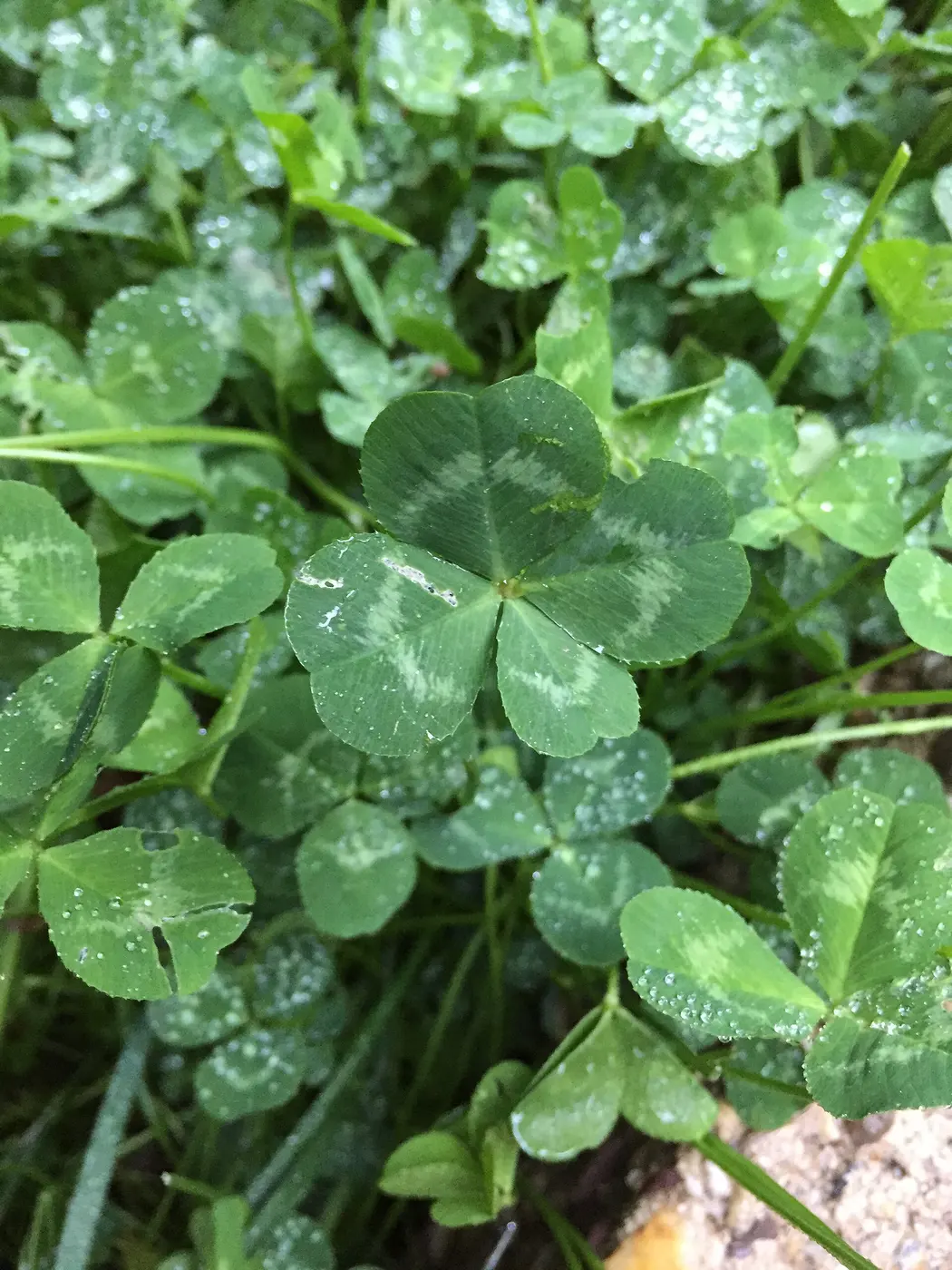

Genes and environment: two reasons
Broadly speaking, there are thought to be two reasons four-leaf clovers form.
The first is genetics. Some plants are naturally inclined to produce four leaflets, and they do so again and again. Around 2010, a research team at the University of Georgia in the United States reported that it had pinpointed the location of a gene involved in the number of leaflets in white clover. According to the researchers, though, even plants with that trait will not produce four-leaf clovers unless conditions such as temperature and day length are right.
The second is damage during growth. A clover leaf forms when a tiny cluster of cells at the tip of the stem, called a primordium, divides. Normally it splits into three, but if it is injured at that stage, for instance by being stepped on, it is said that it can split into four instead. This is thought to be why four-leaf clovers are often found near park entrances and along paths where people walk a lot.
Put the two reasons together, and the best strategy for a four-leaf hunt seems to be to search busy, well-trodden spots, around a plant that has already produced one. The tips that seasoned clover hunters all swear by may turn out to make more sense than you’d expect.
The world record is 63 leaves
Some clovers go far beyond four. Five- and six-leaf clovers turn up too, rare as they are, and some people take on the challenge of cultivating plants with ever more leaves.
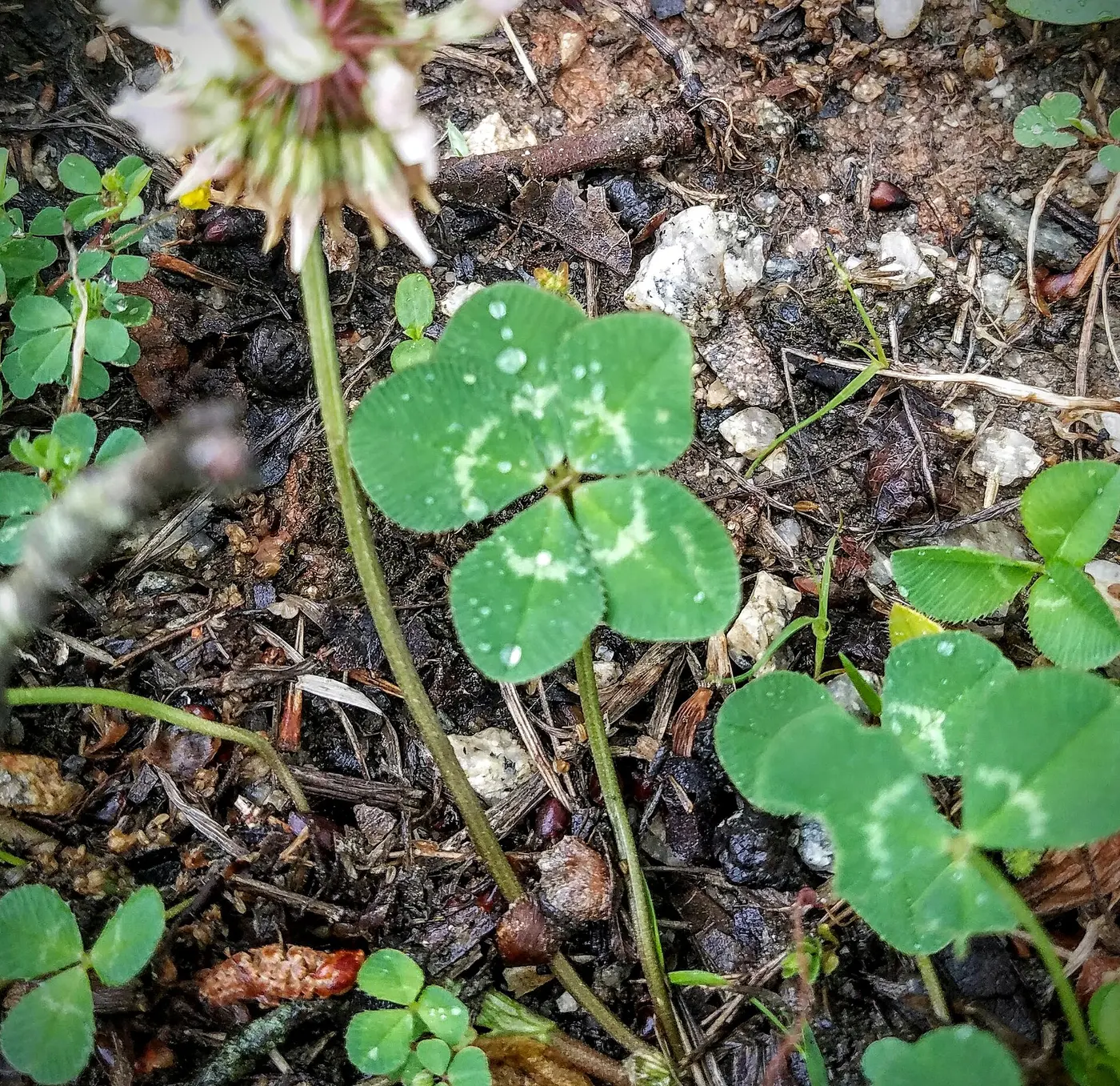

In 2009, Shigeo Obara of Hanamaki in Iwate Prefecture, Japan, found a clover with no fewer than 56 leaves and was recognized by Guinness World Records. Obara had spent many years crossing many-leaved plants with one another.
That record was broken by a man living in Tochigi Prefecture. He took home plants with four, five, seven and more leaves, grew them in his garden, and every year hand-pollinated the many-leaved plants with one another and collected their seeds. In July 2023, he found a clover with 63 leaves on a single stem, which was recognized as a new world record. Counting the leaves alone reportedly took him more than an hour.
How it became a sign of luck
The four-leaf clover’s status as a lucky charm is said to come from European folklore. A well-known explanation holds that the four leaves stand for hope, faith, love and luck.
In Ireland, meanwhile, a three-leaf member of the clover family is cherished as a national symbol. According to legend, St. Patrick used the three-leaf plant to explain Christian teaching, so the three-leaf clover has a special meaning all its own.