Why does singing sand squeak?
Clean, evenly sized quartz grains rub against one another, and the vibration is thought to ring out as sound.
Walk on a sandy beach and usually all you hear is the crunch of shifting sand. On certain beaches, though, every step draws a squeak or a chirp from underfoot, almost like the call of a small animal.
This is “singing sand,” known in Japanese as nakisuna (crying sand) or narisuna (sounding sand). Beaches like this are dotted all around Japan. So where in the sand does that sound come from?
Quartz takes the lead
Singing sand is made mainly of grains of a mineral called quartz. Quartz is a hard mineral with the same composition as rock crystal, and it is found in a great deal of sand. At Kotohikihama, a beach in Kyōtango, Kyoto Prefecture, that is famous for its singing sand, about 70 percent of the sand is said to be quartz.
There is still a lot we don’t understand about how singing sand sings, but the basic idea goes something like this. When you press down on dry sand with your foot, the layers of sand shift, and the grains all rub against one another at once. On the grains’ surfaces, friction makes them catch and slip, catch and slip, over and over in rapid succession. Those vibrations resonate through the layer of sand, and we hear them as sound.
Not just any sand will sing, however. It is said to need grains that are well matched in size and rounded in shape and, above all, grains with clean surfaces.
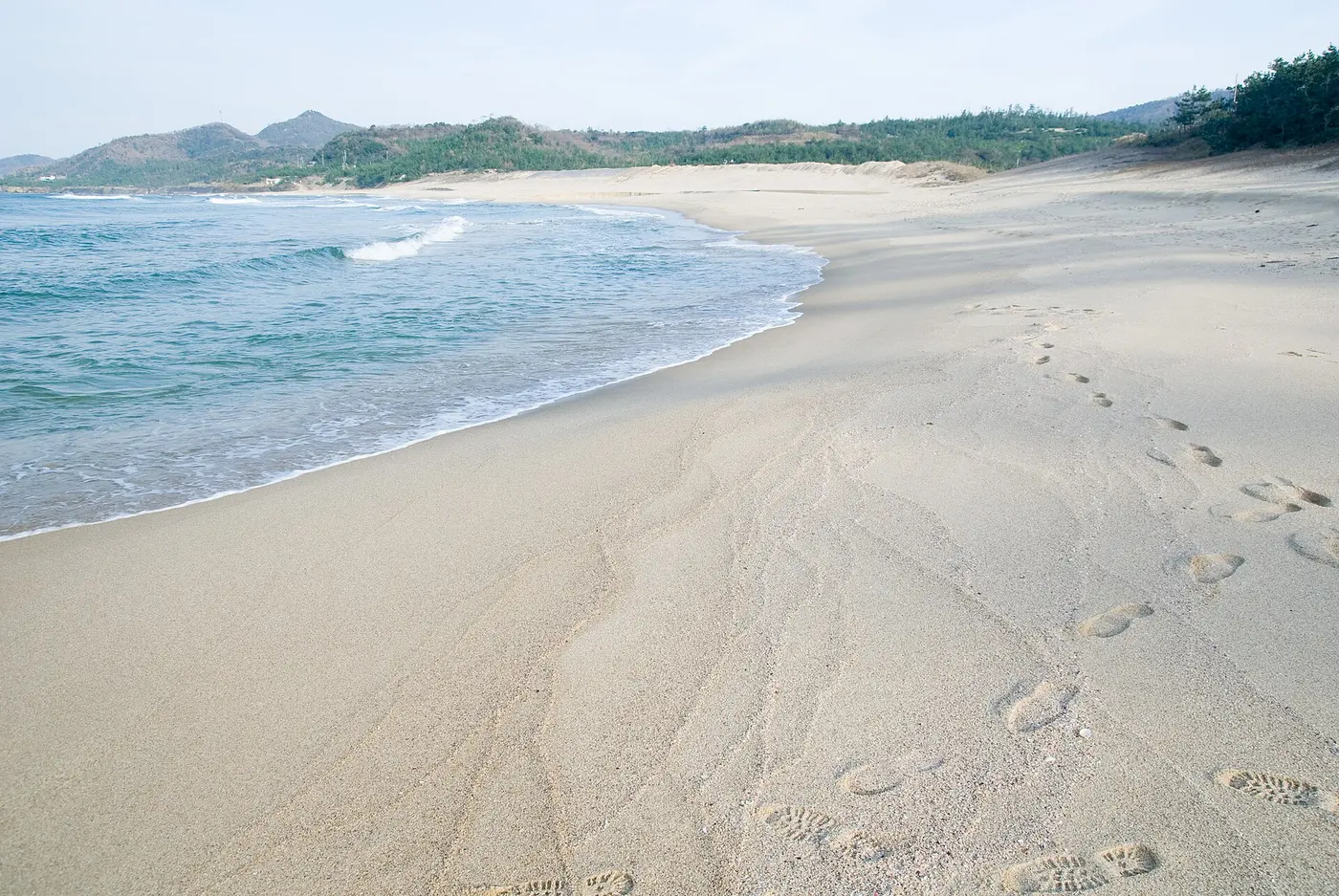

A little dirt and it falls silent
Singing sand is extremely delicate. Just a trace of oil, fine mud or other grime on the grains changes the way they rub together, and the sound stops. That is why singing sand is sometimes called a “barometer of how clean the sea is.”
In 1997, when the Russian tanker Nakhodka spilled heavy oil in the Sea of Japan, oil washed up on Kotohikihama too, badly affecting the sand’s voice. Local people kept up cleanup efforts, and the sand is said to have started singing again. Kotohikihama has continued working to protect the beach, banning smoking on the sand in 2001, and in 2007 it was designated a national Natural Monument and Place of Scenic Beauty.
Other singing-sand beaches include Kotogahama in Ōda, Shimane Prefecture; another Kotogahama in Wajima, Ishikawa Prefecture; and Kugunarihama in Kesennuma, Miyagi Prefecture. Kugunarihama is written with the characters for “eighteen” and “sound”: the story goes that the sand’s squeak, “kukku,” was heard as kuku, “nine-nine,” and nine plus nine makes eighteen. The sound of the sand at Kotogahama in Shimane has even been chosen as one of the “100 Soundscapes of Japan.”
A roar in the desert
Singing sand has relatives not only on beaches but in deserts too. These, though, are another thing entirely.
In deserts around the world, about 35 places are known where sand avalanching down the face of a large dune sets off a deep, heavy booming hum. The sound can last for several minutes and reportedly reaches as much as 105 decibels. Mingsha Shan near Dunhuang in China—its name means “Singing Sand Mountain”—has been known since ancient times as a mountain where the sand sings.
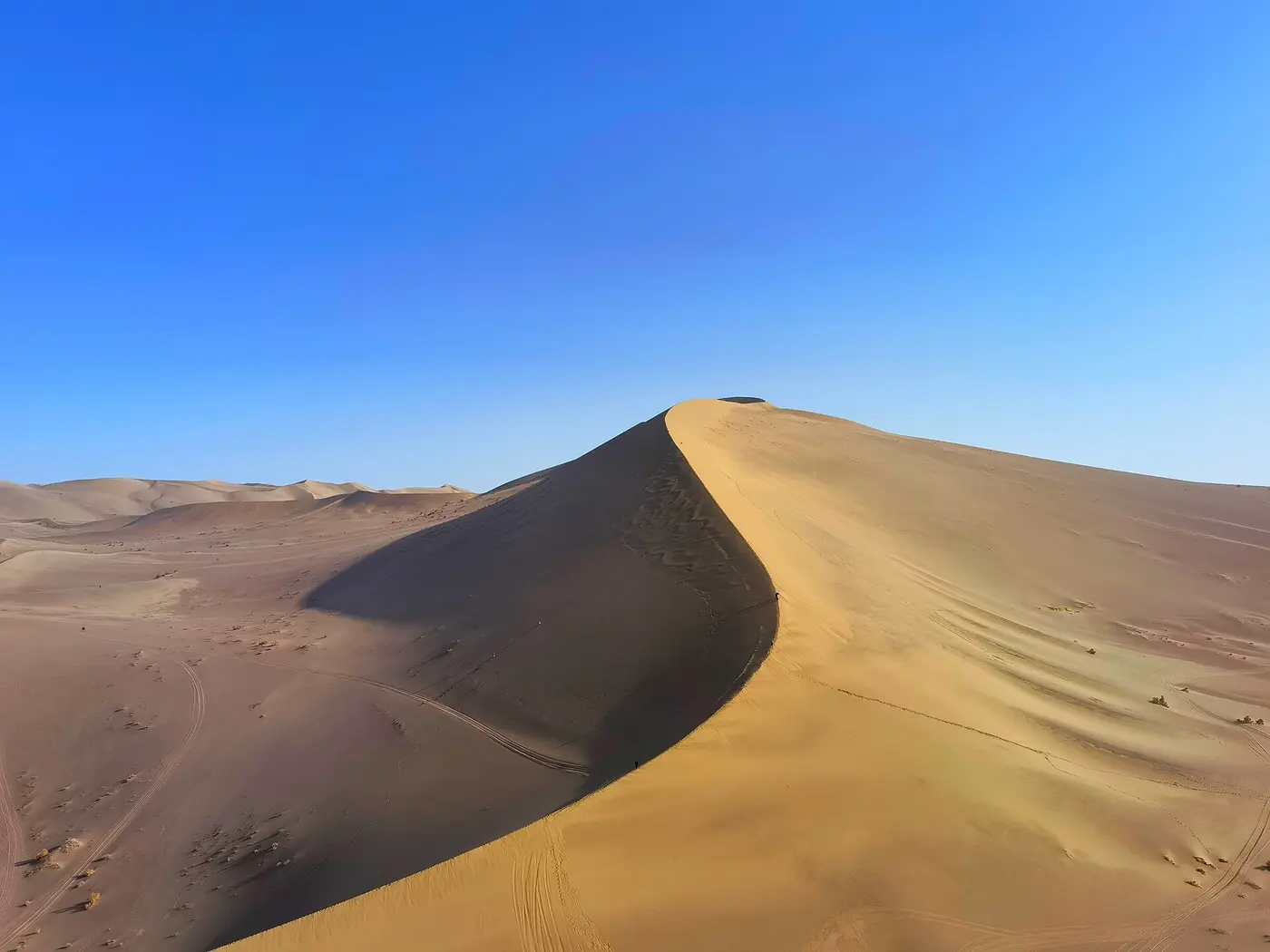

Beach sand gives a short, high squeak the instant you step on it, while a desert’s “booming dune” keeps up a low drone for a long time. Both are thought to start with dry grains of sand rubbing together, but they differ so much in pitch and duration that the two are studied separately. Just how dunes manage to make such a loud sound for so long is still being debated by researchers.
Either way, both are a kind of modest natural instrument, one that plays only when dry grains of sand move together in unison.