Where did Earth’s water come from?
The leading theory says asteroids delivered it, but the question is still not settled.
0.02%
Photos of Earth taken from space show a world glowing blue. Oceans cover about 70 percent of its surface, to an average depth of about 3,700 meters (12,000 feet). No other planet in the solar system is known to hold so much liquid water on its surface.
Compared with the weight of the whole planet, though, the oceans are a mere trace. All the seawater put together amounts to only about 0.02 percent of Earth’s mass. You could say it barely dampens the surface. And where this thin film of water came from is still not clearly understood.
Born in a place too hot
The mystery starts with where Earth was born. About 4.6 billion years ago, planets were growing inside a disk of gas and dust circling the young Sun. Close to the Sun it was hot, too hot for water to freeze into ice. Water could become ice only beyond a certain distance from the Sun, a boundary known as the “snow line.”
Earth formed inside that snow line. If so, the rocks it was built from should have been dry, holding almost no water. That led to the idea that the water arrived later, delivered by bodies containing ice or water that had formed beyond the snow line. The leading suspects: comets and asteroids.
The clue is “heavy hydrogen”
The key to telling them apart is a kind of hydrogen “fingerprint.” Alongside ordinary hydrogen there is a tiny amount of deuterium, or heavy hydrogen, which carries one extra neutron. The ratio of deuterium to ordinary hydrogen in water is thought to depend on where that water formed. In Earth’s oceans, there is about one deuterium atom for every 6,400 hydrogen atoms.
Comets, being lumps of ice, were long the favorite. But when scientists measured the water of Halley’s Comet and a few others, they found roughly twice as much deuterium as in Earth’s oceans. In 2011, the discovery that Comet Hartley 2 has a ratio much like Earth’s oceans briefly revived the comet theory.
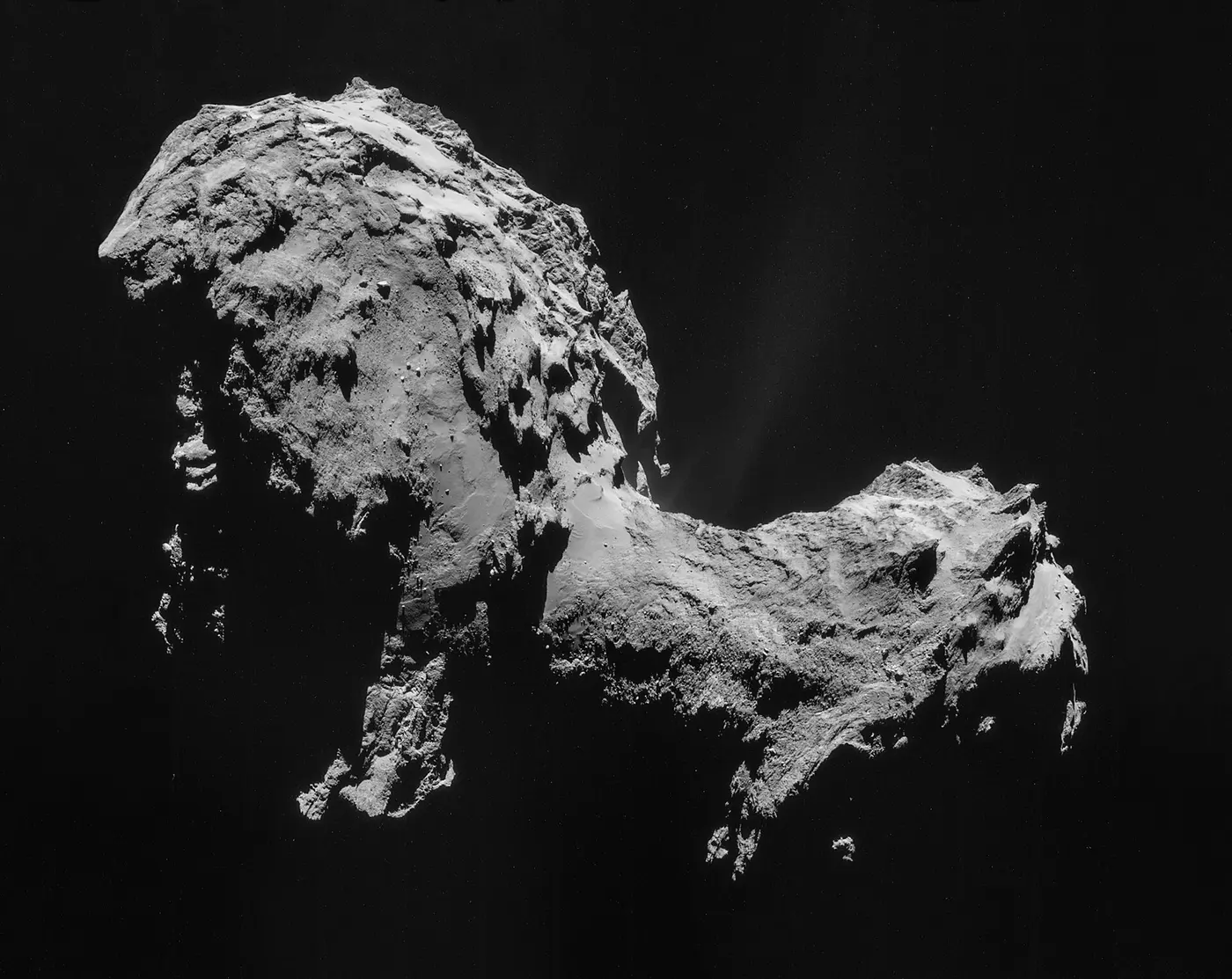

Then, in December 2014, the European Space Agency (ESA) announced the results of its Rosetta spacecraft’s close-up study of Comet Churyumov–Gerasimenko (67P). The deuterium content of its water was high: more than three times that of Earth’s oceans. Results like these have strengthened the view that comets supplied only a small part of Earth’s water—less than 10 percent, even by generous estimates.
The water of asteroid Ryugu
Asteroids have taken their place as the leading suspects. In particular, meteorites called carbonaceous chondrites, which are rich in water and organic matter, have deuterium ratios very similar to Earth’s seawater. Carbonaceous chondrites are dark meteorites that preserve much of the material from the time the solar system was born.
A major clue came from Japan’s Hayabusa2 spacecraft. Hayabusa2 collected about 5.4 grams of material from the asteroid Ryugu, and in December 2020 the capsule carrying it landed in the Australian desert. Analysis showed that Ryugu’s material closely resembles CI chondrites, an especially primitive type of carbonaceous chondrite, and that it holds as much as about 7 percent water, locked up in clay minerals and the like. Scientists even found liquid water sealed inside a crystal. The idea that asteroids like Ryugu brought water to Earth suddenly looked much more real.
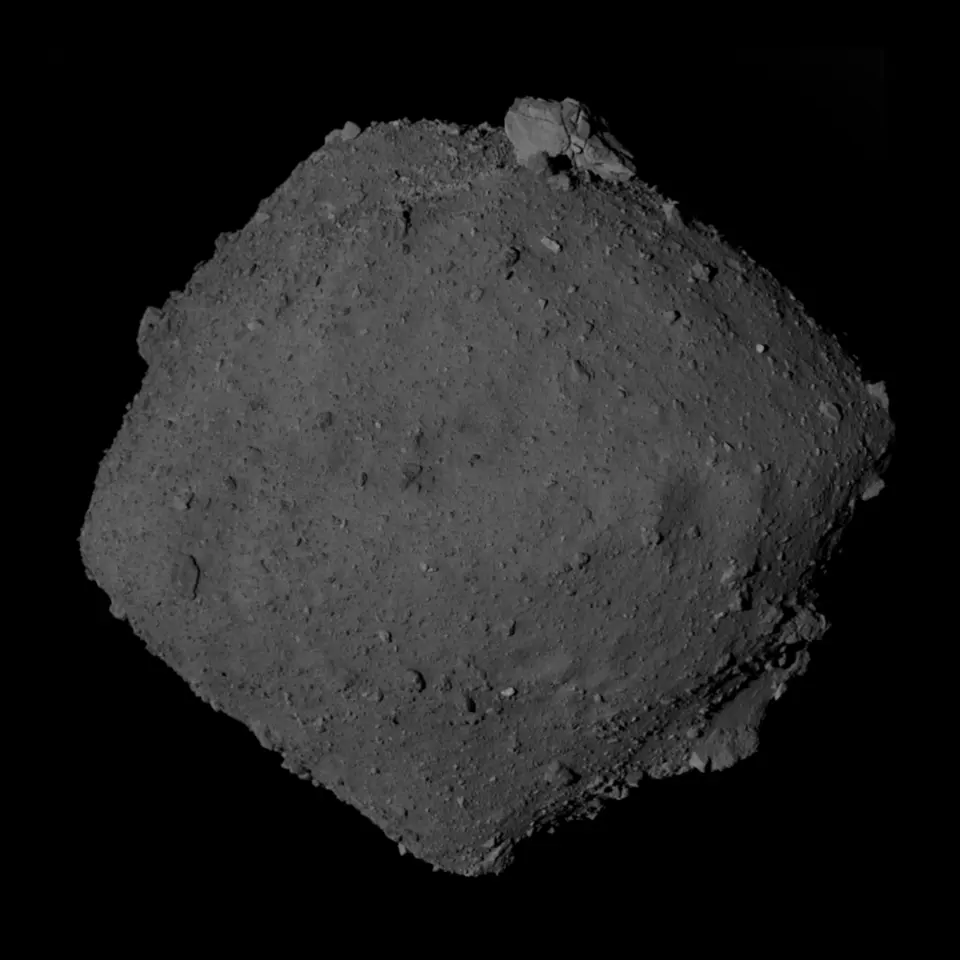

Even so, the story isn’t over. In 2020, a study reported that meteorites called enstatite chondrites—thought to be close to the material Earth was built from—contain surprisingly large amounts of hydrogen. Perhaps Earth already had plenty of the makings of water from the start. Other research suggests water may have been produced in the magma ocean that covered the newborn Earth. Earth’s water may have gathered bit by bit from several sources rather than from just one.