Was the three-point seat belt patent free to use?
Yes. Volvo, which introduced the three-point belt in 1959, opened its patent so other carmakers could use it free of charge.
1million+
Get into a car, pull the belt diagonally across your chest and click it into the buckle beside your hip. That everyday motion belongs to the three-point seat belt, which holds you at the hips and across the chest at the same time.
The design was made practical by an engineer at the Swedish carmaker Volvo. And Volvo chose not to keep the profits from it to itself.
A lap belt was not enough
The idea of strapping a person into a seat is an old one. In the 19th century, the English engineer George Cayley used belts on his gliders, and in the 20th century they became essential in aircraft seats. In cars, the American company Nash offered a lap belt as an option as early as 1949.
But a two-point belt across the lap alone could let the upper body jackknife forward in a crash, slamming the head and chest. The idea of adding a diagonal shoulder strap to make a three-point belt had been patented in the United States by 1955, but it had not yet come into wide use.
An engineer from fighter-plane seats
The man who turned it into something anyone could use was Nils Bohlin. Born in 1920, Bohlin had worked at the aircraft maker Saab on ejection seats, which let fighter pilots escape in an emergency. In 1958 he moved to Volvo to work on safety.
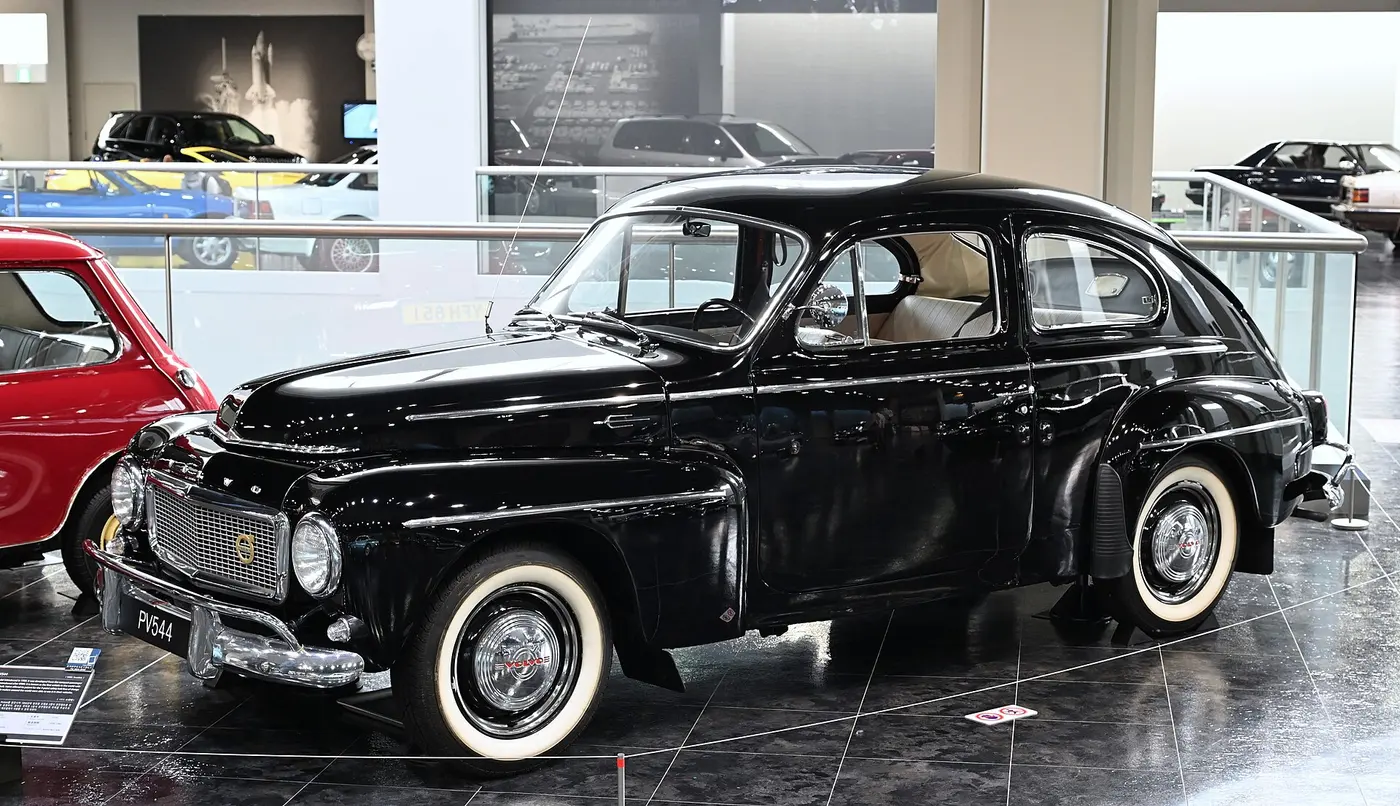

Bohlin’s idea was to join the lap belt and the diagonal shoulder belt into a single strap anchored low at the side of the seat. In a crash it held the pelvis and chest, the sturdiest parts of the body, and it could be fastened easily with one hand. In 1959, Volvo introduced the three-point belt in its cars.
Volvo did not keep it to itself
Volvo patented the design. The patent described its aim as stopping the wearer’s body from being thrown forward, in a way the body could tolerate. But rather than charge other carmakers for its use, Volvo let anyone use it for free. Volvo Group’s official website describes the invention as having been “effectively gifted to the rest of the industry, and therefore the rest of the world to use, without payment or claims.”
Bohlin went on to measure its effect. In 1967, he studied 28,000 accidents in Sweden and reported that, as long as the passenger compartment stayed intact, no belted occupant had been killed in crashes below about 100 kilometers per hour (60 miles per hour).
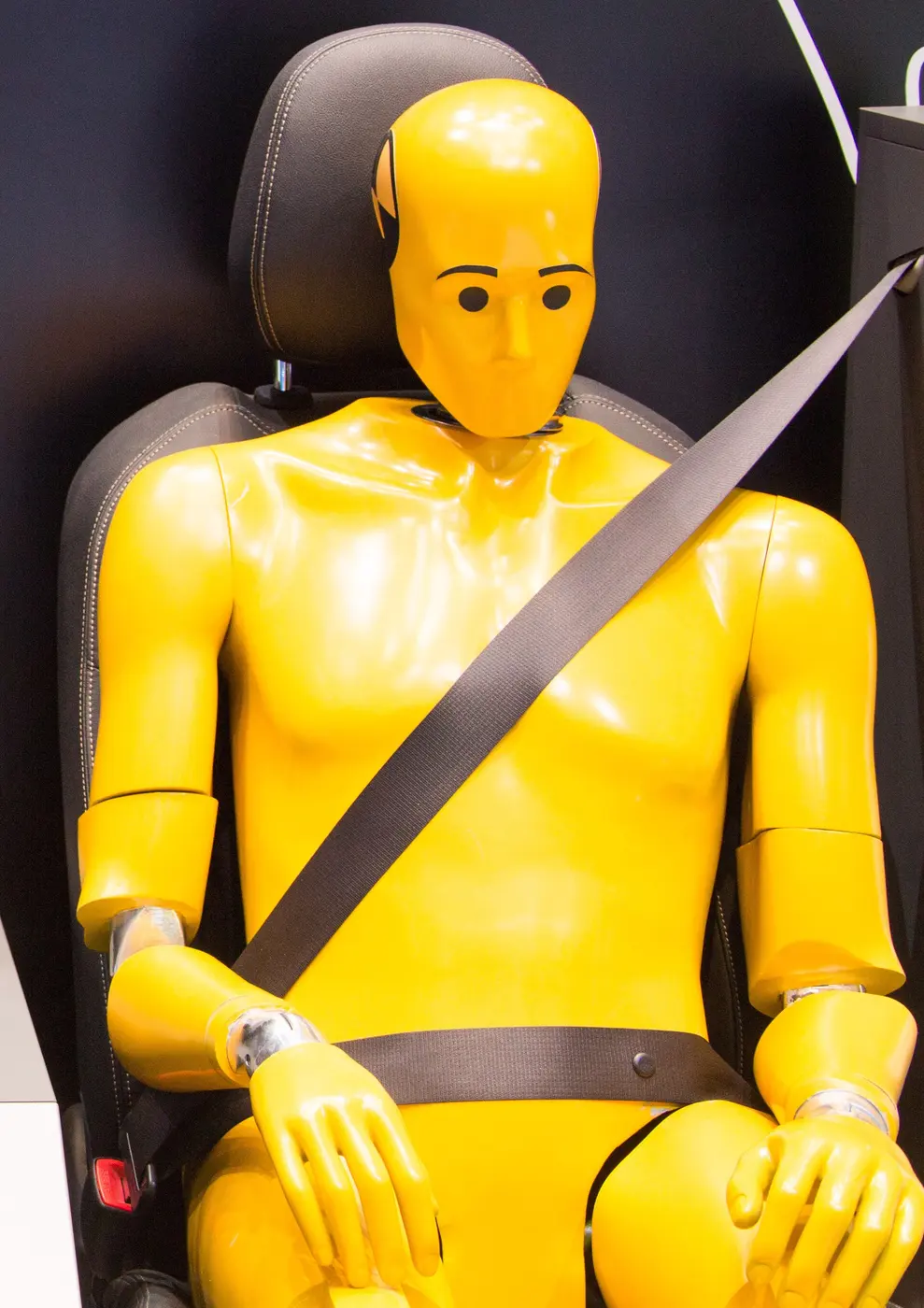

Today the three-point seat belt is fitted in nearly every car in the world. Volvo credits the invention with saving at least a million lives.
How belts became compulsory in Japan
In Japan, fitting seat belts to the driver’s seat of passenger cars became mandatory in 1969. The requirement was extended to the front passenger seat in 1973 and to the rear seats in 1975. Whether to actually wear them, though, was long left up to the people inside. In 1971, wearing a belt on expressways was declared something drivers should “make an effort” to do, but there was no penalty for ignoring it. Wearing belts in the front seats became compulsory on expressways and similar roads in 1985, and in the rear seats in 2008.
According to Japan’s National Police Agency, rear-seat passengers who were not wearing a belt died at about 13.9 times the rate of belted passengers on expressways, and about 2.8 times the rate on ordinary roads. Even in the back seat, the belt is a lifeline.