Do sea otters hold hands while they sleep?
Mostly in aquariums. In the wild, sea otters mainly wrap themselves in kelp to keep from drifting away.
Two sea otters float on their backs, front paws gently linked, fast asleep. Footage like this, filmed in aquariums, has charmed people around the world. It is often explained that they hold hands so they won’t drift apart while they sleep.
So do wild sea otters hold hands like this every night? Take a look at how they actually behave at sea, and a somewhat different picture emerges.
Life on the water
Sea otters belong to the weasel family and live along the coasts of the North Pacific. They do sometimes come ashore, but they eat, sleep and raise their young almost entirely on the water.
When they rest, they float on their backs at the surface, usually gathered in groups. These groups are called “rafts,” and typically consist of 10 to 100 animals, with males and females in separate groups. The largest raft ever observed is said to have contained more than 2,000 otters.
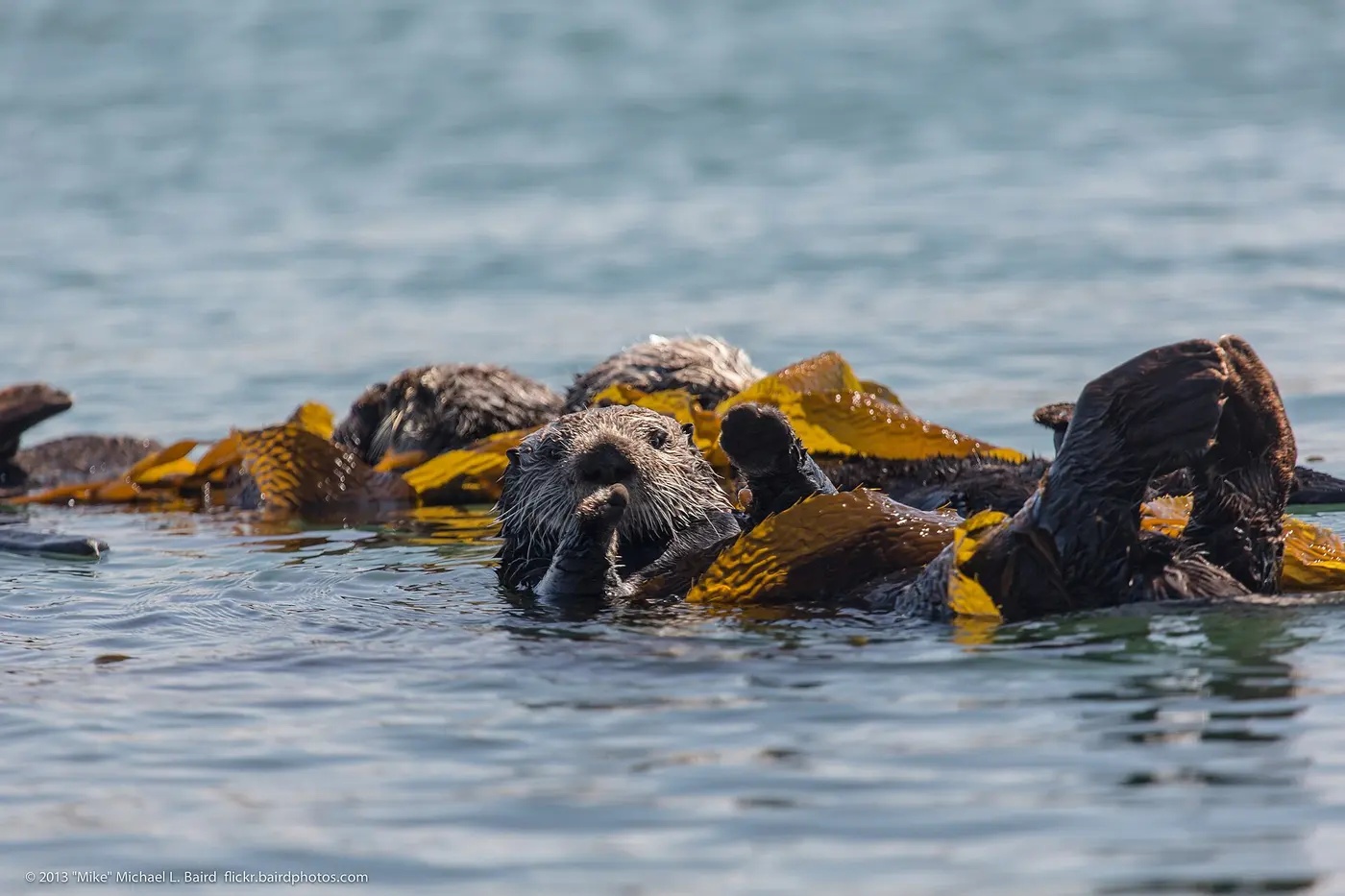
Sleeping unprotected on a sea of waves, wind and currents, though, an otter could easily end up drifting far away. What sea otters rely on to stay put is not so much a friend’s paw as seaweed.

Kelp as a natural anchor
In the waters where sea otters live, large seaweeds such as giant kelp grow in dense, forest-like beds. When resting, otters wrap these long fronds around their bodies or hold on to them to keep from drifting. Because the kelp is rooted to the seafloor, it works much like a ship’s anchor.
What about holding hands, then? Linking paws while sleeping is said to be seen mainly in captivity, in places such as aquariums. Tanks often have no kelp to wrap up in, and one idea is that the otters hold on to each other instead. It seems wild otters do sometimes grab on to one another, but this has not been established as a regular habit when rafts sleep.
There is one bond, however, that holds firm in the wild too: mother and pup. A mother carries her pup on her belly, hugging it as she floats and cares for it.
A workbench on the chest
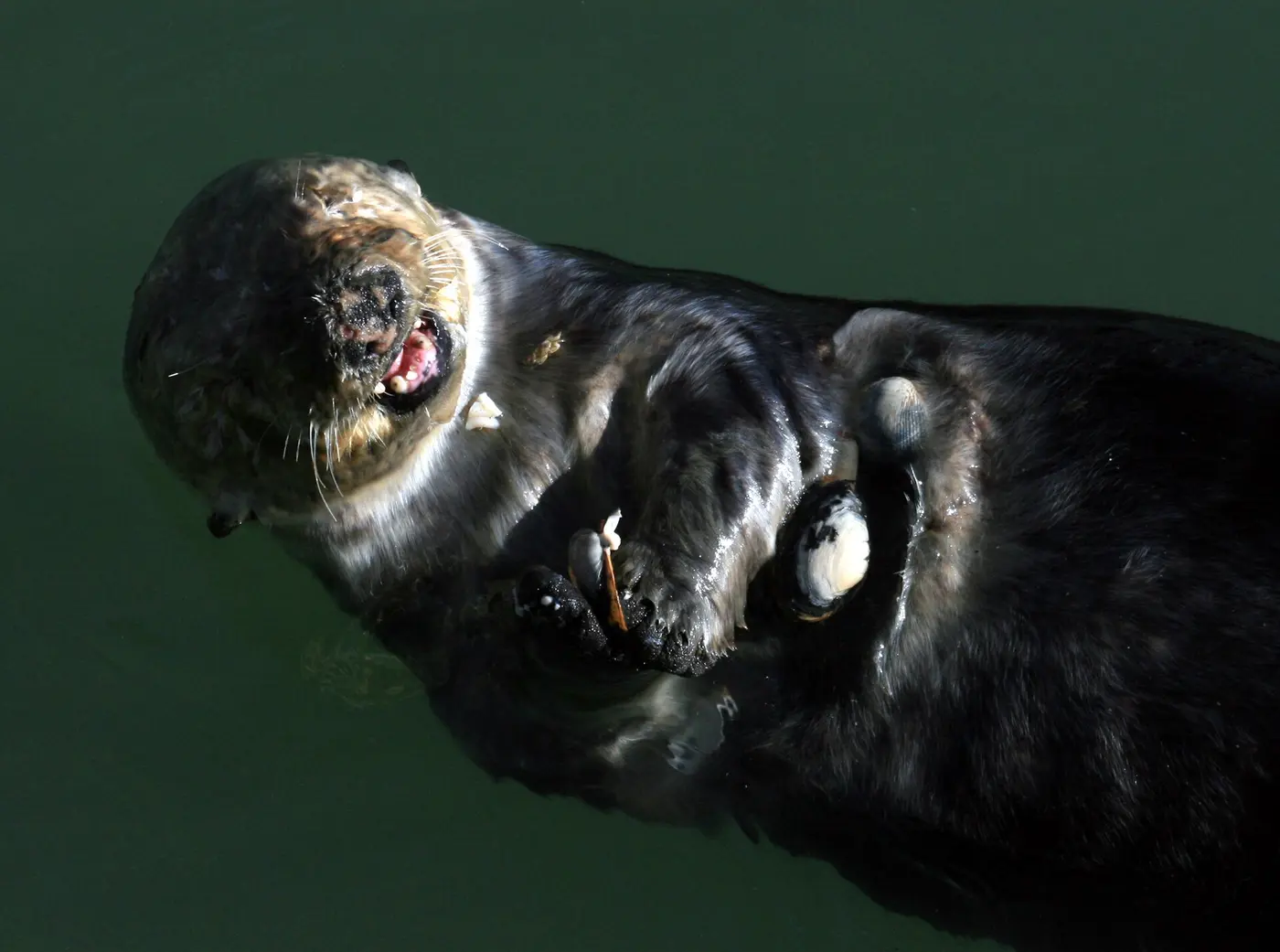
Sea otters are also known as one of the few mammals that use tools. After diving for clams or sea urchins, an otter rolls onto its back, places a stone on its chest and bangs the shellfish against it to crack it open.
Under each foreleg is a fold of loose skin that the otter uses like a pocket, sometimes stashing food it has gathered or a favorite stone.

There is a reason sea otters eat so diligently. Unlike whales and seals, they have no thick layer of blubber. To stay warm in cold water, they must eat a lot and keep generating heat inside their bodies, and they are said to eat more than a quarter of their body weight in food every day.
Their other defense against the cold is their fur. A sea otter has more than 100,000 hairs per square centimeter (well over 600,000 per square inch), among the densest fur of any animal. Yet this magnificent coat once drove the species to the brink of extinction. Hunting for the fur trade reduced a population thought to number around 150,000 to 300,000 down to only about 1,000 to 2,000 animals. Thanks to later protection, their numbers have gradually recovered.
When sea otters return, the sea itself changes. By eating sea urchins, which graze on kelp, otters keep the urchins from multiplying out of control, and the kelp forests survive. In a sense, sea otters tend the very forests that anchor them while they sleep.