Do dolphins really sleep with half their brain at a time?
Yes. The two halves take turns sleeping, and the eye opposite the sleeping half stays closed.
When we fall asleep, we close our eyes, our muscles go slack, and we become almost entirely unaware of what is going on around us. We take that for granted. But what would happen if you tried to sleep like that in the middle of the ocean?
Dolphins are not fish. They are mammals that breathe with lungs, and they have to come up to the surface for air every few minutes to every 10 minutes or more. On top of that, dolphins are thought to breathe semi-consciously rather than automatically. If a dolphin sank into a deep sleep, it would be unable to surface for air or keep watch for predators.
Sleeping with one eye open
Keepers and researchers had long noticed that dolphins sometimes swim slowly with just one eye closed. The meaning of that habit was revealed in the early 1970s by a team led by Lev Mukhametov in the former Soviet Union, who recorded the brain waves of bottlenose dolphins.
What they found was astonishing. One half of the dolphin’s brain showed the slow, large waves typical of deep sleep, while the other half kept producing the waves of an animal wide awake. This is called unihemispheric sleep. Dolphins were quite literally sleeping with half their brain at a time.
When the right half of the brain sleeps, the left eye closes; when the left half sleeps, the right eye closes. Because the nerves linking each eye to the brain cross over to the opposite side, it is the eye opposite the sleeping half that shuts. According to reports, in bottlenose dolphins each half of the brain sleeps for a total of about four hours a day.
The waking half stays on duty
While one half rests, the half that stays awake takes on some vital jobs: keeping the body moving and swimming, rising to the surface to breathe, and watching the surroundings through the open eye.
That open eye is thought to help not only in watching out for predators such as sharks, but also in keeping track of the rest of the group. Some observers have seen dolphins swimming side by side rest with the eye facing their companion kept open.
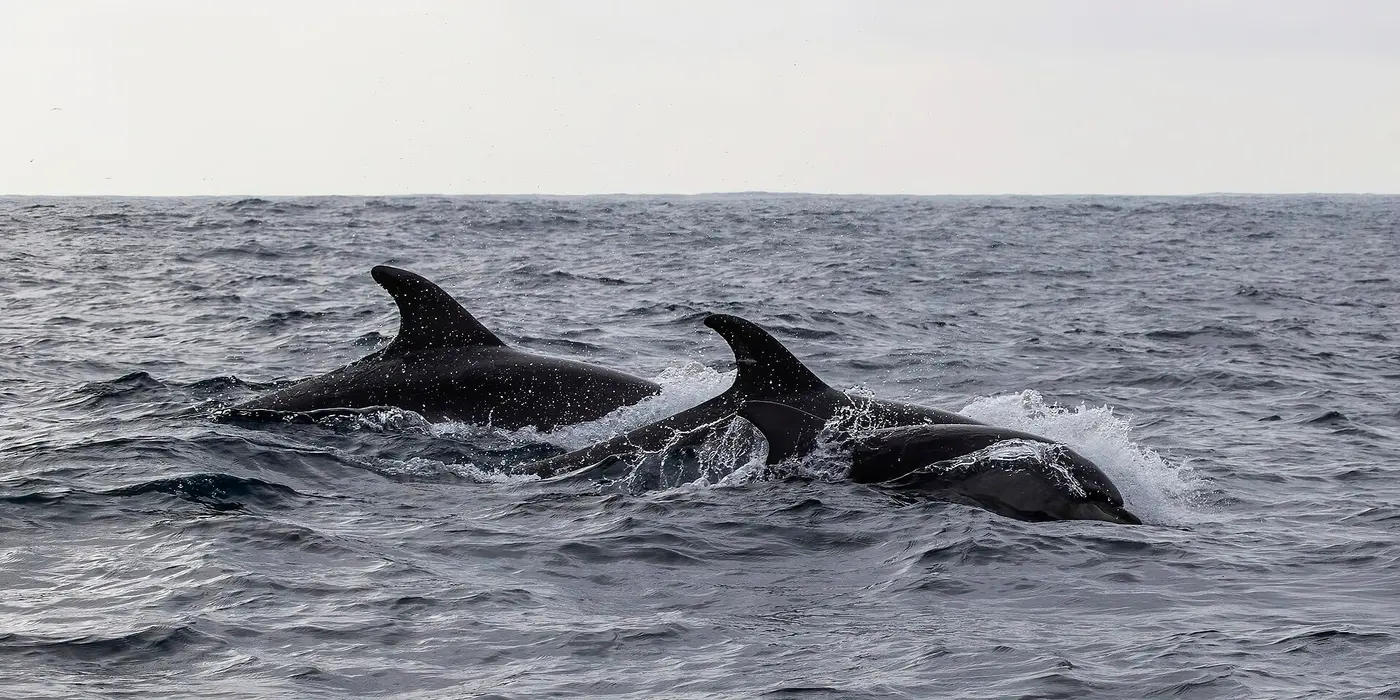

A resting dolphin may float motionless near the surface like a log, or swim slowly in the same direction alongside the rest of its group. Swimming while asleep is a feat that is hard for humans even to imagine.
Dolphin sleep differs from ours in another way, too. Human sleep cycles back and forth between a lighter stage called REM sleep and deeper sleep, and most of our dreams are said to come during REM sleep. In dolphins, however, REM sleep has never been clearly identified. Whether dolphins dream is something nobody yet knows.
Do newborn calves never sleep?
There is still much we do not understand about how dolphins sleep. In 2005, a widely discussed report described killer whale and bottlenose dolphin calves and their mothers swimming almost without rest for about a month after birth.
Later, though, a different research team observed calves more closely and reported seeing them rest with one or both eyes closed while still swimming. Exactly how newborn dolphins sleep remains a matter of debate.
Birds sleep on one side, too
The ability to sleep with just one side of the brain is not unique to dolphins. Some birds sleep in a similar way.
Ducks at the edge of a flock, for example, have been reported to sleep with one half of the brain while keeping open the eye that faces away from the group. The more dangerous their position, the more often they sleep with one eye open.
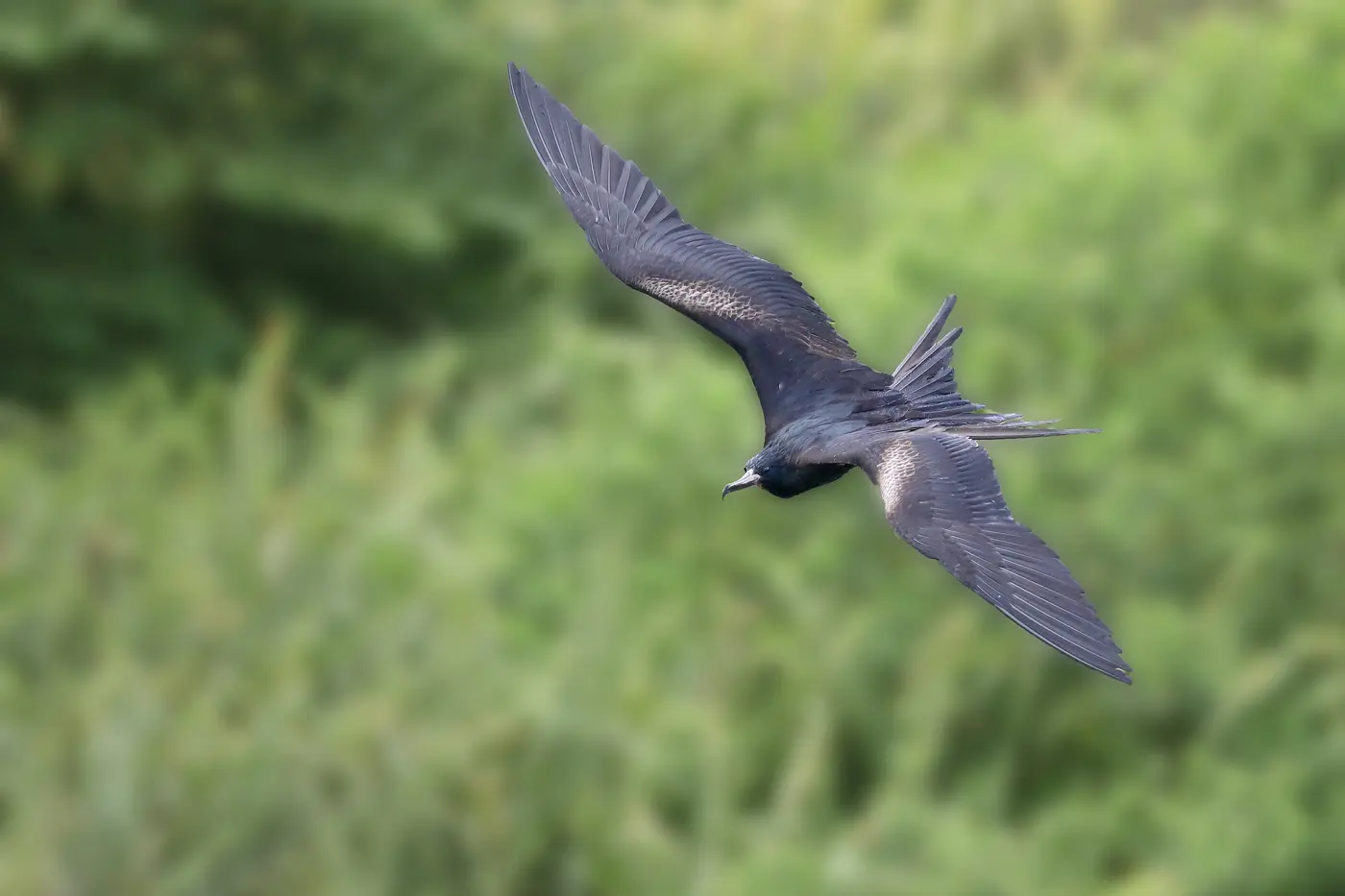
In 2016, brain-wave recordings confirmed that great frigatebirds, which fly over the ocean for days on end, sleep in flight. Most of their naps, however, lasted only a few seconds to a little over 10 seconds. And their total sleep while flying came to just over 40 minutes a day, far less than when they rest on land.