How are seedless grapes made?
Either by growing varieties that naturally fail to form seeds, or by dipping bunches in the plant hormone gibberellin.
1959
In summer, Japanese stores fill up with small Delaware grapes. You lift a bunch to your mouth and squeeze out the fruit, and never once does a seed hit your teeth. Most of the popular Shine Muscat grapes are seedless, too.
But come to think of it, that is strange. For a plant, seeds are precious: they are how it leaves offspring. So how does seedless fruit come about? There are two main ways, and one of them was developed in Japan.
No seeds, no growth
The first thing to know is that, for a grape, seeds are not just an extra. As they develop inside the fruit, seeds release plant hormones that make the surrounding flesh grow.
So simply preventing seeds from forming isn’t enough; the fruit won’t grow to full size. Making seedless grapes means achieving two things at once: getting rid of the seeds, and still making the fruit grow big.
Varieties that naturally lack seeds
The first approach is to grow varieties that naturally fail to form seeds.
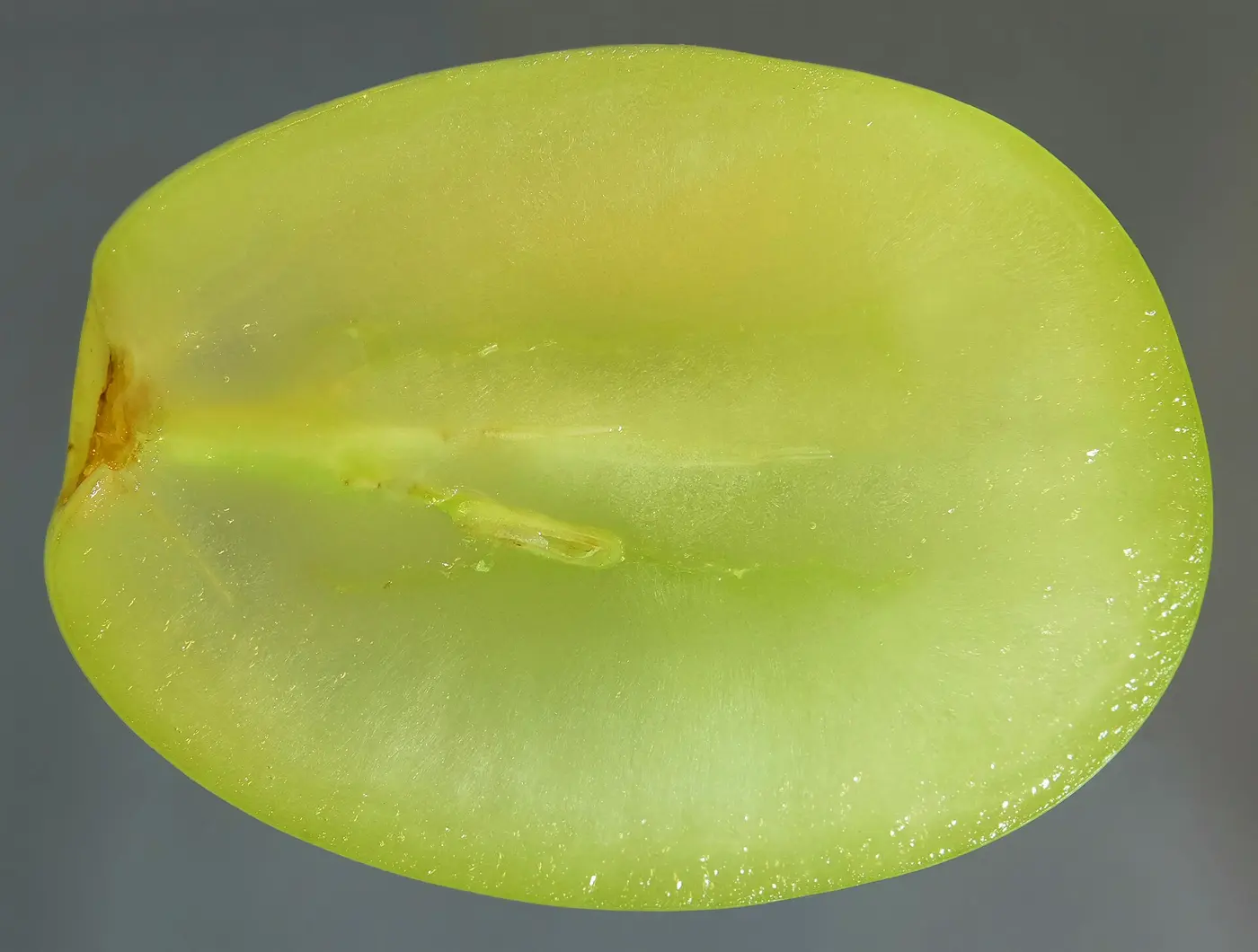
The best known is the variety called Thompson Seedless in the United States. It is thought to have originated in Asia Minor, once part of the Ottoman Empire. In California it occupies about a third of all grape acreage, and in 2000 about 97 percent of the state’s raisins came from this variety. In Thompson Seedless, the flowers are pollinated and fruit begins to form, but the seeds stop developing partway, leaving only tiny traces inside the fruit.
Since these varieties produce no seeds, they can’t be grown from seed. Instead they are propagated by cuttings or grafting. And to make the fruit bigger, they are often treated with gibberellin, which we will come to shortly.

The accidental seedless Delaware
The second approach is to take a variety that normally has seeds and make it seedless with the help of a plant hormone. The star here is a substance called gibberellin, and Japanese scientists played a central part in its discovery.
In the mid-1920s, in Japanese-ruled Taiwan, a researcher named Eiichi Kurosawa was studying bakanae, or “foolish seedling,” a rice disease that makes seedlings shoot up abnormally tall and spindly. In 1926, Kurosawa showed that a substance released by the fungus behind the disease makes plants elongate. In 1938, Teijirō Yabuta and colleagues at Tokyo Imperial University isolated the substance and named it gibberellin. It was later found to be a plant hormone that plants naturally produce themselves.
Once gibberellin could be manufactured in factories in Japan in the mid-1950s, agricultural research stations across the country began testing uses for it on all sorts of crops. One of them was the Delaware grape. At first, the goal was not seedlessness at all. Delaware berries grow packed tightly together, and splitting was a constant problem. The idea was that gibberellin might lengthen the bunch’s stem and keep the berries from crowding each other.
Then, in 1958, at a research station in Yamanashi Prefecture and elsewhere, seedless berries turned up by chance on bunches treated with gibberellin before flowering. On top of that, they ripened earlier. The research quickly switched course toward making seedless grapes.
Two baths in gibberellin
The problem was that the berries came out small. The fix was to treat the bunches a second time after flowering. On July 17, 1959, at the fruit-tree branch of the Yamanashi Agricultural Experiment Station, seedless Delaware grapes were finally harvested ripe. Mitsuo Kishi, the branch head who led the research, later recalled it as “a day I will never forget as long as I live.”
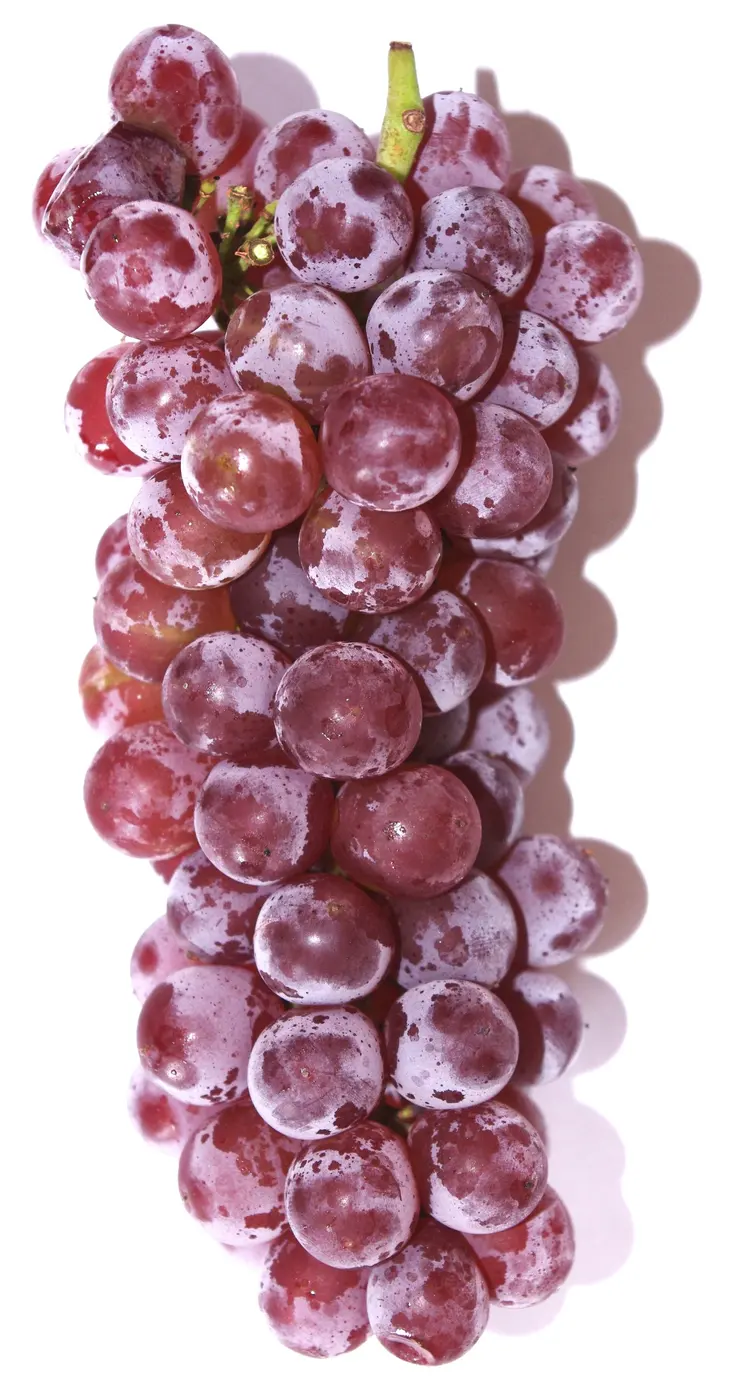

In the standard method used today, a gibberellin solution is poured into a cup and each bunch of grapes is dipped in it, one at a time. The first dip comes about 14 days before the expected date of full bloom, to prevent seeds from forming. The second comes about 10 days after full bloom, to make the berries grow larger. Seedless grapes are born from dipping bunch after bunch in the solution by hand.
In 1960, the first seedless Delaware grapes, from 220 hectares of vineyards, were shipped. They were a huge hit and reportedly sold for twice the price of ordinary Delawares. According to a 1995 article, by then all of Japan’s roughly 6,700 hectares of Delaware vineyards had switched to seedless. Varieties differ in how easily they can be made seedless, and Kyoho grapes, for example, are said to be harder than Delawares. But by adjusting the timing and method for each variety, growers now produce seedless fruit from many different varieties.