Why does ice float on water?
Freezing locks water molecules into an open crystal, so ice takes up about 9% more space and is lighter.
9%
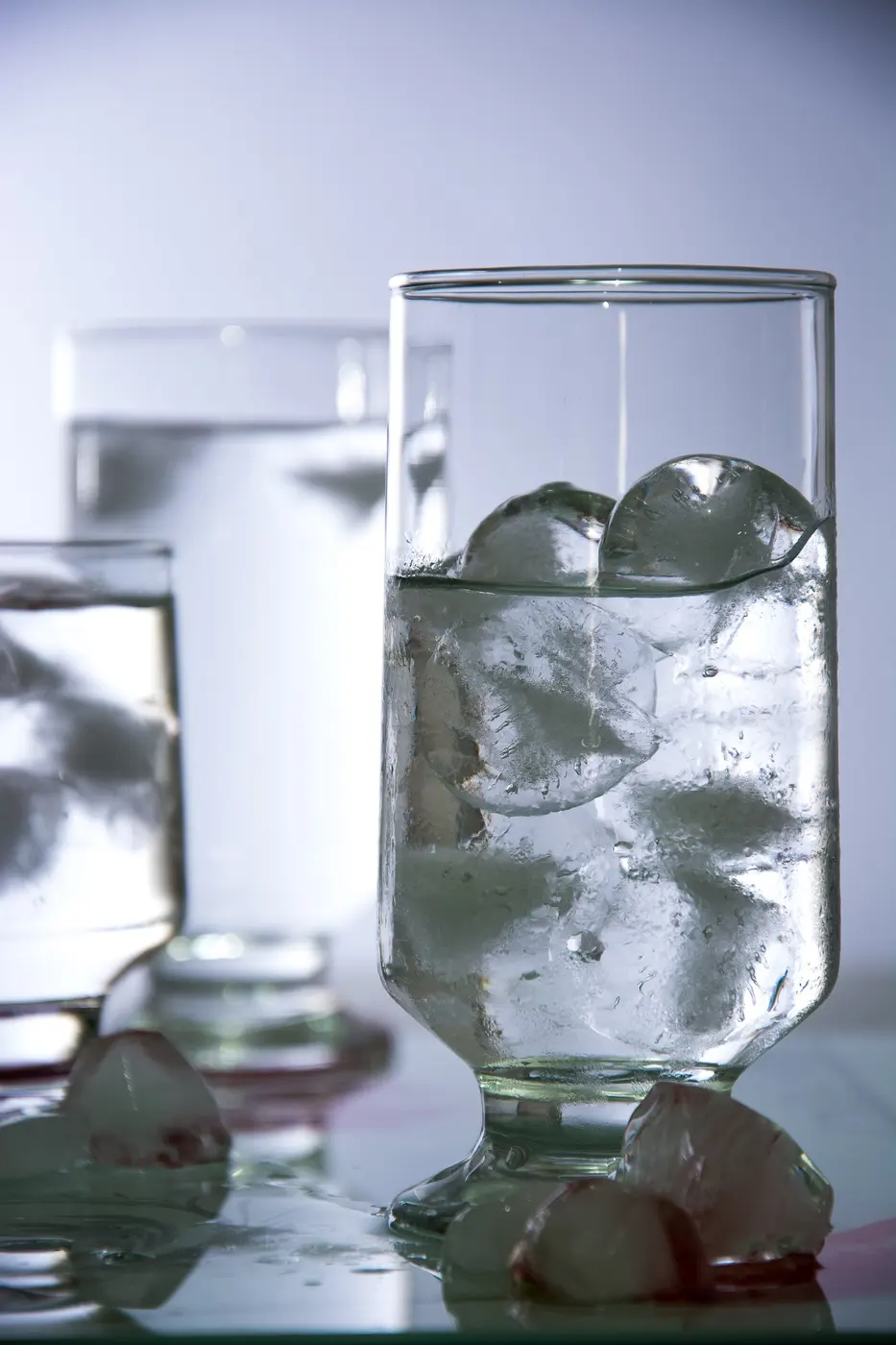
Drop ice cubes into a cold drink and they bob up, crowding together near the top of the glass. It’s such a familiar sight that we rarely stop to wonder about it.
But in nature, this is something of an exception. Candle wax and most metals shrink and grow denser when they solidify, so the solid sinks in its own melted liquid. Water, whose solid floats on its liquid, is a bit of an oddball.
Freeze it, and it expands
When water freezes, its volume grows by about 9 percent—close to a tenth. The mass stays the same while the volume increases, so ice weighs less than the same amount of space filled with water. The density of water at 0°C is almost exactly 1 gram per cubic centimeter, while ice comes in at about 0.92 grams. That difference is what keeps ice afloat.
It’s also why water pipes burst on bitterly cold winter nights, and why a plastic bottle filled to the brim with water swells tight when you freeze it. Water that seeps into cracks in rock can freeze and expand again and again, slowly splitting the rock apart over many years.

A crystal full of gaps
So why does water expand when it freezes? The key lies in hydrogen bonds, the attractions that link water molecules to one another.
A water molecule is one oxygen atom attached to two hydrogen atoms, in a bent, V-like shape. The oxygen end carries a slight negative charge and the hydrogen ends a slight positive charge, so neighboring molecules attract each other. In liquid water, these bonds form and break, break and form again at a furious pace, and the molecules move about while staying relatively tightly packed.
When water freezes, though, each molecule links hands with four neighbors and lines up in a fixed orientation. The result is a crystal built on a hexagonal lattice. That lattice is an airy structure riddled with empty space. By lining up neatly, the molecules actually end up taking more room. The six-sided shape of snowflakes comes from this same arrangement.
Water is heaviest at 4°C
Water’s odd behavior begins even before it freezes. Most liquids shrink and grow denser the colder they get, but water is densest not at 0°C but at about 4°C (39°F). Cool it further, and more and more open, ice-like arrangements appear within the liquid, making it lighter instead.
This sets the stage for something remarkable in winter lakes. As cold air chills the surface water, that water becomes denser and sinks, and water from below rises to take its place. Once the whole lake has cooled to near 4°C, any water that gets colder is lighter, so it stays at the surface and eventually turns to ice. The floating ice covers the lake like a lid, protecting the water beneath from the cold.
That is how, even under thick ice, water of around 4°C remains at the bottom of a lake, letting fish survive the winter. If ice were heavier than water, lakes might freeze from the bottom up, and the world would likely be a far harsher place for living things.
The tip of the iceberg really is just the tip
The difference in density between ice and water isn’t very large. So although ice floats, most of it sits underwater. Ice floating in fresh water shows less than a tenth of itself above the surface. Icebergs in the ocean float a little higher, because seawater is slightly denser than fresh water, but even so, close to 90 percent of an iceberg is hidden below the sea.
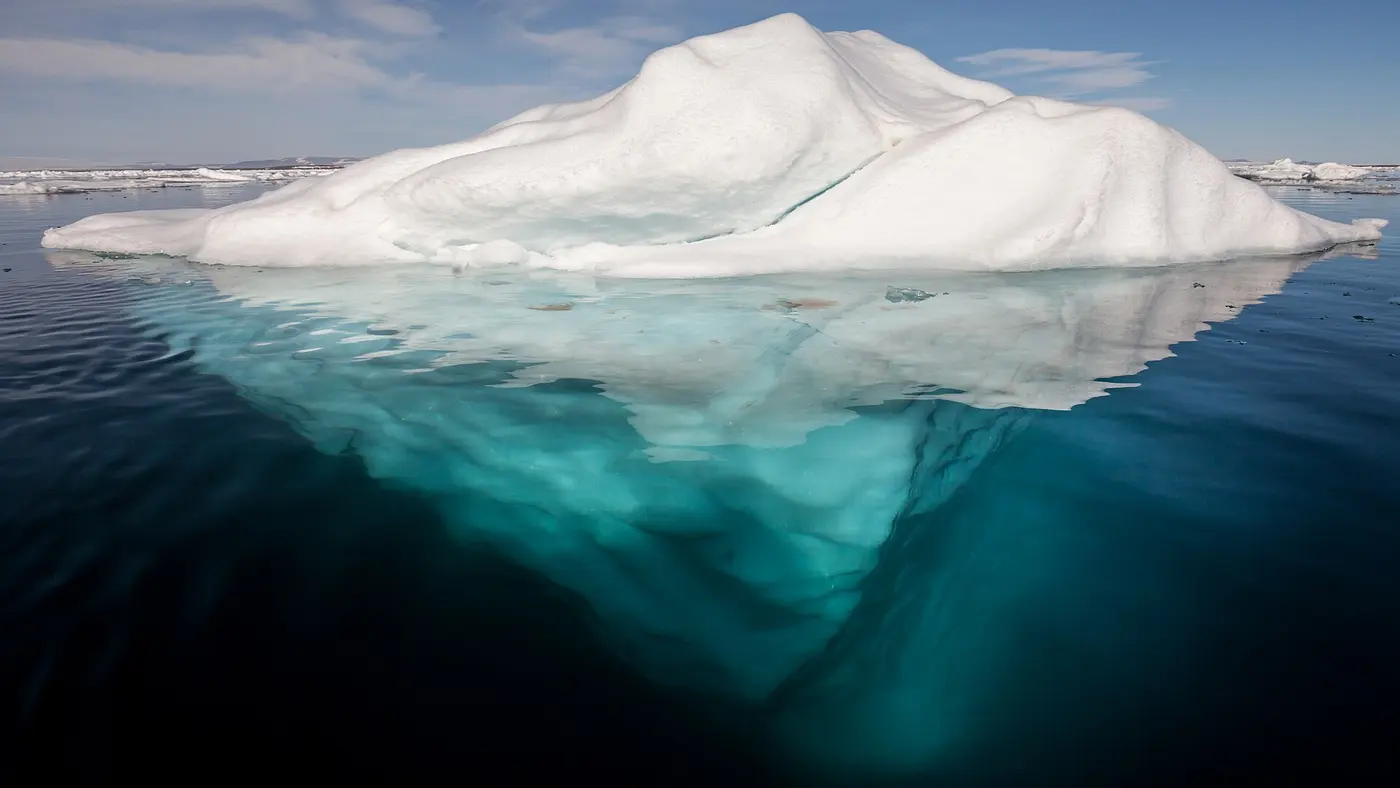

We say “the tip of the iceberg” to mean that what we can see is only a small part of the whole. It turns out the phrase isn’t just a good metaphor; as physics, it’s remarkably accurate.