Why does water boil at a lower temperature on a mountain?
Lower air pressure lets water form vapor bubbles more easily. On Mount Fuji’s summit, it boils at about 87°C.
87°C
Boil water on the summit of Mount Fuji and it bubbles furiously, yet the thermometer doesn’t even reach 90°C. You may have heard that rice cooked at the top comes out with a hard, uncooked center.
Water boiling at 100°C is a fact about the lowlands where most of us live. What decides the boiling temperature is not really the water itself, but the air pressing down on it.
Boiling is a pushing contest with the air
Water molecules escape from the surface of water at any temperature, a little at a time. That is why laundry dries. As the temperature rises, the push of those escaping molecules—the pressure of the water vapor, called vapor pressure—gets stronger and stronger.
Boiling is when bubbles of water vapor rise not just from the surface but from within the water itself. For a bubble to form, the pressure of the vapor has to beat the pressure of the surrounding air trying to crush it. At sea level, air pressure is about 1,013 hectopascals, and water’s vapor pressure reaches that value at exactly 100°C. So at sea level, water boils at 100°C.
Turn that around, and if the air pressing down gets weaker, water can form bubbles at a lower temperature. The boiling point rises and falls with air pressure.
About 87°C on top of Mount Fuji
The higher you go, the thinner the layer of air above your head, and the lower the air pressure. On the summit of Mount Fuji, 3,776 meters (12,388 feet) high, the pressure is about 630 to 640 hectopascals, roughly two-thirds of that at sea level. There, water boils at about 87°C (189°F). Sources give anywhere from 86 to 88°C because the pressure at the summit changes with the weather.
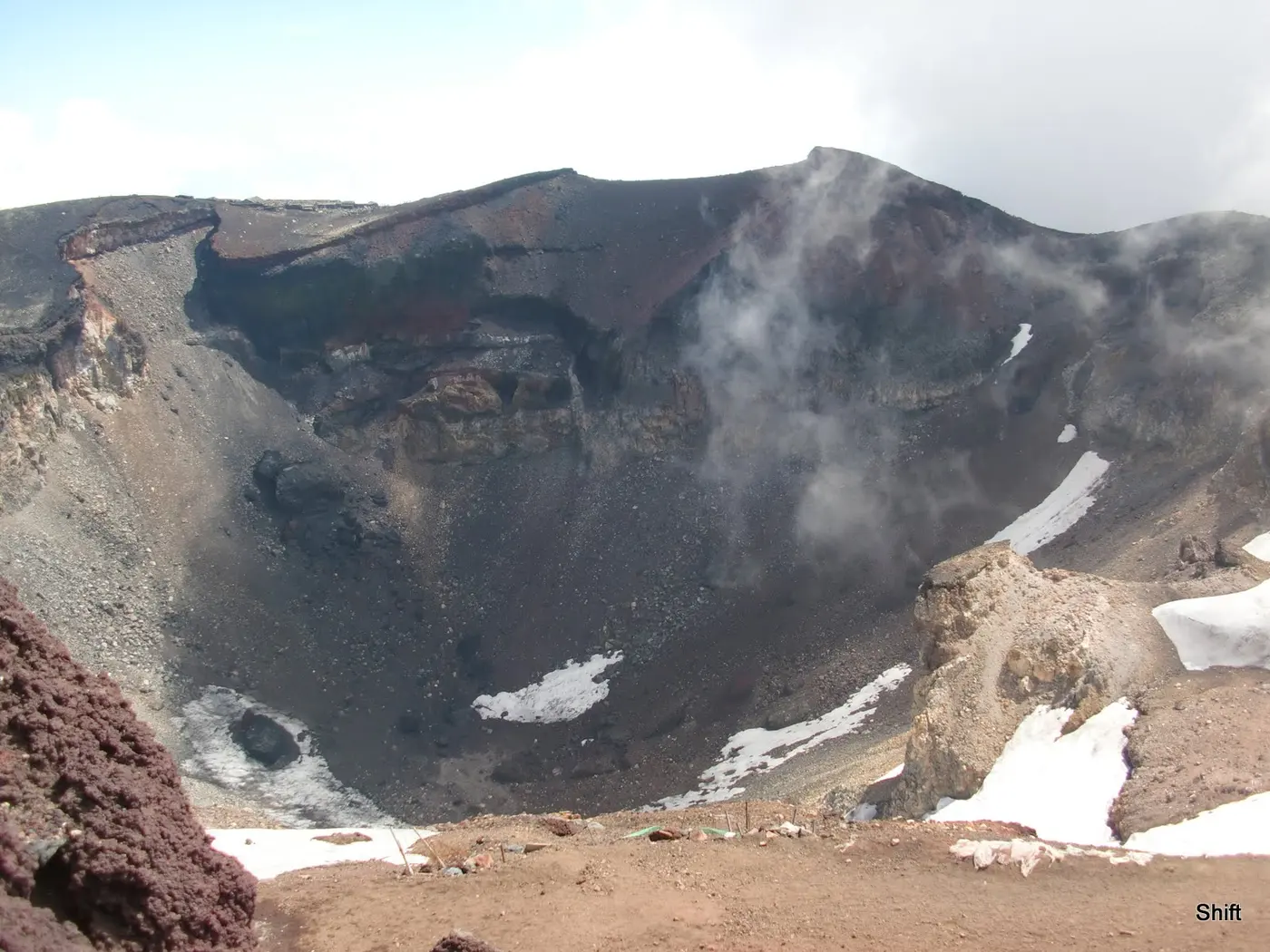

On the summit of Mount Everest, the world’s highest peak, the pressure is only about a third of that at sea level, and water boils at about 70°C (158°F). That is about the right temperature for brewing Japanese green tea, and yet the water is bubbling away. As a rough rule, the boiling point drops by about 1°C for every 300 meters or so of elevation.
Boiling, but not cooking
What matters in cooking is not whether the water is boiling but how hot it is. Softening rice all the way through or cooking a potato properly takes enough heat. On a summit where boiling water tops out at 87°C, food may not cook through no matter how long you simmer it.
One famous victim of this was Charles Darwin, best known for his theory of evolution. In March 1835, during the voyage of the Beagle, Darwin crossed the Andes in South America and camped at a spot he estimated to be no lower than about 3,300 meters (11,000 feet). According to his travel account, the potatoes stayed hard after hours of boiling, and even after being left on the fire all night they were still not cooked. His companions blamed the pot: “the cursed pot [which was a new one] did not choose to boil potatoes.”
A pressure cooker is a mountain in reverse
The opposite of a mountaintop is higher pressure, which raises the boiling point. The pressure cooker brings that into the kitchen. When the lid seals the pot tightly, the steam trapped inside raises the pressure, and the water no longer boils even when it goes past 100°C. In a home pressure cooker, the temperature inside reaches about 120°C (248°F), cutting the time needed for stews dramatically.
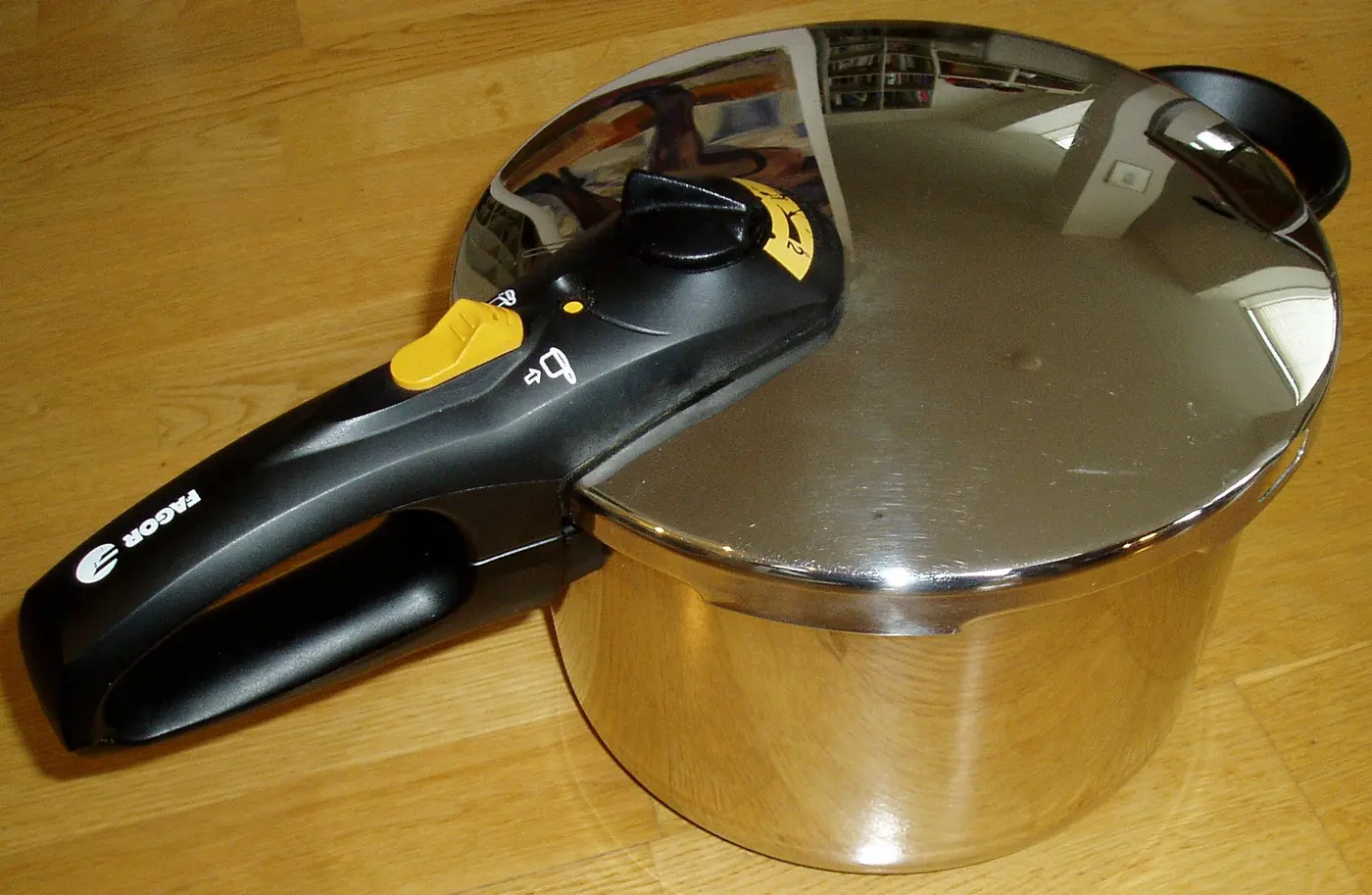

The ancestor of the pressure cooker is the “steam digester” devised in 1679 by the French-born physicist Denis Papin. In fact, Darwin himself wrote in his account that what went wrong in the Andes was the converse of Papin’s digester. Mountain huts on high peaks sometimes use pressure cookers to make rice for the same reason.