What was the first computer?
It depends on the definition. The Z3, the ABC, Colossus and ENIAC can each claim to be “first” in some sense.
18,000vacuum tubes
What was the world’s first computer? Many people would answer ENIAC, the American machine. Photos of its room-filling bulk are a textbook staple.
Yet the more people know about the history of computing, the more carefully they handle this question. Depending on what you count as a “computer,” the answer splits several ways.
What makes a computer?
People focus on different things when they talk about computers. Does it run on electronics, or on gears and electromagnetic switches? Does it handle numbers digitally, as 0s and 1s? Can its sequence of calculations be changed without rebuilding the machine, in other words, is it programmable? Is it a general-purpose machine that can tackle any calculation? Depending on which of these conditions you emphasize, a different machine takes the title of “first.”
A 19th-century computer on paper
Trace the idea to its roots and you reach Charles Babbage, a 19th-century English mathematician. From the 1820s he worked on a “Difference Engine” that would calculate tables of numbers automatically with gears, and in the 1830s he conceived the “Analytical Engine,” which would take its instructions from punched cards and keep a unit for storing numbers separate from the unit that calculated with them. It was an idea that points straight to today’s computers.
In 1843, the mathematician Ada Lovelace published notes on the Analytical Engine that set out a procedure for calculating the Bernoulli numbers. It is sometimes called the world’s first computer program. But partly because of the engineering limits and funding problems of the time, none of Babbage’s machines was ever completed.
Machines born in the midst of war
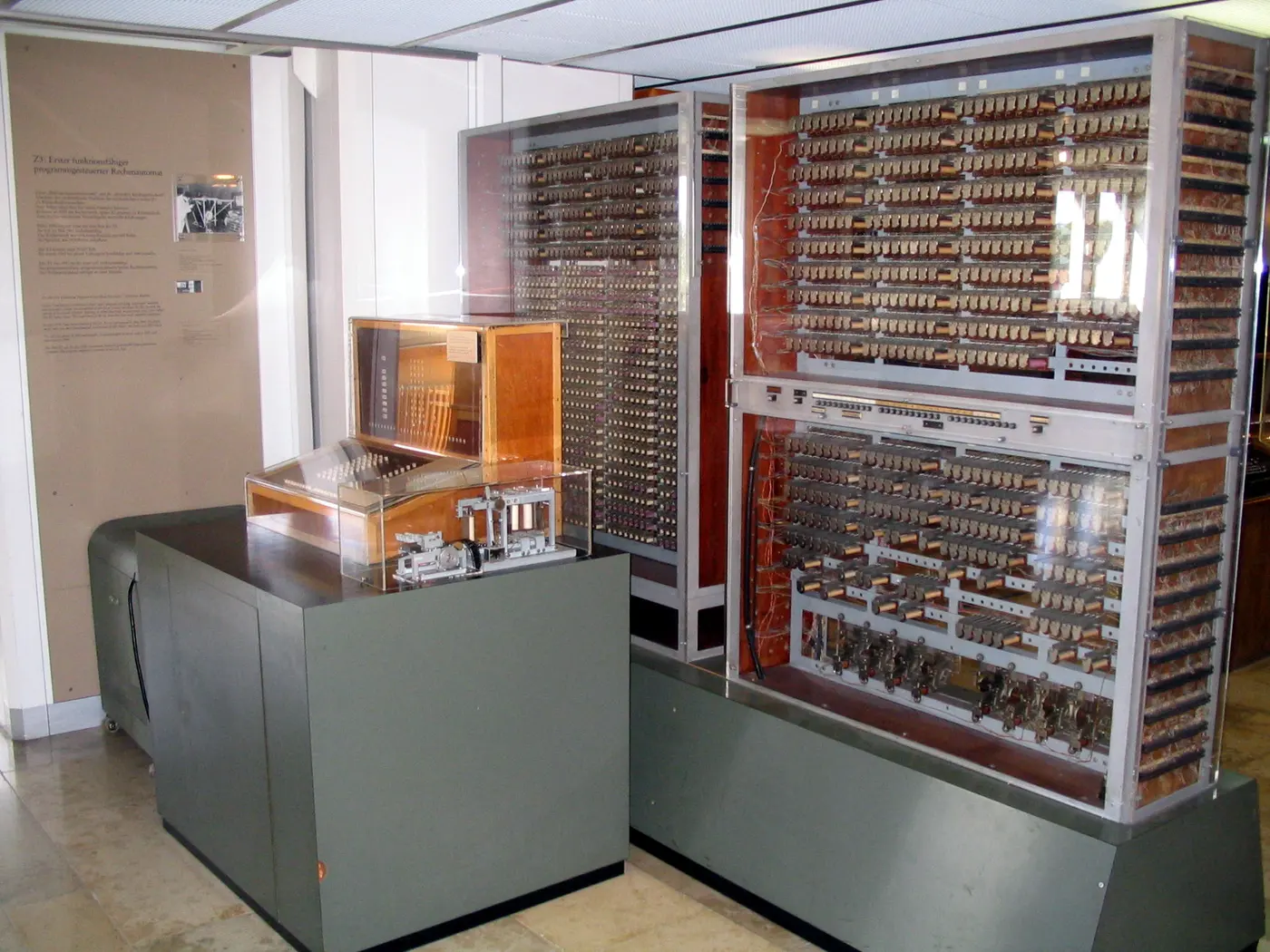
Machines that actually worked appeared during the wars of the 20th century. In May 1941, the German engineer Konrad Zuse demonstrated the Z3 in Berlin. It ran on about 2,600 electromagnetic switches called relays and read its program from punched film, and it is regarded as the first working programmable, fully automatic digital computer. The original was destroyed in an air raid in 1943, but a replica was built later.

Around the same time at Iowa State in the United States, John Atanasoff and his graduate student Clifford Berry were building a machine that calculated electronically using vacuum tubes. Known by their initials as the ABC, it ran as a prototype in 1939, and the full machine was successfully tested in 1942. Its program could not be changed, however; it was a special-purpose machine for solving systems of linear equations.
In Britain in 1944, an electronic machine called Colossus went into operation at Bletchley Park to help break German codes. It is regarded as the world’s first programmable electronic digital computer. Its very existence, however, remained a state secret until the mid-1970s.
ENIAC and the 1973 ruling
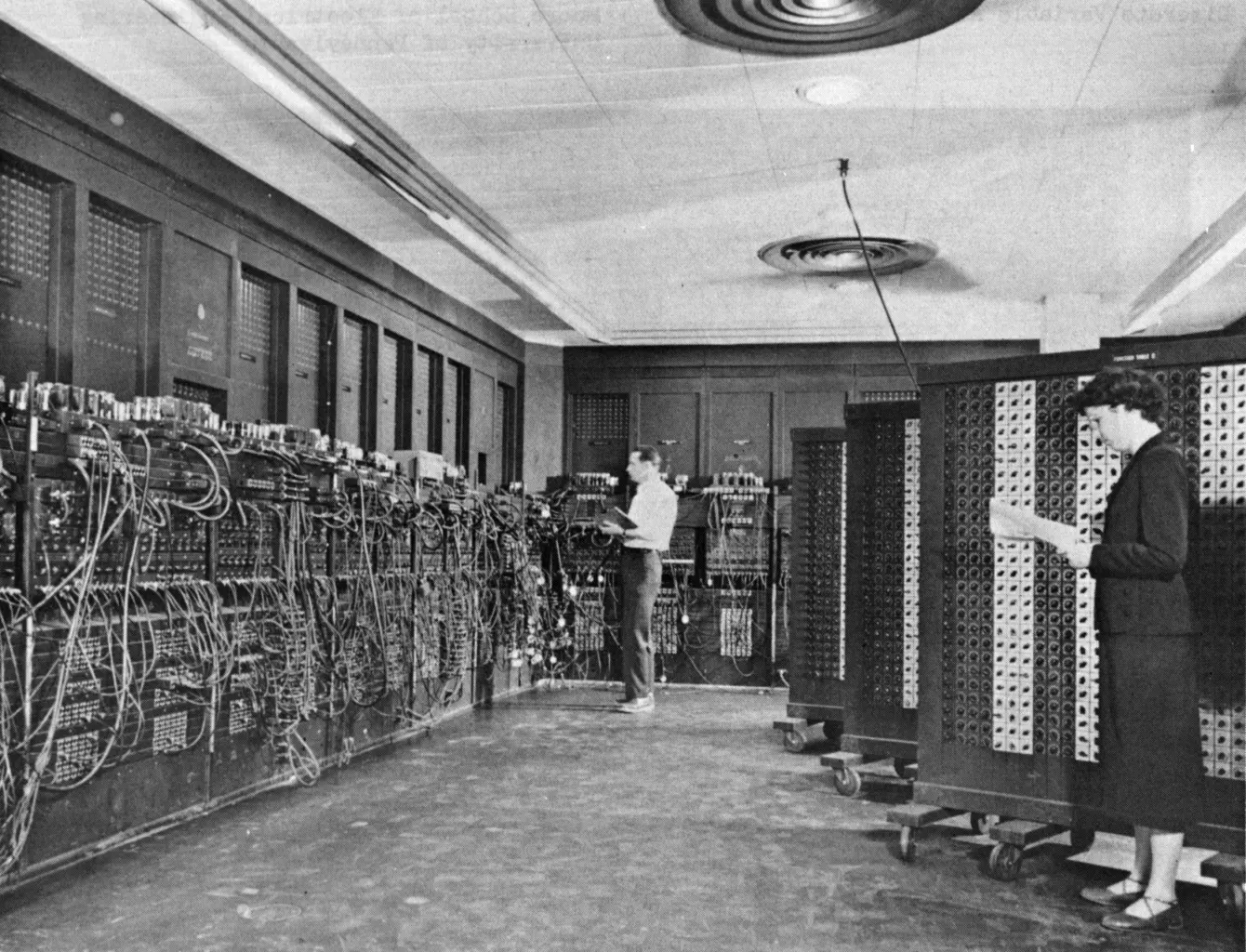
ENIAC was developed at the University of Pennsylvania for the U.S. Army. It was completed in 1945 and unveiled in February 1946. It had roughly 18,000 vacuum tubes and weighed about 27 tonnes (30 short tons). It is regarded as the first machine to meet all the conditions at once (programmable, electronic, general-purpose and digital), and newspapers hailed it as a “giant brain.”

But the story doesn’t end there. ENIAC’s developers obtained a patent in 1964, and in 1973 a U.S. federal district court declared it invalid. The ruling found that the ENIAC inventors had derived the idea of the electronic digital computer from Atanasoff, and gave Atanasoff legal recognition as the inventor of the first electronic digital computer. One of the reasons cited was that one of ENIAC’s developers had visited Atanasoff in 1941 and seen the ABC.
In the end, there is no single “first computer.” Each of these machines can claim to be first in its own sense.