Why are potato sprouts poisonous?
Sprouts and green skin are rich in solanine and chaconine, natural toxins the plant uses to defend itself.
You buy a bag of potatoes, forget about it, and one day find white or purple sprouts growing out of the little dimples on their skin. Many of us have been there. Plenty of people were also taught, at school or at home, that potato sprouts are poisonous and must be cut out thoroughly before cooking.
That bit of kitchen wisdom is true. But why would a potato bother to store poison in its sprouts?
The culprits: solanine and chaconine
The poisons in potatoes are natural toxins called solanine and chaconine. Both belong to a family of compounds known as glycoalkaloids, and they are especially concentrated in the sprouts and in skin that has turned green after exposure to light.
According to Japan’s Ministry of Agriculture, Forestry and Fisheries, even the edible part of an ordinary potato contains an average of about 7.5 milligrams of these compounds per 100 grams, with 30 to 80 percent of that found near the skin. Parts that have turned green from light exposure are said to contain 100 milligrams or more per 100 grams. And the highest concentrations of all are in the sprouts.
Eating large amounts can cause nausea, diarrhea, vomiting, stomach pain, headache and dizziness. For a person weighing 50 kilograms (110 pounds), symptoms may appear at around 50 milligrams, and 150 to 300 milligrams could be life-threatening. Children, with their smaller bodies, need to be careful with even smaller amounts.
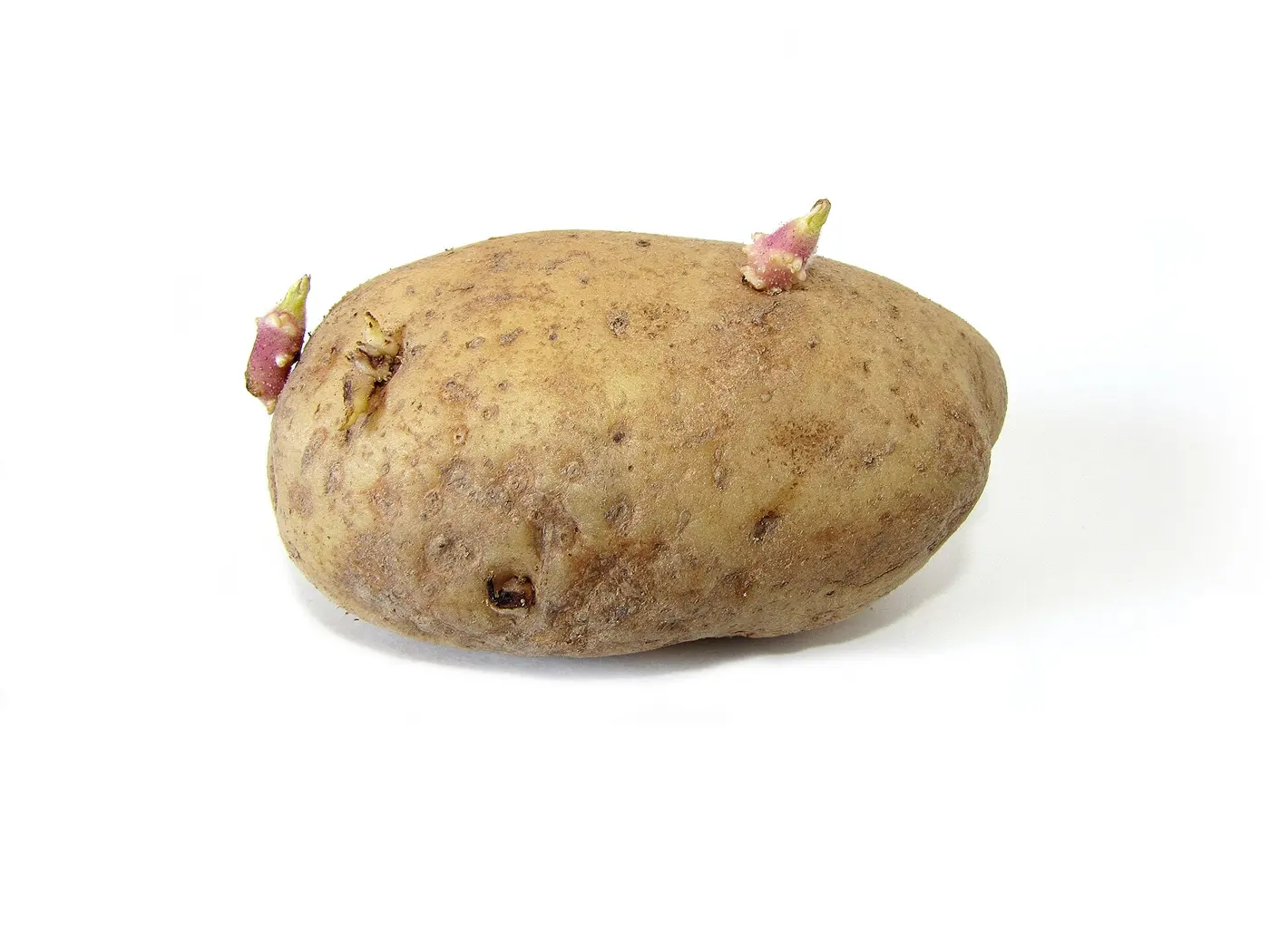

Sprouts are the start of the next generation
The potato we eat is not a root but a swollen underground stem. The dimples on its surface are called “eyes,” and new shoots grow from them, eventually sending stems and leaves up above ground. The starch stored in the potato is, by rights, food for those shoots.
Solanine and chaconine are thought to be defensive compounds that protect the plant from being eaten by insects, pathogens and animals. The precious sprouts that lead to the next generation are, in a sense, the potato’s weak spot. That is thought to be exactly why the plant concentrates its defenses there. Potatoes belong to the nightshade family, along with tomatoes and eggplants, and quite a few members of this family contain glycoalkaloids of this kind.
Green means danger
Potato skin turns green because exposure to light makes it produce chlorophyll. Chlorophyll itself is harmless. But light also increases the levels of solanine and related compounds, so a green tinge is a sign that the toxins may have increased.
That is why the ministry recommends storing potatoes somewhere dark, cool and well ventilated. Above 20°C (68°F) they tend to sprout or spoil, so around 10°C (50°F) is ideal. There is no need to refrigerate them. In the fridge, the sugar content of potatoes rises, which may increase the amount of acrylamide, a harmful substance, that forms when they are fried or stir-fried.
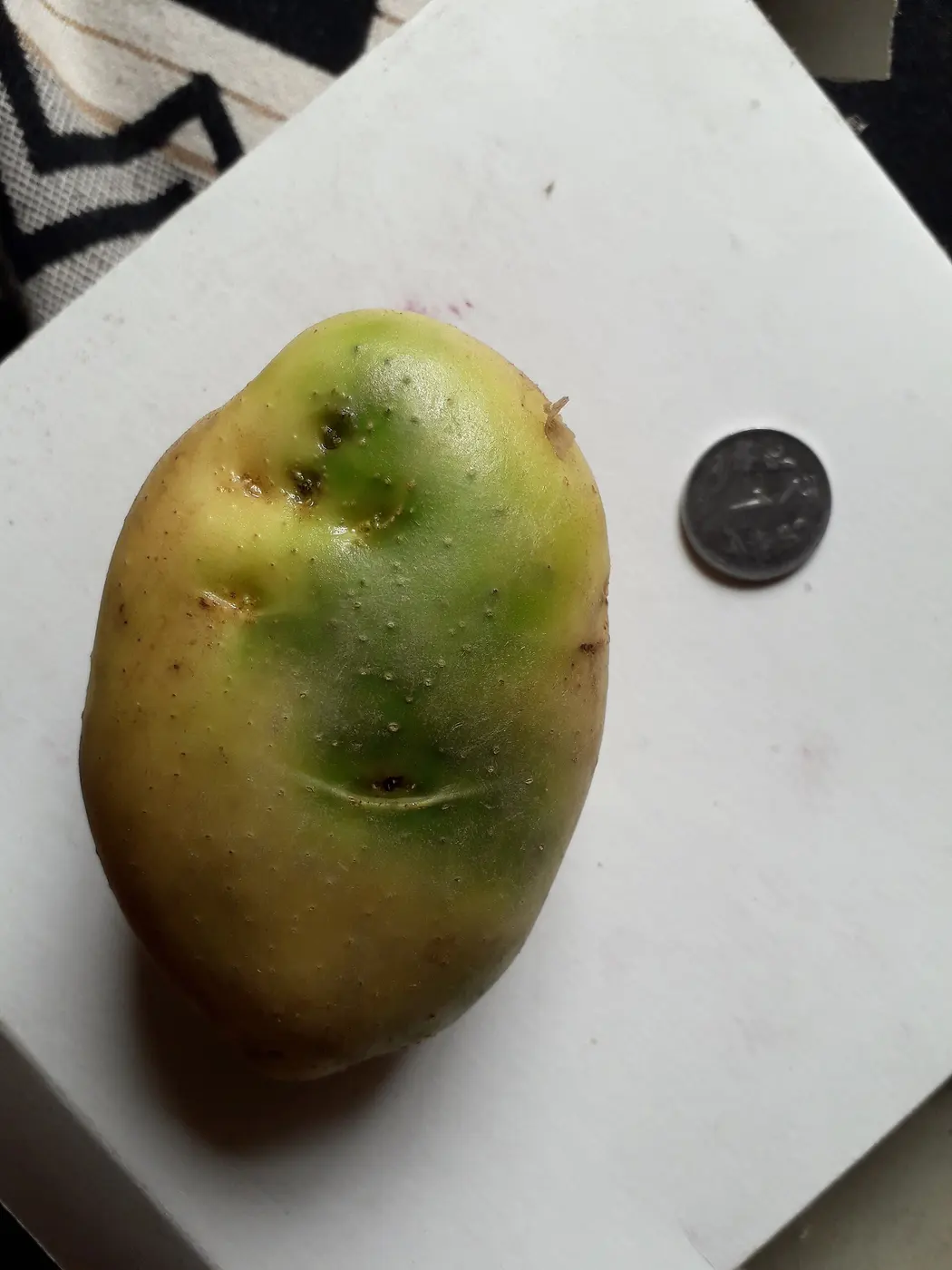

Boiling won’t make them safe
An important point: cooking does almost nothing to reduce these toxins. There are reports that they begin to break down above 170°C (338°F), but boiling does not lower the amount, and no cooking method can be relied on to reduce them. Gouge out sprouts down to their base, and peel green areas thickly to remove them. If a potato tastes bitter or acrid, stop eating it.
Extra care is needed with small, immature potatoes grown in school gardens or home vegetable patches, which can contain high levels of these compounds. In January 2015, at an elementary school in Nara Prefecture, 31 of the 51 people who ate potatoes grown and cooked at the school developed nausea, stomach pain and other symptoms. Leftover boiled potatoes were found to contain 19 to 39 milligrams of the toxins per 100 grams.