Why does popcorn pop?
At about 180°C, water in the kernel turns to steam, bursts the tough hull, and the inside puffs up at once.
180°C
That toasty smell drifting from the movie theater concession stand. Or a lidded pan on the stove that soon erupts with a cheerful pop, pop-pop. No matter how many times you watch, it is a small marvel: hard little yellow kernels turning into fluffy white puffs in an instant.
Yet if you heat kernels from an ordinary ear of summer corn in a pan, you won’t get popcorn. Popcorn kernels are built with a special mechanism for bursting.
A tiny pressure cooker in every kernel
Popcorn comes from a particular type of corn known as popping corn. Each kernel is packed with hard starch, and water makes up about 14–20% of its weight.
When the kernel is heated, that water tries to turn into steam. But popping corn has an exceptionally strong outer hull that barely lets moisture through. With no way out, the steam drives the pressure inside the kernel higher and higher. In effect, each kernel becomes a tiny pressure cooker.
The pressure eventually reaches about nine times atmospheric pressure. Meanwhile, the heat and steam soften the starch inside into a gooey mass. When the hull finally gives way, the pressure drops all at once and the steam expands violently. The softened starch puffs up like foam and, cooling in the open air, sets in that shape. The result is the white popcorn we know, 20 to 50 times the size of the original kernel.
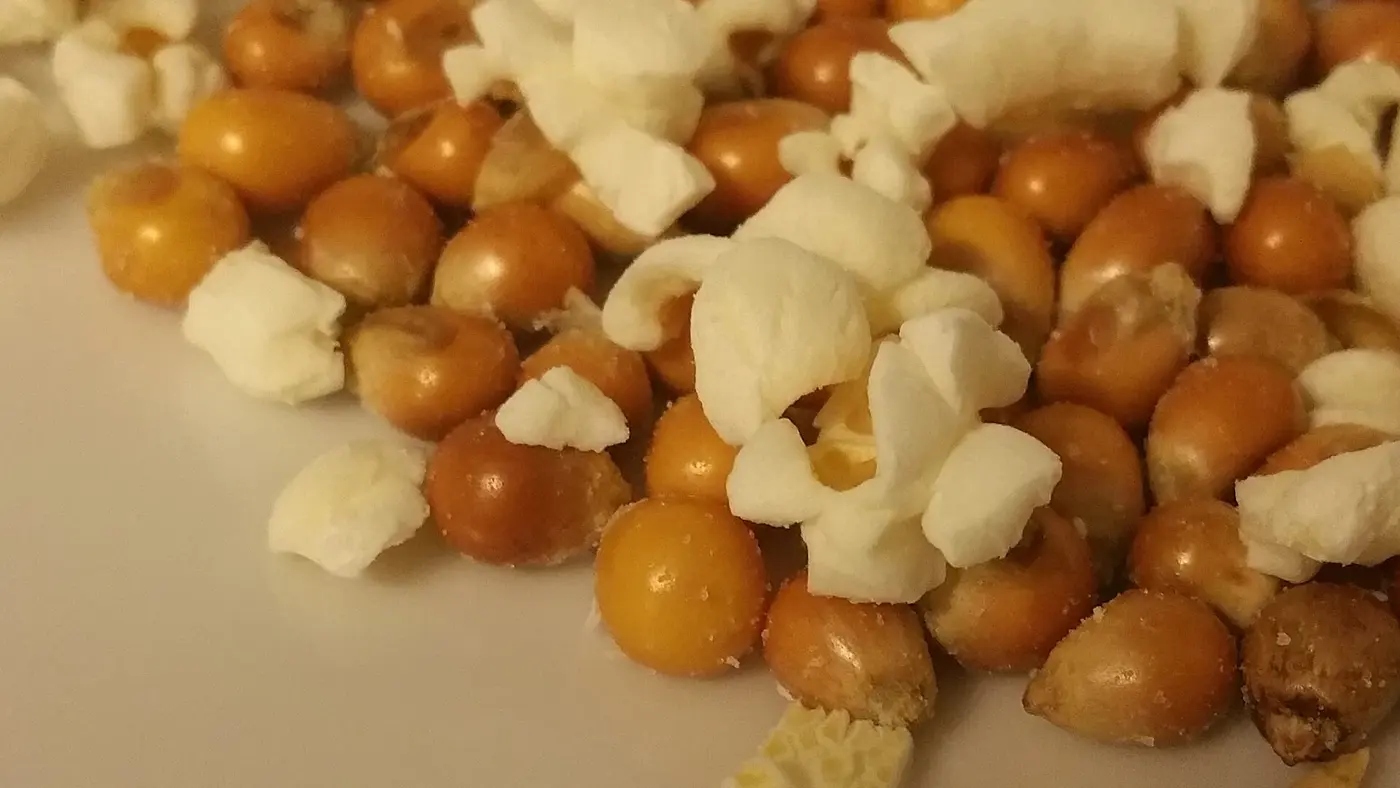

Ordinary corn doesn’t pop because its hull is not as strong as popcorn’s, so the steam leaks out little by little.
Popping happens at about 180°C
In 2015, the French physicists Emmanuel Virot and Alexandre Ponomarenko published a detailed study of the moment popcorn pops.
The pair heated kernels while filming them with a high-speed camera that captures thousands of frames per second. They found that almost all kernels pop at about 180°C (356°F), and that this temperature changes little whatever the kernel’s shape or size. They showed it can be explained by a simple model: a container under pressure that bursts at a certain limit.
The pop itself turned out to last only a few hundredths of a second. How you heat the kernels matters, too. Heat them too fast and the hull bursts before the center has softened, leaving popcorn with a hard core. Heat them too slowly and steam leaks out through a tiny gap at the base of the kernel, leaving more of them unpopped.
A leg to jump with, and the source of the pop
Popcorn doesn’t just burst; it jumps. The high-speed footage revealed that secret as well.
When the hull splits, a lump of starch shoots out. It pushes against the bottom of the pan like a leg, and as it is squashed, the rebound launches the whole kernel anywhere from a few millimeters to a few centimeters into the air. The researchers described popcorn as midway between plants that fling their seeds explosively and animals that jump using muscles.
So what is the “pop”? It sounds like the hull cracking, but when the researchers recorded video and sound together and lined them up, the sound did not coincide with the moment the hull split. They believe the pop comes from the water vapor trapped inside the kernel rushing out.
Popcorn from about 6,700 years ago
Popcorn is one of the oldest snacks humans have enjoyed. Corn is thought to have been domesticated about 9,000 years ago in what is now Mexico. At archaeological sites on the northern coast of Peru, researchers have found corncobs dated to about 6,700 years ago, and some of them are reported to be the kind that appears to have been eaten as popcorn.
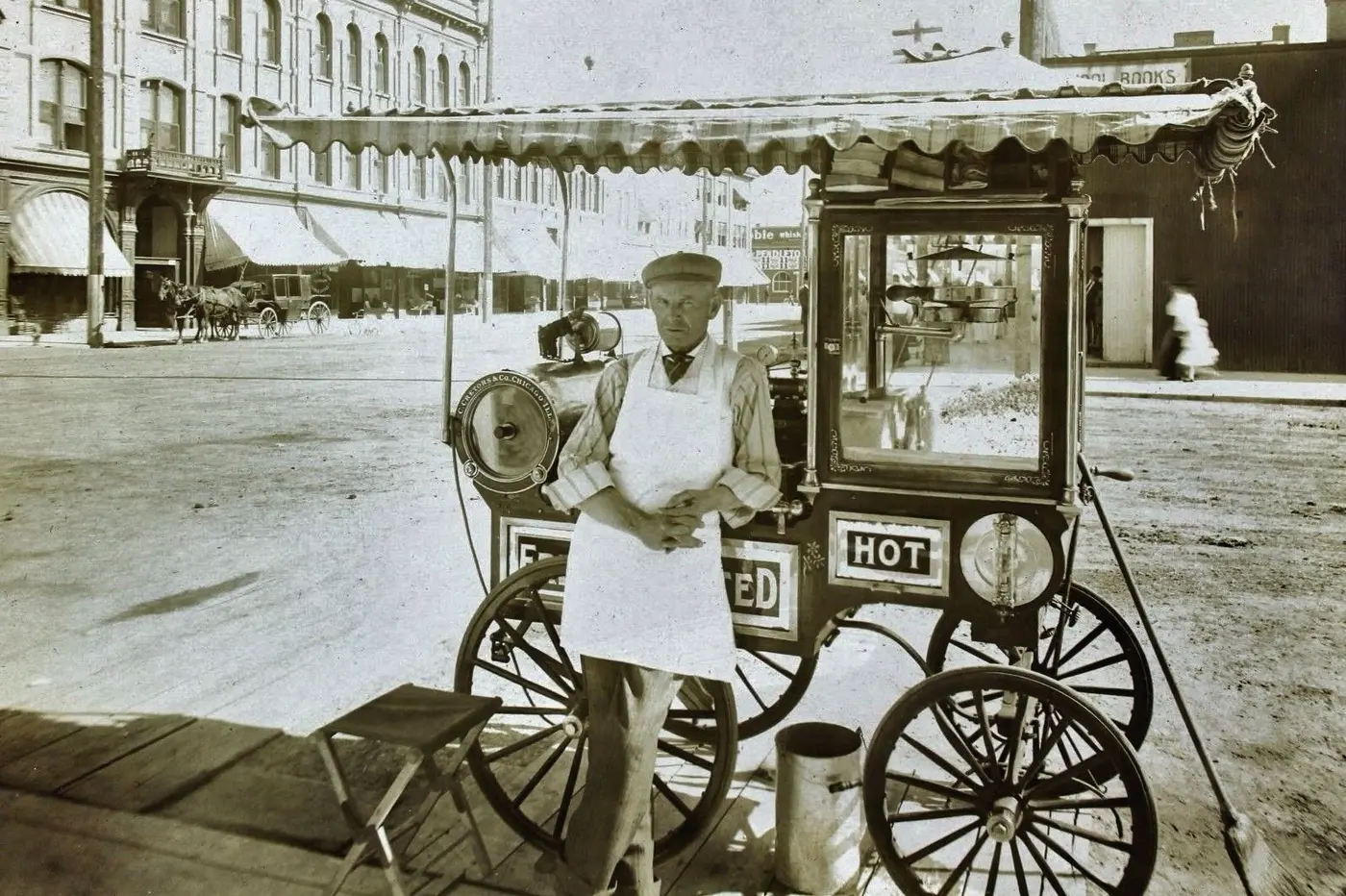
Popcorn became the easy snack we know today in the United States in the late 19th century. Charles Cretors, a candy store owner in Chicago, built a steam-powered popcorn machine, and freshly popped corn began to be sold from street carts.