Why does Swiss cheese have holes?
Bubbles of carbon dioxide made by bacteria, which gather around tiny specks of hay that fell into the milk.
Ask people to draw a piece of cheese and most will sketch a yellow triangle dotted with round holes. It is the cheese the cartoon mouse is always carrying, and its real-life model is Emmental, a cheese from Switzerland.
So how do those holes get there? Nobody punches them in. They are, in fact, bubbles blown by tiny living things at work inside the cheese. And in 2015, the story of how those bubbles form gained a surprising new chapter.
The holes are bacterial burps
Making Emmental takes three kinds of bacteria: two lactic acid producers, Streptococcus thermophilus and Lactobacillus helveticus, and propionic acid bacteria.
The first two turn the sugar in milk into lactic acid. The propionic acid bacteria then feed on that lactic acid and give off propionic acid, acetic acid and carbon dioxide. Trapped inside the cheese with nowhere to go, the carbon dioxide slowly collects and swells into those round holes. Cheesemakers call them “eyes.”
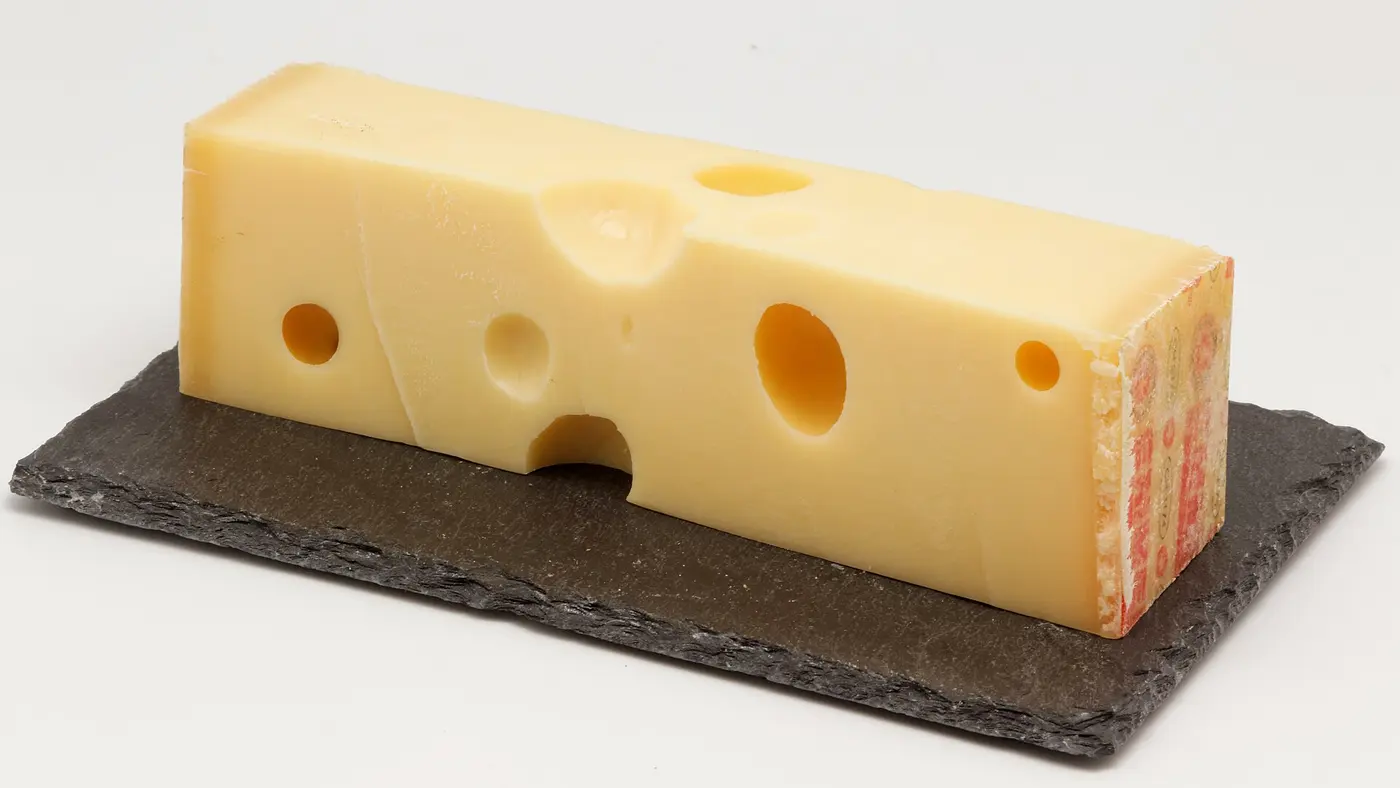

The propionic acid and other by-products also give Emmental its distinctive sweet, nutty flavor. The holes and the taste come from the same bacteria’s work.
Holes grow in a warm room
Propionic acid bacteria need a certain amount of warmth to thrive. According to the Emmental producers’ organization, the cheese is first moved to a fermentation cellar kept at around 19–24°C (66–75°F). Over roughly six to eight weeks there, the holes grow to just the right size.
Once they have, the cheese moves to a cool storage cellar at about 12°C (54°F). The lower temperature halts hole formation, and the cheese continues to mature slowly. Genuine Emmental spends at least 120 days in the cellar before it goes on sale.
The size of the holes depends on temperature, acidity and how long the cheese ripens. Cheesemakers have long adjusted these conditions to steer how the eyes develop.
The seeds of the bubbles were bits of hay
That still leaves a puzzle. Why does the carbon dioxide gather into scattered large holes instead of spreading through the cheese as countless tiny bubbles?
The idea that bacterial carbon dioxide makes the holes had been known since the early 20th century; in 1917 an American researcher published a paper on how the eyes in Emmental form. But in the 2000s, Switzerland faced an awkward problem. The holes in its Emmental were getting fewer year by year.
The cause was tracked down by Agroscope, the Swiss federal agricultural research institute. Its research, announced in 2015, pointed to microscopic bits of hay that drop into the milk during milking. These specks act as the “seeds” of the bubbles: carbon dioxide gathers around them and the holes grow. The team made cheese with different amounts of hay powder added to the milk and confirmed that the number of holes changed with the amount of powder.
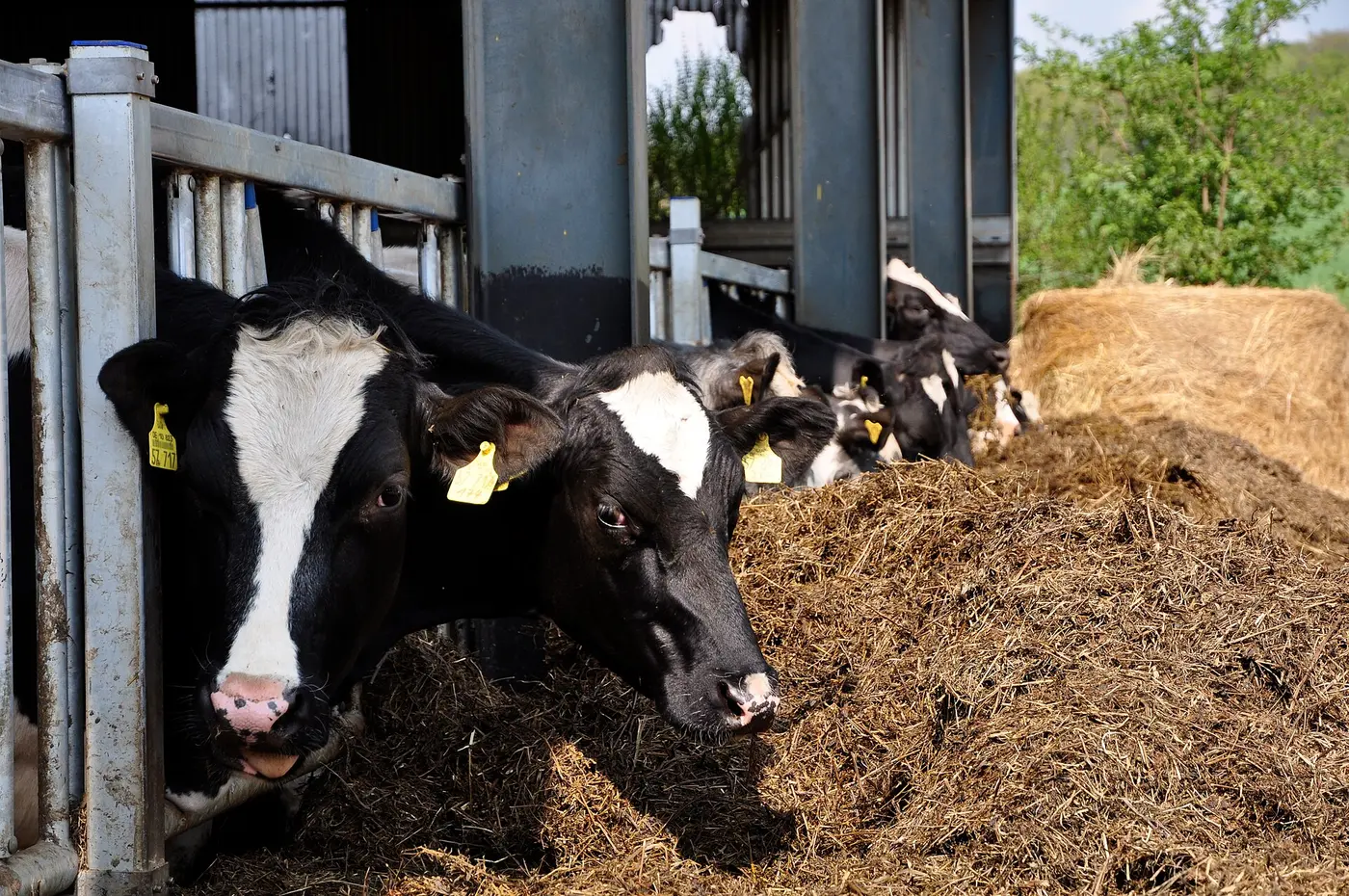

In the days of milking by hand into open buckets, hay dust floating around the barn ended up in the milk on its own. As closed milking machines spread and hygiene standards tightened, the milk became very clean. That left too few seeds for bubbles, and the holes are thought to have dwindled as a result. It also fits an old observation: cheese made from summer milk, when cows eat fresh grass, had smaller holes than cheese made in winter, when they eat hay.
Going to court to get the holes back
An Emmental with few holes may be perfectly good cheese, but it looks a little disappointing. So the producers’ organization sought permission to add “hay flower powder” to its recipe.
The government office that oversees the rules protecting traditional regional products opposed the change. The dispute went to court, and in April 2025 Switzerland’s Federal Administrative Court ruled in the producers’ favor. Adding hay back to milk that has become too clean: keeping holey cheese holey turns out to be hard work.