Why is the sour umeboshi called an “alkaline food”?
An old system classed foods by their ash, and umeboshi ash is alkaline. But food doesn’t change blood pH.
Pop an umeboshi—a Japanese salt-pickled plum—into your mouth, and the sourness is enough to make your whole face scrunch up. Yet have you ever seen or heard umeboshi described as a star example of an “alkaline food”? Lemons, too, are often called alkaline foods, despite being sour.
Sour things ought to be acidic. So why are these called alkaline? And is it true that keeping your body alkaline is good for your health? Let’s take these questions one at a time.
It all comes down to the ash
The sourness of umeboshi comes mainly from citric acid. Lick an umeboshi itself, and it is unquestionably acidic.
But the classification of foods as “acidic” or “alkaline” isn’t based on how sour the food is. Instead, the method is to burn the food, dissolve the remaining ash in water, and test its properties.
When food is burned, organic substances such as citric acid turn into carbon dioxide and water and disappear. What remains is minerals. If the ash is rich in potassium, sodium, calcium and magnesium, it is alkaline; if it is rich in phosphorus, sulfur and chlorine, it is acidic. Umeboshi and lemons contain plenty of potassium and similar minerals, so their ash is alkaline. That is why they are classed as “alkaline foods.”
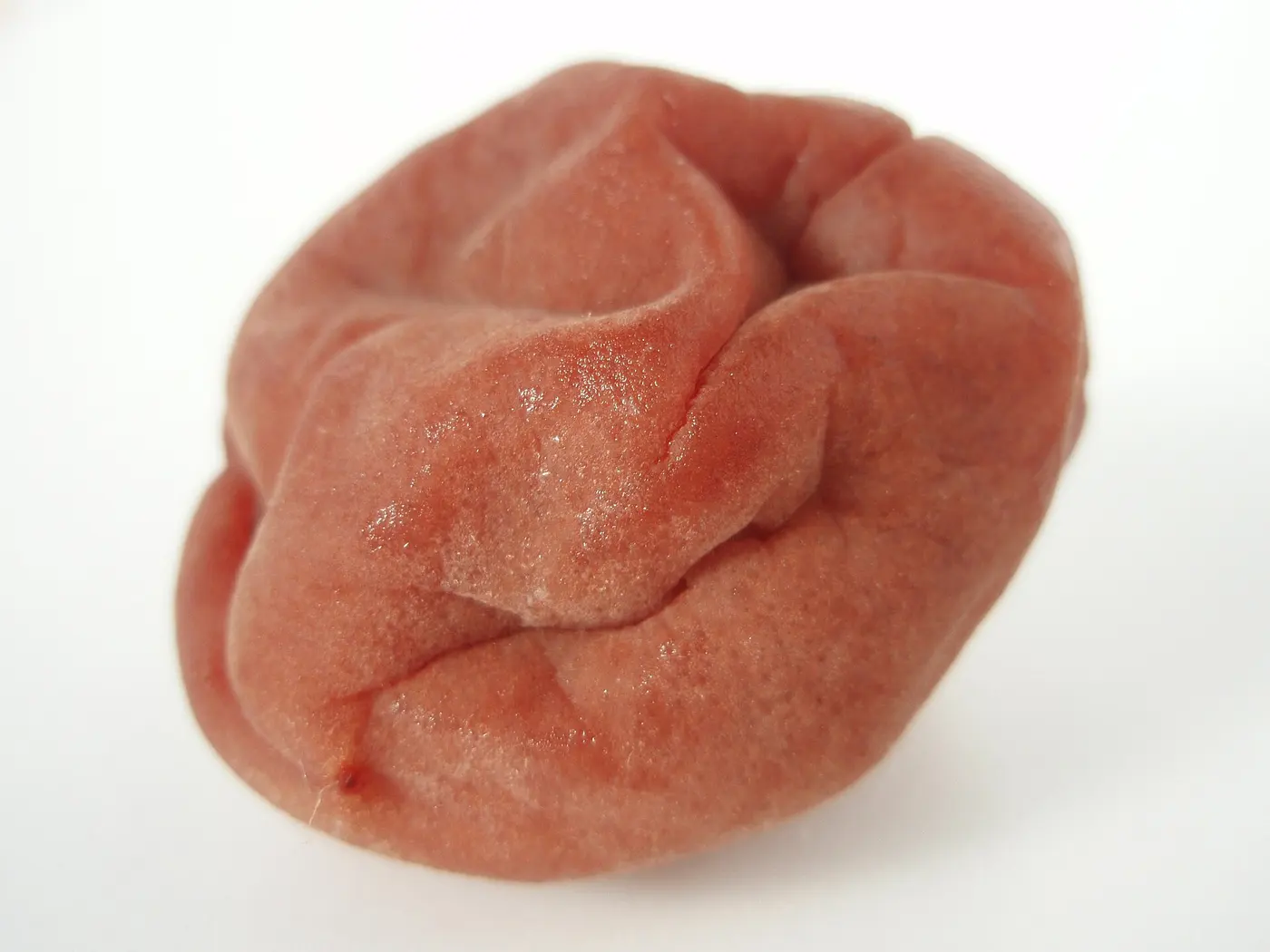

Meat, fish, eggs, rice and the like, on the other hand, are classed as “acidic foods,” because their proteins contain a lot of phosphorus and sulfur. So foods that aren’t sour at all are acidic foods, while the sour umeboshi is an alkaline food. The secret behind these confusing labels lies in the ash.
An idea born in 19th-century Europe
The idea goes back to 19th-century Europe. The French physiologist Claude Bernard noticed that when rabbits were fed meat instead of plants, their urine changed from alkaline to acidic. Researchers then began to examine the ash left by burned foods, and some argued that a diet heavy in meat might tip the body toward acidity.
In Japan, the idea is said to have been taken up as part of health-regimen theories from around the Taishō era (1912–1926), spreading the notion that “eating too many acidic foods makes your body acidic and prone to illness.” Umeboshi came to be held up as the model of a healthy alkaline food.
Food doesn’t change your blood’s pH
So does eating alkaline foods make the body more alkaline? Modern medicine and nutrition science say no.
The pH of our blood is held within a very narrow range, 7.35 to 7.45. Blood has buffering systems that neutralize acids and bases, and on top of that the lungs exhale carbon dioxide and the kidneys excrete excess acid in urine, constantly keeping things in balance. Whatever effect diet has on blood pH is tiny and temporary. If blood pH ever did change significantly, that would not be a matter of diet but a medical condition needing immediate treatment.
In Japanese nutrition science, too, doubts about dividing foods into “acidic” and “alkaline” began to be raised around the late 1980s, and the classification came to be seen as meaningless as a guide to health.
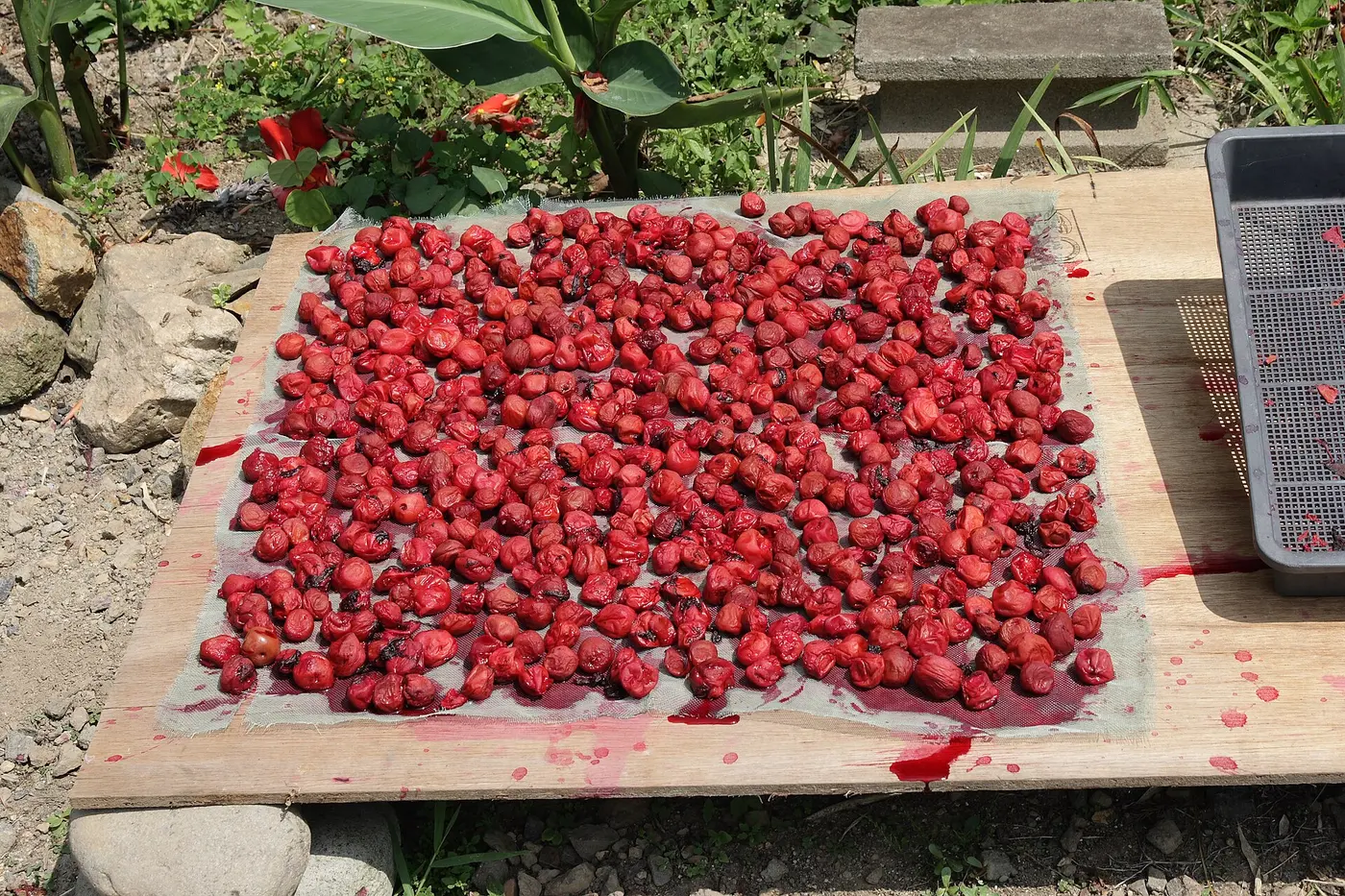

What changes is your urine
That doesn’t mean food has no effect on the body at all. What diet does change is the pH of urine. Eat a lot of meat and your urine leans acidic; eat a lot of vegetables and fruit and it leans alkaline. That is because the kidneys adjust and excrete the acids and bases that come into the body.
In 1995, an index called PRAL (potential renal acid load) was proposed to estimate how much acid load a food places on the kidneys, and its relationship to kidney stones and bone health is being studied. Even so, this is a separate matter from the idea of “making your body alkaline.”
Umeboshi have supported Japanese meals for a very long time, but they are also a high-salt food. If you are thinking about your health, it is probably wiser to pay attention to how much you eat and how much salt it contains than to whether it is acidic or alkaline.