Why doesn’t ice cream in Japan have a best-before date?
At −18°C (0°F) or below its quality barely changes, so Japanese law lets makers leave the date off.
-18°C
Milk and yogurt, bread and snacks: in Japan, nearly every packaged food has a “best before” or “use by” date printed somewhere on it. Yet turn a cup of ice cream around and around in your hand, and you will not find a date anywhere.
Have you ever stared at a tub of ice cream you can’t remember buying, wondering whether it is still safe to eat? As it turns out, the missing date is not an oversight by the manufacturer. It is a deliberate omission, based on clear rules.
The law says you don’t have to
In Japan, food labeling is governed in detail by the Food Labeling Standards, which are based on the Food Labeling Act. Among them is a line stating that for ice cream products, the date and storage instructions may be omitted.
Ice cream is not the only food with this exemption. Others include sugar, salt, chewing gum, ice and alcoholic drinks. All of them change extremely little in quality even when kept for a long time, and ice cream is counted among them.
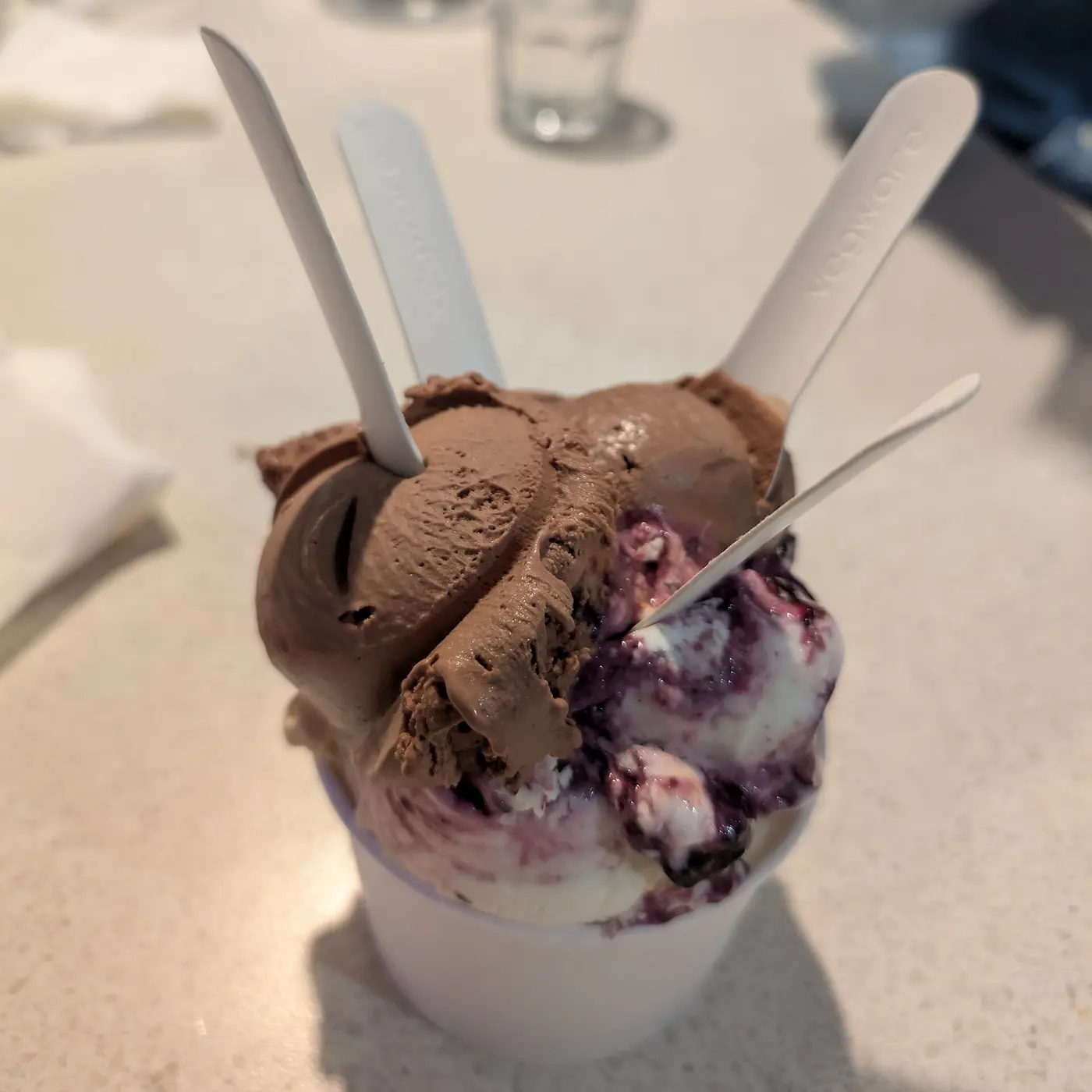

In exchange, the industry’s own fair-competition code says that when the date is omitted, the package should carry a note such as “Store at −18°C or below at home” or “Keep frozen (store at −18°C or below).” In place of a date, there is a temperature.
At −18°C, microbes can’t multiply
So why does ice cream keep so well? The key is temperature. Food spoils mainly because microorganisms such as bacteria and molds multiply. They need water to do so, but at −18°C (0°F) or below, almost all the water in food is frozen, leaving microbes with none to use. As a result, they cannot multiply.
That doesn’t mean freezing kills them, though. They simply sit still, in a kind of sleep. To be precise, they won’t wake up as long as the temperature stays low. The Japan Ice Cream Association likewise explains that as long as ice cream is stored at −18°C or below, its quality changes only very slightly.
Flavor, however, still changes
No date, however, does not mean the ice cream will taste just as good forever. The thing to watch out for is temperature swings.
In a home freezer, the temperature rises and falls every time the door is opened and closed. Each time, the tiny ice crystals in ice cream melt a little and refreeze, gradually growing into bigger crystals. That is why ice cream left too long takes on a crunchy, gritty texture. It is also why ice cream that has half melted and been refrozen never regains its smoothness.
For ice cream, what matters is not how long it has been stored, but at what temperature.
For this reason, the association recommends keeping ice cream at −25°C (−13°F) or below during long-term storage in factory and commercial freezers, and at no warmer than −18°C on its way to the home. At home, the best plan is to keep it at the back of the freezer and finish it soon.
Four kinds of “ice cream”
Incidentally, if you look at the “type” field on a Japanese ice cream package, you will notice several different names. Under national standards, a product with at least 15.0% milk solids, including at least 8.0% milkfat, is “ice cream”; at least 10.0% milk solids, including at least 3.0% milkfat, is “ice milk”; and at least 3.0% milk solids is “lacto ice.” Together, these three make up the category of “ice cream products.”
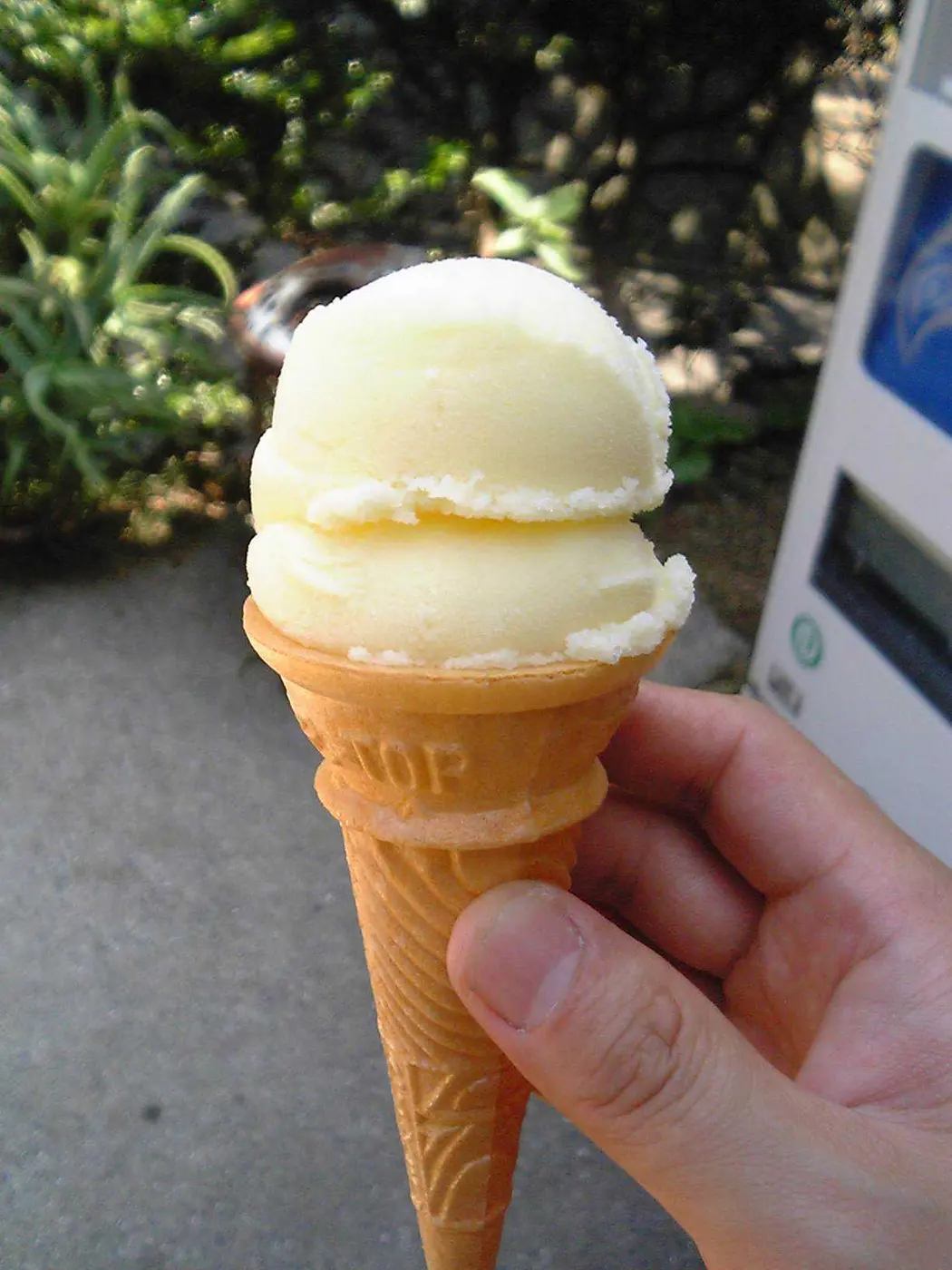

Treats with even less dairy, such as shaved ice and ice pops, are called hyōka (frozen confections) and are handled under separate standards. Frozen confections are also among the foods allowed to omit the date, so they too almost never carry one.