Why does cutting onions make you cry?
Cutting breaks open the cells, setting off enzymes that produce an irritating gas that reaches your eyes.
Curry, hamburger steak, nikujaga (a homey Japanese stew of meat and potatoes), onion soup. The onion is one of the hardest-working vegetables in any kitchen. Yet after a minute or two of chopping, your eyes start to sting and tears well up. The more you love to cook, the more often you have endured this small ordeal.
The strange thing is that you can stare at a whole onion, or even sniff it, without shedding a single tear. So what happens the instant the knife goes in? The answer is a tiny chemical chain reaction, set off in the split second that the blade slices through the onion’s cells.
An uncut onion won’t make you cry
Inside an onion’s cells, the raw material for tears and the enzyme that transforms it are stored in separate compartments. The raw material belongs to a family of sulfur-containing amino acids. Normally the two never meet, so nothing happens.
But when a knife ruptures the cells, the two mix and a reaction begins. First, an enzyme called alliinase breaks down the amino acid, creating an unstable substance. That substance is then transformed into a compound called propanethial S-oxide—the tear-inducing agent, or lachrymator.
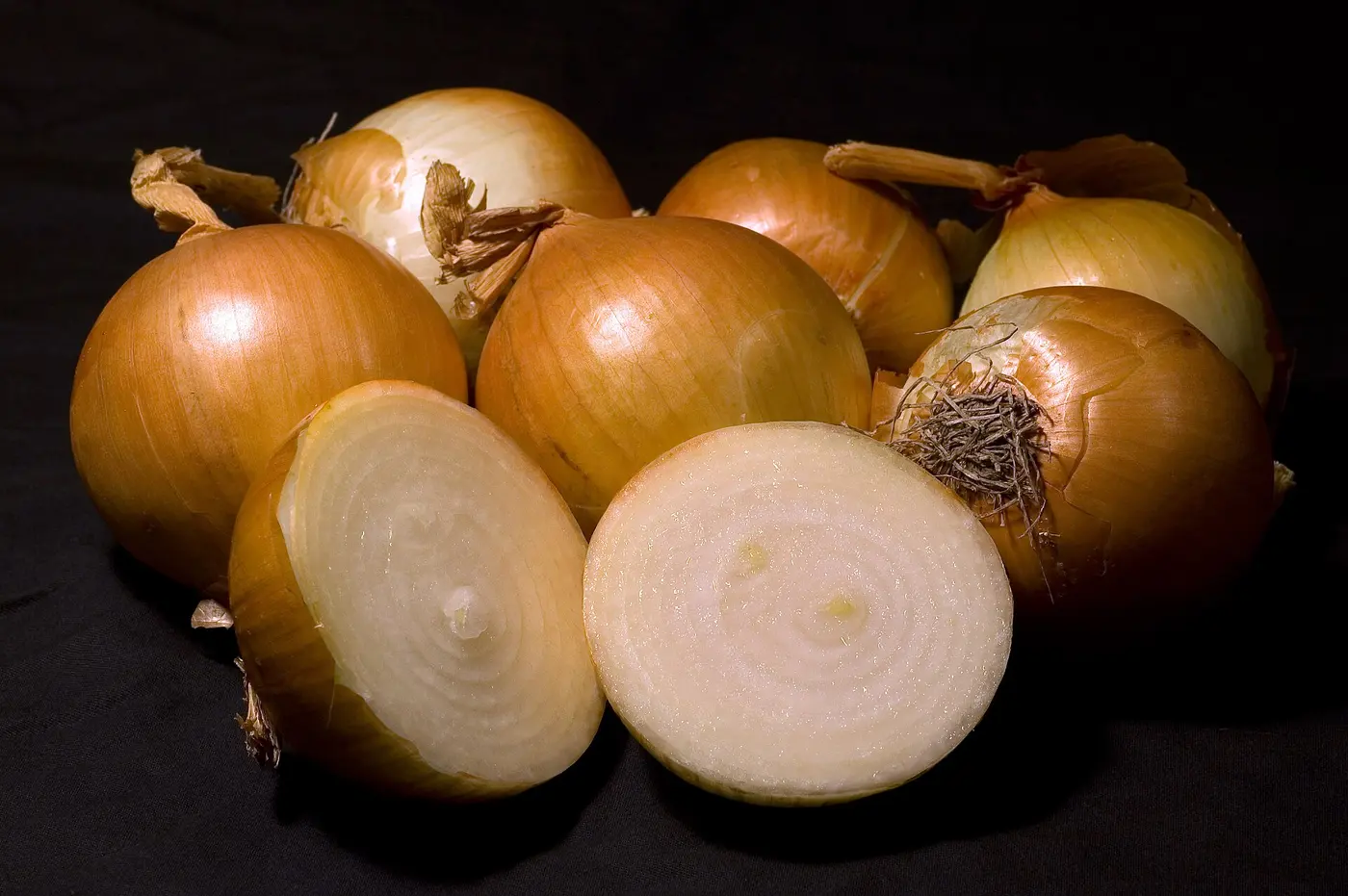

This compound evaporates easily, so it quickly drifts into the air and reaches the eyes of whoever is standing over the cutting board. When the nerves on the surface of the eye detect it as an irritant, the body produces tears to wash the foreign substance away. In other words, onion tears are a reflex that protects the eyes. For the onion, meanwhile, this irritant is thought to act as a defense when insects or animals take a bite.
The tear-making enzyme was discovered in Japan
For a long time, scientists believed the tear-inducing compound formed on its own, so to speak, through the action of alliinase alone. That assumption was overturned by researchers at House Foods, a Japanese food company.
They discovered that there is a second enzyme, one that converts the substance produced by alliinase into the lachrymator. The discovery of this enzyme, named lachrymatory factor synthase, was published in the scientific journal Nature in 2002. The way onions make people cry turned out to be one step more complicated than anyone had thought.
In 2013, the research won the Ig Nobel Prize in Chemistry, an award given for research that “first makes people laugh, and then makes them think.” A discovery that surprised scientists around the world had grown out of an everyday kitchen annoyance.
Kitchen tricks for fewer tears
Once you know how it works, the reasoning behind tear-reducing tricks becomes clear.
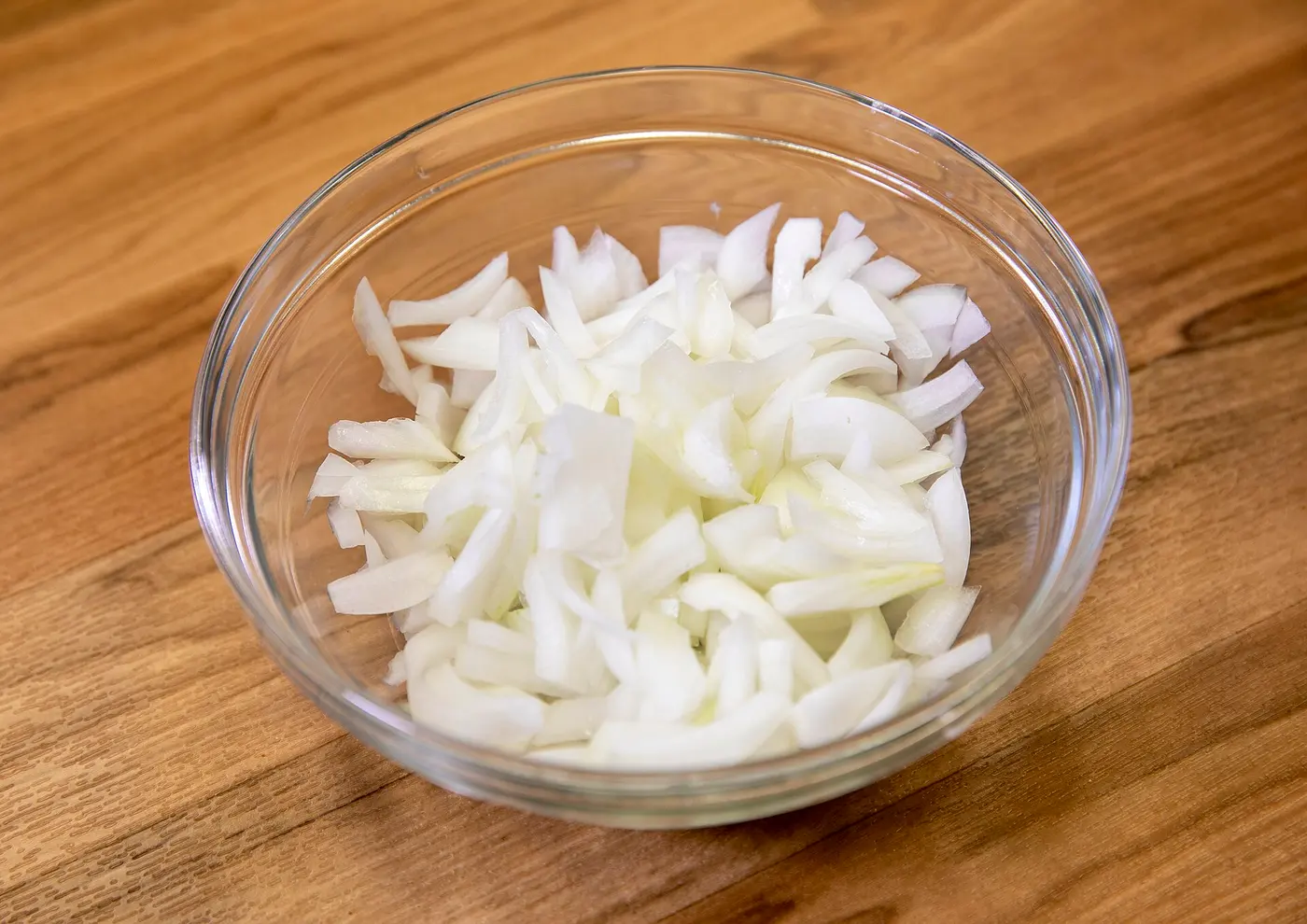
One is to chill the onion beforehand. At low temperatures, the enzymes work more sluggishly, and the irritant spreads into the air less readily. Using a sharp knife helps too. A dull blade crushes as it cuts, rupturing more cells and releasing that much more of the compound. Turning on the range hood so the irritant doesn’t linger around your face also makes good sense. Each of these tricks targets a different link in the same chain: slowing the enzymes, breaking fewer cells, or clearing the air.

Incidentally, chopping garlic, a member of the same plant family, does not bring on tears the way onions do. Garlic has the same alliinase, but the amino acid it starts from has a slightly different structure. So instead of a lachrymator, what it mainly produces are the compounds behind its powerful smell.
The birth of the “tearless onion”
Understanding the enzymes also opened a path to onions that don’t make you cry. Through years of conventional breeding, without genetic modification, House Foods developed an onion with very little alliinase. The result, named the “Smile Ball,” went on trial sale in 2015 and began appearing in stores.
It is said to bring on few tears when cut and to have little pungency, so eating it raw in a salad lets you really taste its sweetness. Research that set out to find the reason for onion tears had, over many years, ended up doing away with the tears altogether.