Why do pine cones open and close?
Their scales have two layers that swell differently with water, so cones close when damp and open when dry.
Walk through a park or a seaside pine grove in autumn, and you’ll find pine cones scattered underfoot. Take a wide-open one home and accidentally get it wet, and a little later you’re in for a surprise. Its spread-out scales have pulled in tight, and the cone has gone back to a slim, closed shape. Let it dry, and it opens up again just as before.
A pine cone that has fallen from the tree is no longer alive. So how can it move?
Opening and closing to launch seeds
A pine cone is the organ a pine tree uses to make its seeds. It consists of scales, the individual flaps of the cone, overlapping in a spiral around a central axis, with seeds tucked at the base of each scale. Pine seeds carry a thin, wing-like attachment that lets them ride the wind a long way.
A pine cone takes about two years to go from flowering to ripe seeds. Once it is ripe, the scales open when the weather turns fine and the air dries out, and the seeds drop free to be carried off by the wind. On rainy days the scales close, keeping the seeds inside. Wet seeds are heavy and don’t fly far, so the tree is thought to send its seeds off on dry days.
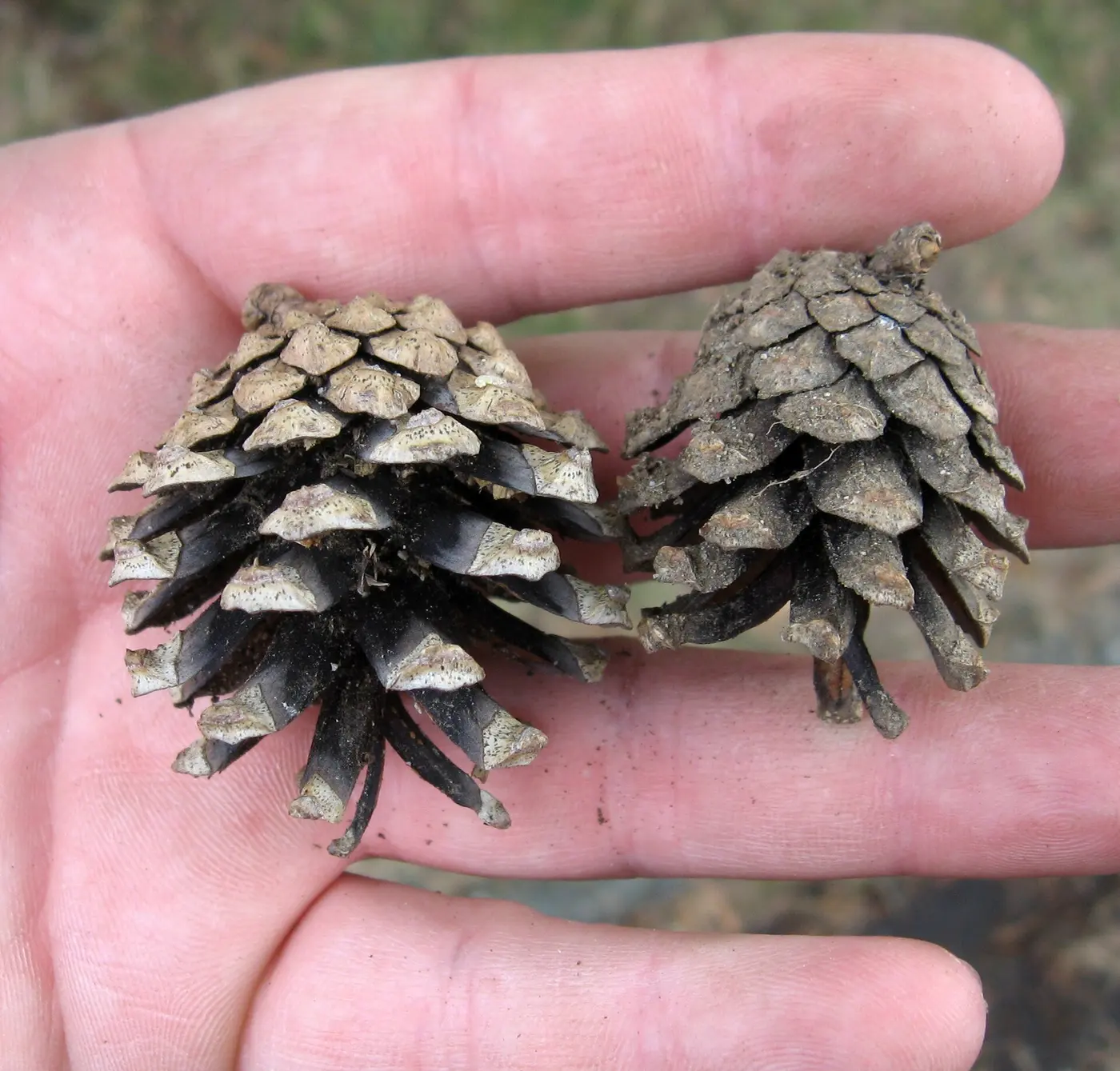

Two layers that swell by different amounts
The mechanism behind this was examined in detail in a study by British researchers published in the journal Nature in 1997.
Each scale, they found, is made of two layers with different properties bonded together. One layer is made of cells that swell considerably when they absorb water. The other is lined with stiff fibers that barely stretch when wet. In their measurements, the two layers differed about threefold in how much they expanded with moisture.
Bond together two strips that expand by different amounts, and when only one of them stretches, the whole thing bends toward the side that stretches less. It is the same principle as a bimetallic strip, the two-metal strip that bends with temperature, except that the pine cone does it with moisture. When a scale gets damp, the swelling layer expands and the scale curls inward, closing the cone. As it dries, that layer shrinks, the scale bends back outward, and the cone opens.
It moves even when it’s dead
This movement doesn’t need any living cells. It is a purely physical process in which the tissue of the scales takes up and gives off water. That is why a pine cone that fell from its tree years ago will still close when wet and open when dry.
Researchers have even tested how long this lasts. In 2017, a team at the University of Freiburg in Germany studied fossil cones of conifers found in ancient sediments. Not only cones from an interglacial period about 120,000 years ago, but even ones from the Miocene epoch, 11.5 million to 16.5 million years ago, closed their scales when soaked in water and opened them again when dried. The team reported them as the oldest plant organs known to still be capable of movement.
Changing shape with moisture alone, without using any energy, has also made this mechanism a source of ideas for new materials, from building facades that open and close on their own with the humidity to fabrics that respond to the wearer’s sweat.
Cones that wait for fire
Some pines have unusual cones that don’t open with ordinary changes in humidity. In some jack pines and lodgepole pines in North America, the cones are sealed tight with resin and stay closed on the branch for years.
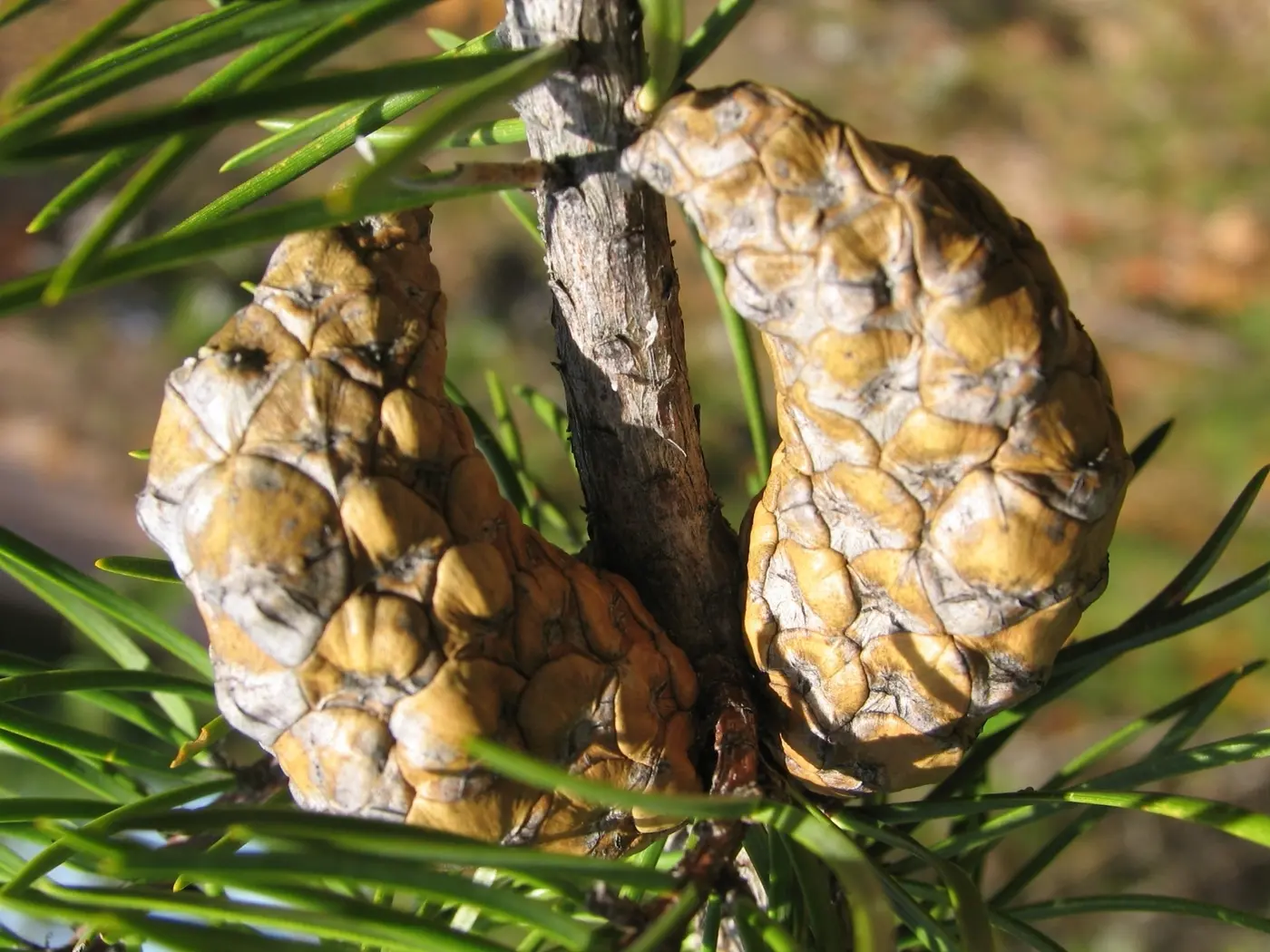

The seal breaks only during a forest fire. When the heat of the flames melts the resin, the cones finally open and scatter their seeds across the burned ground. Open ground where fire has cleared away the old trees is an ideal place for young seedlings to grow. These pines follow a strategy of waiting for fire to leave their descendants.