How does moss come back to life after drying out?
It protects its cells against drying out, then repairs any damage quickly once it gets water again.
1500years
After a long dry spell in summer, the moss growing in the cracks of stone walls and concrete-block fences can turn brown and shriveled. It looks completely dead. But check again after a rain shower, and it has returned to lush green as though nothing had happened.
An ordinary plant that dried out that badly would never recover. So how does moss come back to life after drying out?
A plant with no roots and no plumbing
About 12,000 species of mosses are known around the world. What sets them apart from ordinary plants is that they lack roots to draw up water and the internal “plumbing,” the vascular tissue, that carries water through the body. The root-like rhizoids you may see are mainly there to anchor the plant to the ground.
Moss soaks up water directly over the whole surface of its leaves and stems. In many mosses the leaves are just one cell thick. The trade-off is that moss can’t store water inside its body. When its surroundings are damp, it takes up water; when they dry out, so does the moss. This trait, in which a plant’s water content simply follows its environment, is called poikilohydry.
Ordinary plants keep their water content steady by drawing water up through their roots, covering their surfaces with a waterproof layer and closing their stomata (breathing pores). Mosses took the opposite route. Instead of avoiding drying out, they evolved bodies that can dry out without dying.
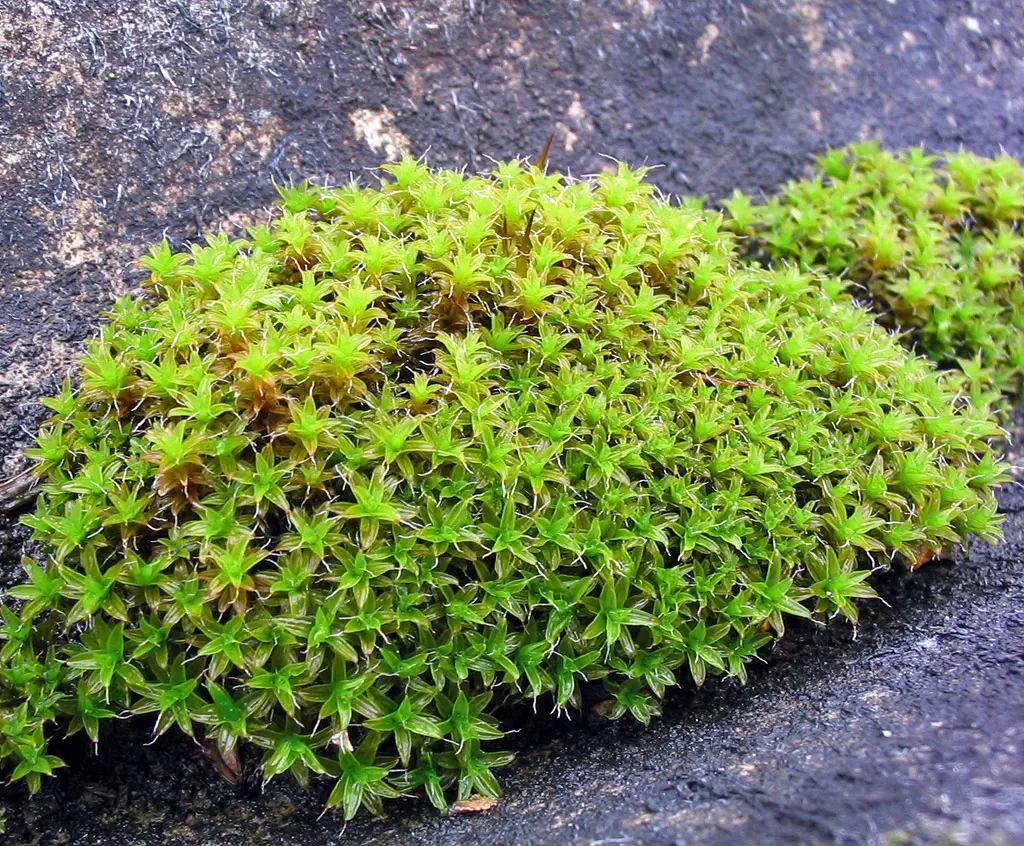

Cells that don’t break when dry
When water leaves a cell, its membranes and proteins normally fall apart. Drought-tolerant mosses have ways of preventing that.
One is to stock their cells with sugars such as sucrose. The sugars are thought to stand in for water in supporting cell membranes, keeping the contents of the cell in a state that resists damage. Special proteins that protect cells from drying out are also known.
The other is speed of repair. In Syntrichia ruralis, a moss long studied for its drought tolerance, cells are known to rush out proteins that fix damaged parts as soon as they take up water again. By combining protection with repair, many mosses are said to be able to stay dry for months and still resume activity within a few hours of getting water.
Moss that woke from a 1,500-year sleep
Moss’s ability to come back to life turns out to stretch beyond drought to long periods frozen solid.
In 2014, a team from the British Antarctic Survey and the University of Reading drilled into a bank of moss extending down into the permafrost on Signy Island, in the South Orkney Islands northeast of the Antarctic Peninsula, and pulled out a cylindrical core 138 centimeters long. They sliced it thin and placed the pieces in an incubator at ordinary temperature and light levels. Within just a few weeks, new shoots began to grow.
Radiocarbon dating showed that the moss around 110 centimeters down, where regrowth appeared, was more than 1,500 years old. Until then, the longest record for frozen moss coming directly back to life had been about 20 years.
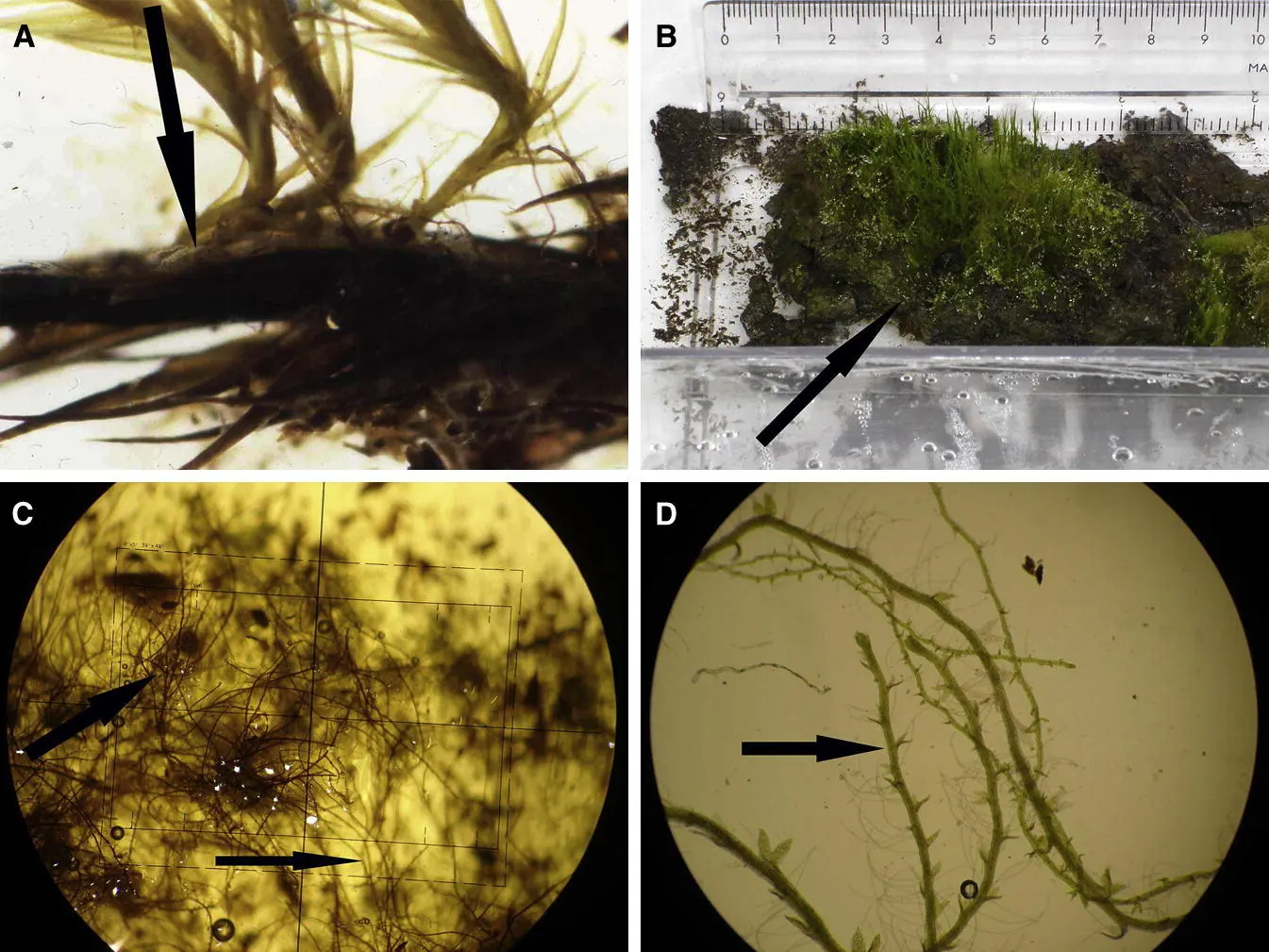

In 2013, researchers had also reported that moss around 400 years old, exposed from beneath a retreating glacier on Ellesmere Island in the Canadian Arctic, could start growing again. Moss cells are thought to have the power, given the right conditions, to rebuild an entire new plant from scratch.
Surviving conditions like Mars
In 2024, a team in China published experiments on Syntrichia caninervis, a moss that grows in deserts. After 30 days in liquid nitrogen at −196°C (−321°F), or up to five years in a freezer at −80°C (−112°F), it grew again once it was warmed. It also withstood doses of radiation far above what would be lethal to a human.
The team then placed it for up to seven days in conditions mimicking Mars: an atmosphere mostly of carbon dioxide, temperatures swinging between −60°C and 20°C (−76°F and 68°F), and intense ultraviolet light. Every one of the dried moss plants regenerated within 30 days. The little plants that dry out and soak up water again in forgotten corners of our planet are astonishingly tough.