Why do autumn leaves turn red and yellow?
Yellow comes from pigments already in the leaf; red comes from a pigment the leaf makes fresh each autumn.
As autumn deepens, the trees on hillsides and in parks begin to change color. Maples blaze red; ginkgoes turn a brilliant yellow. All summer long they wore much the same green, so what exactly is going on inside those leaves?
We say leaves “turn,” but yellow and red are produced in quite different ways. A yellow leaf is showing a color that was there all along, merely hidden. A red leaf has gone to the trouble of making a brand-new color once autumn arrives.
Yellow was there all along
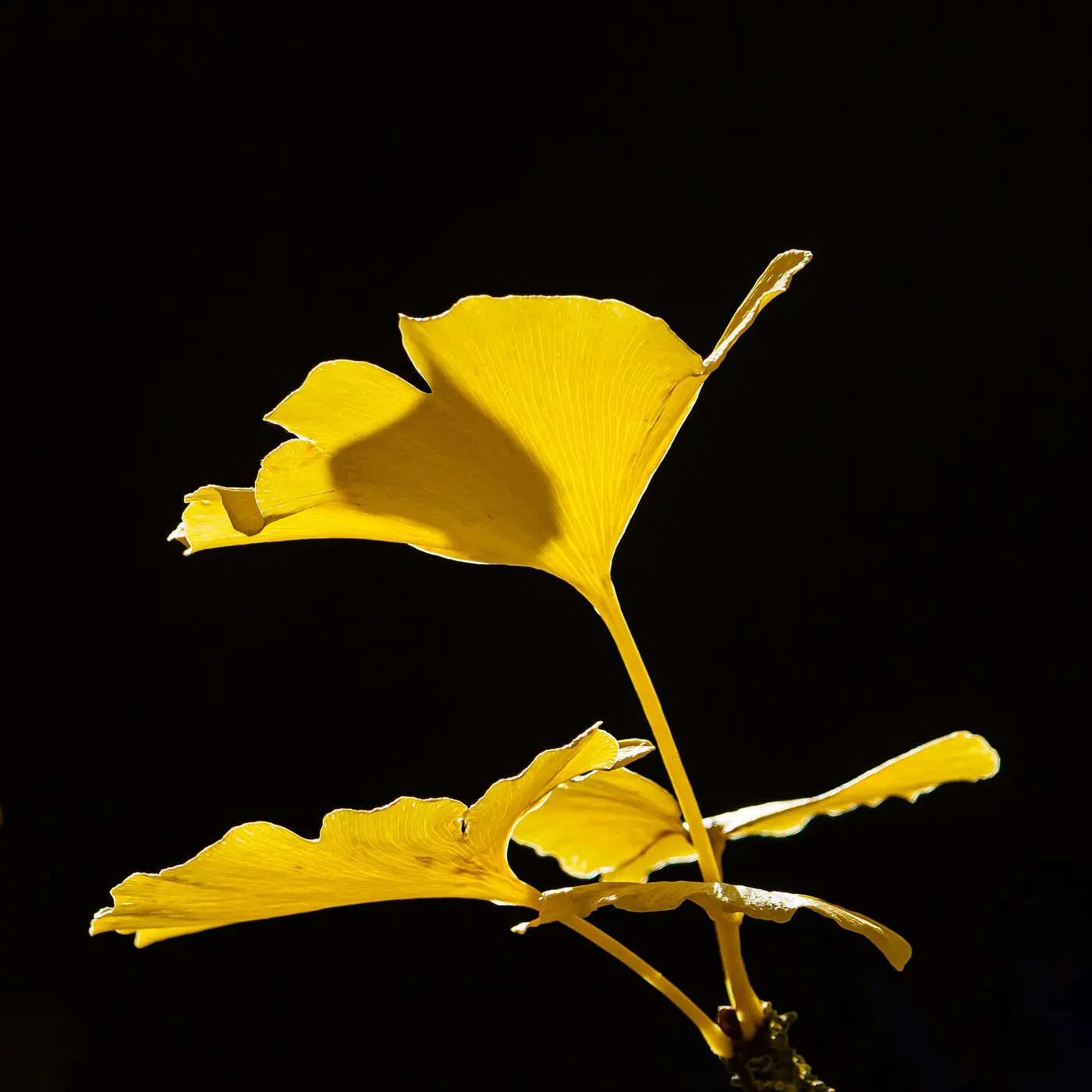
Leaves look green because they are packed with chlorophyll, the pigment that drives photosynthesis. But leaves also contain carotenoids, yellow and orange pigments. In summer the green of chlorophyll vastly outnumbers them, so the yellow goes unnoticed.
When the days shorten and temperatures fall in autumn, deciduous trees start preparing for winter. The chlorophyll in their leaves is broken down, and valuable nutrients locked inside it, such as nitrogen, are pulled back into the branches and trunk. As the green fades, the carotenoid yellow that had been hiding underneath comes into view. That is the yellow of ginkgoes and similar trees, which Japanese calls kōyō (黄葉), “yellow leaves.”

When the leaves of beeches or sawtooth oaks turn brown, the color comes from tannins and other brownish substances. Japanese has a word for this, too: katsuyō (褐葉), “brown leaves.”
Red is made fresh in autumn
The red of maples and rowans, on the other hand, comes from a pigment called anthocyanin. It belongs to the same family of pigments that colors blueberries and red shiso, yet in most trees it is almost absent from summer leaves. The red is newly made inside the leaf once autumn comes.
In autumn, a partition-like layer called the abscission layer gradually forms where the leaf joins the branch. Sugars made in the leaf then have a harder time traveling out to the branch, and they build up in the leaf instead. These sugars, among other things, are thought to be the raw material for anthocyanin.
Weather matters for a vivid red. Sunny days that keep photosynthesis going, followed by sharply cold nights: a run of autumn days like that is said to make for the most beautiful colors. In Japan, one rule of thumb is that leaves begin to turn once the daily low drops below about 8°C (46°F).
Why bother turning red?
Still, why would a tree spend effort making a new pigment for leaves it is about to drop anyway? Researchers have been debating that question for a long time.
One leading idea is the “sunscreen” hypothesis. A leaf whose chlorophyll is being dismantled becomes vulnerable to damage from strong light. Anthocyanin may shield the leaf from that light, buying the tree time to finish reclaiming its nutrients.
Another idea is that the red is a message to insects. Aphids and other insects that visit trees in autumn to lay their eggs might read it as a warning: this tree has strong defenses, so stay away. Both theories have studies that support them and studies that cast doubt on them, and some researchers suspect the color does both jobs.
Red autumns and yellow autumns
Autumn colors also vary by region. In East Asia, Japan included, and in eastern North America, many trees turn red, whereas in Europe yellow foliage is said to be more common.
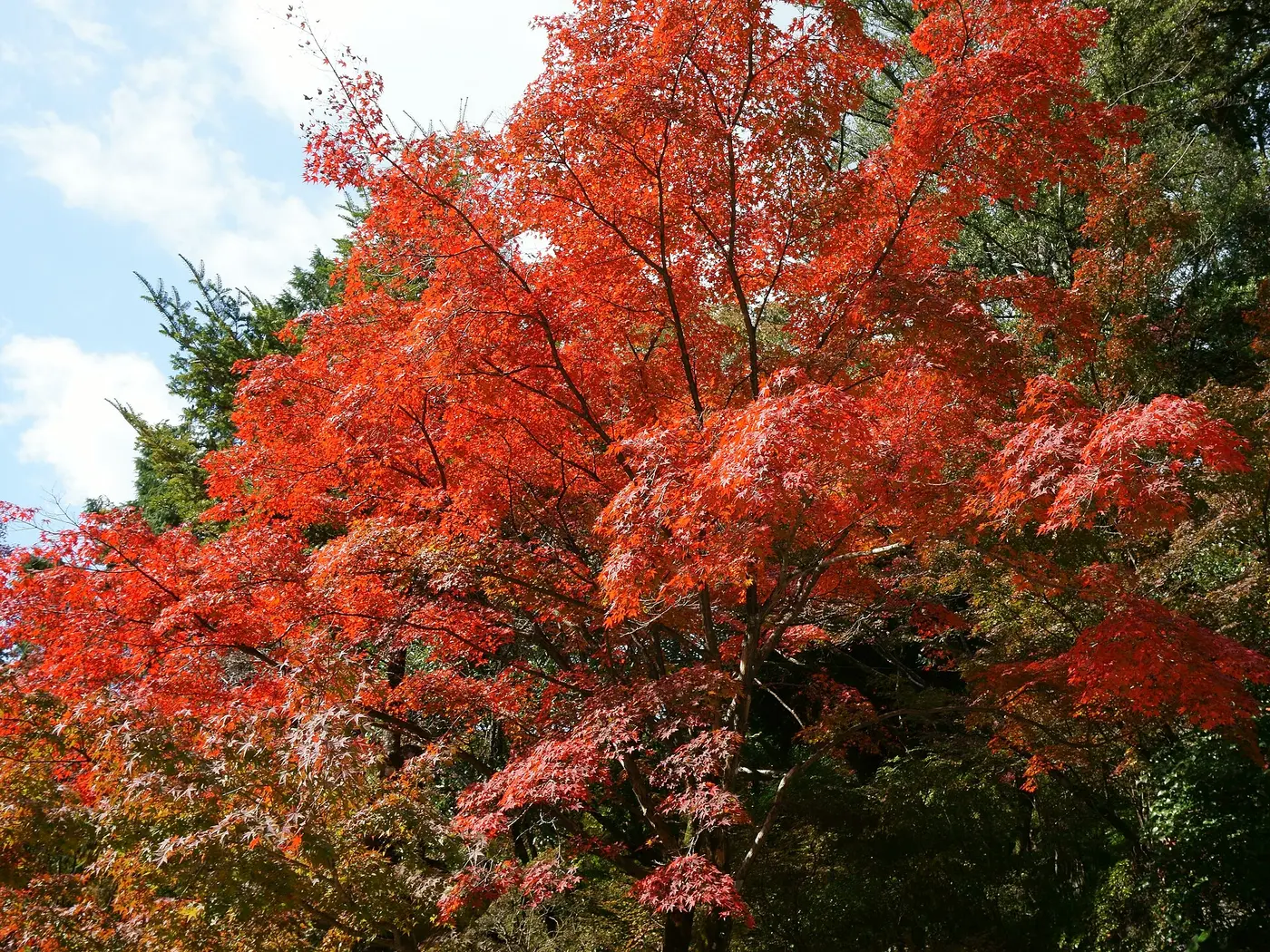

A study published in 2019 suggested that this difference might be explained by differences in autumn sunlight and temperature. The stronger the sun and the harsher the cold in a region, the more it pays for trees to make red pigment to protect their leaves. Another theory points to history: during the ice ages, Europe lost many of its tree species. There is no single settled answer. Even so, if Japan’s autumns glow red, the country may have its climate to thank.